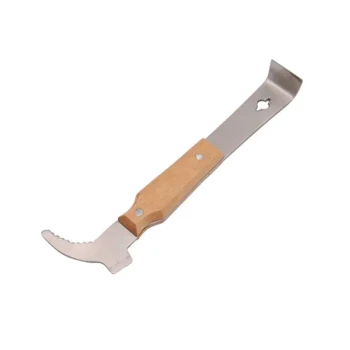
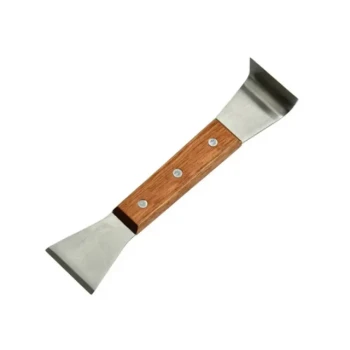
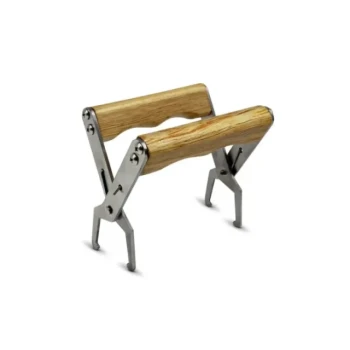
The technical significance of using professional tools for internal hive inspections lies in the shift from estimation to verified data. While external observation offers only superficial clues, internal access allows you to precisely quantify honey maturity, detect pests before they cause systemic damage, and accurately time hive expansion to maximize total yield.
Internal inspections enable a proactive management style that is impossible with external observation alone. By verifying the exact developmental stage of the colony, you can time the addition of supers and harvest cycles to optimize both colony health and production volume.
Precision in Production Management
To maximize the output of a hive, you must move beyond guesswork. Internal inspections provide the granular data required to make critical operational decisions.
Determining Honey Maturity
External observation cannot tell you the moisture content or capping status of honeycomb. Professional tools used internally allow for the precise determination of honey maturity.
This ensures you harvest only when the product is stable and ready, preventing fermentation risks associated with premature extraction.
Optimizing Hive Capacity
The timing of adding "supers" (additional boxes for honey storage) is a major factor in yield optimization. Adding them too early taxes the colony's heat regulation; adding them too late triggers swarming instincts and halts production.
Internal inspections reveal the colony's exact development status. This data allows you to decide the exact moment to expand capacity, directly correlating to a maximized total honey yield.
Proactive Health Assurance
The technical advantage of internal tools is perhaps most critical regarding biological threats.
Early Pest Detection
By the time pest infestations are visible from the outside of a hive, the damage is often irreversible. Internal inspections facilitate the early detection of pests.
Identifying mites or beetles inside the hive structure allows for targeted intervention before the colony's population collapses.
Understanding the Trade-offs
While internal inspections are technically superior for data gathering, they introduce variables that must be managed.
The Cost of Intrusiveness
Unlike external observation, which is passive, internal inspection is an active disruption. Opening the hive alters the internal climate and temporarily disrupts the colony's workflow.
Therefore, the technical goal is not constant inspection, but efficient inspection. You must use professional tools to gather the necessary data (maturity, pests, space) quickly to minimize the duration of the disturbance.
Making the Right Choice for Your Goal
To apply this to your apiary management, align your inspection method with your specific technical objectives.
- If your primary focus is Yield Maximization: Prioritize internal checks to identify the exact developmental window for adding supers.
- If your primary focus is Risk Mitigation: Schedule regular internal audits to catch pest infestations before they manifest externally.
True technical mastery in beekeeping comes from using the right tools to see what is happening inside the box, rather than guessing from the outside.
Summary Table:
| Feature | External Observation | Internal Inspection (Professional Tools) |
|---|---|---|
| Data Accuracy | Superficial/Estimations | Verified/Precise Data |
| Honey Maturity | Invisible (Guesswork) | Measured Capping & Moisture Levels |
| Pest Control | Reactive (Visible too late) | Proactive (Early internal detection) |
| Yield Impact | Suboptimal (Timing errors) | Maximized (Precision timing of supers) |
| Hive Disturbance | Non-intrusive | Brief, targeted disruption |
Elevate Your Apiary Operations with HONESTBEE
As a commercial apiary or distributor, your success depends on shifting from estimation to precision. HONESTBEE empowers your business with a comprehensive wholesale range of professional beekeeping tools, advanced hive-making machinery, and high-capacity honey-filling equipment.
Whether you need industrial-grade hardware or essential consumables to ensure hive health and maximize production, we provide the technical solutions to scale your operations efficiently.
Ready to optimize your yield and streamline your production?
Contact us today to explore our wholesale offerings!
References
- Abera Anja, Elfiyos Seyoum. Assessment of beekeeping production system and constraints in basketo special woreda, Southern Ethiopia. DOI: 10.15406/hij.2018.02.00039
This article is also based on technical information from HonestBee Knowledge Base .
Related Products
- Professional Multi-Function Stainless Steel Hive Tool
- Professional Stainless Steel Pry-Bar Hive Tool
- Ergonomic Plastic Frame Spacer Tool for Rapid Hive Management Beekeeping
- Multi-Function Plier-Style Frame Grip Hive Tool
- HONESTBEE Professional Multi-Functional Hive Tool with Ergonomic Wood Handle
People Also Ask
- Why are professional hive tools considered indispensable? Master Beekeeping Maintenance with Precision Leverage
- What is the role of professional hive tools in routine apiary maintenance? Expert Tips for Hive Health and Longevity
- What are the benefits of a multi-functional hive tool? Streamline Your Apiary Workflow with One Tool
- What advantages do multi-functional hive tools offer? Maximize Your Apiary Efficiency and Workflow
- What are the common construction features of hive tools? Key Insights for Superior Beekeeping Efficiency