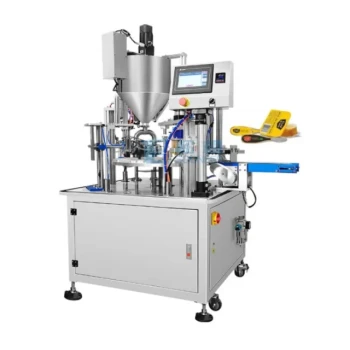
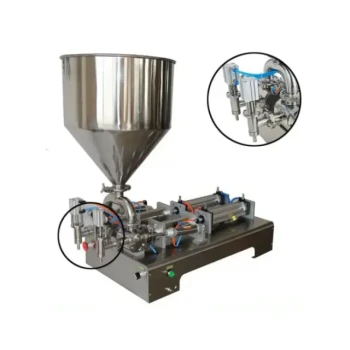
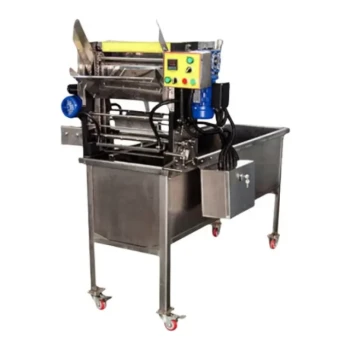
Automated honey filling machines solve critical production issues by eliminating volumetric inconsistency, preventing product waste through advanced anti-drip technology, and ensuring strict hygiene compliance. These systems replace labor-intensive manual processes with high-precision metering, allowing for rapid, large-scale distribution while maintaining the honey’s natural quality and shelf life.
Core Takeaway: Automation transforms honey packaging from a bottleneck into a competitive advantage by ensuring exact net weights, minimizing contamination risks, and optimizing throughput for global supply chains.
Eliminating Volumetric Inaccuracy and Material Waste
High-Precision Metering Systems
Manual filling often leads to overfilling or underfilling, which creates financial losses or regulatory non-compliance. Automated machines utilize high-precision piston or gravity-based metering to ensure that the net content of every bottle remains identical.
Advanced Anti-Drip Technology
Honey’s high viscosity often causes "stringing" and dripping during the transition between containers. Modern machines employ vacuum anti-drip designs and precision metering pumps to ensure clean cut-offs, preventing waste and keeping the exterior of the packaging pristine.
Viscosity Management
Fluctuating temperatures can change how honey flows, leading to inconsistent fill speeds. Integrated temperature control systems maintain the honey at an optimal flow state, ensuring consistent performance regardless of environmental conditions.
Ensuring Product Integrity and Global Compliance
Enclosed Operating Environments
Honey is hygroscopic, meaning it easily absorbs moisture from the air, which can lead to fermentation and spoilage. Automated systems provide a closed-loop environment that minimizes air exposure, preserving the honey’s natural enzyme activity and flavor profile.
Mitigation of Contamination Risks
Manual handling increases the risk of microbial contamination and the introduction of foreign particles. Automated lines significantly reduce human contact, ensuring the final product meets the rigorous hygiene and food safety standards required for international trade.
Visual Appeal and Marketability
Improper filling can introduce air bubbles or crystallization nuclei that mar the clarity of the product. Automated machines are designed to fill from the bottom up or use controlled speeds to prevent air entrapment, ensuring a premium visual presentation for the retail shelf.
Scaling Operations for Global Distribution
Rapid Throughput and Fulfillment
For wholesalers and distributors, speed is essential to maintaining a reliable supply chain. Automation allows for ultra-fast delivery and efficient order fulfillment by processing thousands of units per hour with minimal downtime.
Standardization for International Markets
Global trade requires strict adherence to standardized weights and labeling. These machines ensure that every unit produced is compliant with international packaging standards, reducing the risk of rejected shipments or legal hurdles in foreign markets.
Labor Efficiency and Cost Control
Automated systems allow apiaries and packaging plants to scale their output without a proportional increase in labor costs. This operational efficiency allows for more competitive pricing models in the B2B marketplace.
Understanding the Trade-offs
Capital Expenditure vs. Long-term ROI
The primary hurdle for many operations is the initial cost of high-grade automated machinery. However, for distributors focused on scale, the reduction in material waste and labor costs typically offsets the investment within a short period.
Maintenance and Technical Expertise
Automated lines require specialized knowledge to calibrate and maintain, particularly when switching between different honey varieties or container sizes. Choosing a partner with deep professional industry expertise is vital to ensuring minimal downtime and optimal machine longevity.
Cleaning Complexity (CIP)
Because honey is sticky and prone to crystallization, the cleaning process for automated lines can be intensive. Most modern systems now include Clean-in-Place (CIP) functionality, which automates the sanitation process but requires a dedicated water and power infrastructure.
Selecting the Right Equipment for Your Portfolio
Choosing the right machinery depends on your specific market position and the demands of your clients.
- If your primary focus is high-volume wholesale distribution: Invest in high-speed, multi-head piston fillers to maximize throughput and ensure rapid order fulfillment.
- If your primary focus is premium or organic retail brands: Prioritize machines with closed-loop systems and precision temperature controls to preserve the honey's natural enzymes and clarity.
- If your primary focus is global export and compliance: Ensure your equipment features integrated capping and sealing to guarantee airtightness and meet international food safety regulations.
By integrating advanced automation into the packaging stage, distributors can ensure a consistent, high-quality supply that meets the rigorous demands of the modern global market.
Summary Table:
| Production Challenge | Automated Machine Solution | Business Benefit |
|---|---|---|
| Filling Inaccuracy | High-precision metering systems | Regulatory compliance & zero material loss |
| Product Waste | Advanced anti-drip technology | Cleaner packaging & improved cost control |
| Contamination | Closed-loop enclosed environments | Strict adherence to global food safety standards |
| Air Bubbles/Clarity | Bottom-up filling & speed control | Premium visual appeal for retail shelves |
| Low Throughput | Rapid processing & high-speed lines | Efficient order fulfillment for large-scale supply |
Scale Your Honey Distribution with HONESTBEE
Are you looking to eliminate production bottlenecks and improve your profit margins? HONESTBEE is your dedicated partner for one-stop sourcing in the beekeeping industry. We cater specifically to commercial apiaries and B2B distributors, offering a comprehensive wholesale portfolio—from high-precision honey-filling machines and hive-making equipment to essential consumables and cultural merchandise.
By choosing HONESTBEE, you benefit from our deep industry expertise, rapid response times, and ultra-fast delivery, ensuring your supply chain remains reliable and competitive. Whether you need OEM/ODM support or specialized hardware to meet international standards, we have the professional capacity to fulfill your needs.
Ready to optimize your operations? Contact our expert team today to explore our wholesale solutions!
References
- Gülşah Kaner, Çağla AYER. Evaluation of Honey and Propolis Consumption Habits of Adults During the COVID-19 Pandemic. DOI: 10.22312/sdusbed.1439100
This article is also based on technical information from HonestBee Knowledge Base .
Related Products
- Fully Automatic Honey Filling Packaging Machine for Processing Line
- Automatic Honey Filling and Filtering Machine for Beekeeping Bottle Filling
- Precision Durable Efficient HONESTBEE Rotary Honey Filling Machine
- Precision Automated Packaging Turntable Honey Spoon Filling Sealing Packing Machine
- Semi Automatic Small Honey Bottle Filling Machine Honey Filler
People Also Ask
- Why are fully automatic honey filling and packaging lines essential? Boost Your Honey's Market Value and Quality
- What is a fully-automatic honey filler? Streamline Your Production with High-Precision Automation
- How do automated honey filling and packaging machines affect profitability? Boost Margins with HONESTBEE Technology
- How do automated honey filling and packaging machines contribute to the market value of honey products? Maximize Your ROI
- How do industrial-grade automated honey filling and packaging machines mitigate the risk of physical contamination?