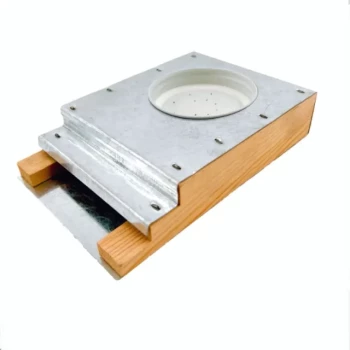
The integration of partitions and feeders into post-harvest management is the most effective method for "drying" honeycombs. By creating a strategic physical barrier, these tools induce bees to relocate residual honey—often up to 300 grams per frame—from extracted combs back into the hive’s central nest. This process ensures that equipment is hygienically cleaned for long-term storage while simultaneously reclaiming vital nutrients for the colony's autumn development.
Core Takeaway: Partitions and feeders serve as behavioral triggers that force bees to scavenge and consolidate residual honey, transforming a potential storage liability into a nutritional asset for the colony.
The Mechanics of Post-Harvest "Drying"
How Partitions Create a Behavioral Trigger
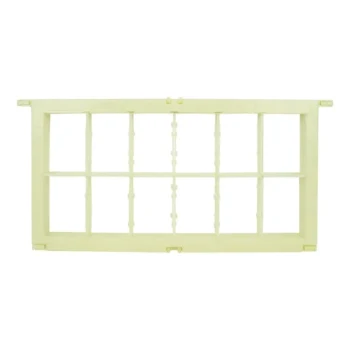
A partition acts as a structural boundary within the hive that separates the main brood nest from the storage area. When "wet" frames are placed behind this partition, the bees perceive the honey as being outside their immediate cluster and will instinctively move it to the center.
The Role of Feeders in Resource Consolidation
Empty feeders can be used similarly to partitions to create an artificial gap within the hive. Placing residual frames in or behind these feeders encourages the bees to clean the cells thoroughly, which is essential for preventing mold and fermentation during the off-season.
Maximizing Reclaimed Nutritional Value
The "drying" process allows beekeepers to recover significant amounts of honey that would otherwise be lost during cleaning. This reclaimed honey provides a high-energy food source that supports colony health and hive strength during the critical transition to winter.
Operational Value for Commercial Distributors
Expanding the Product Portfolio
For wholesalers, offering specialized partitions and feeders is essential for providing a comprehensive, full-spectrum product range. These tools are not just accessories but are vital components for professional honey management and hive hygiene.
Leveraging Deep Industry Expertise
Distributors who understand the technical nuances of honeycomb drying can provide exceptional customer service to their clients. Demonstrating how these tools prevent honey waste and equipment degradation builds long-term trust with commercial beekeeping operations.
Efficiency in Supply Chain and Fulfillment
High-quality partitions and feeders must be available exactly when the harvest ends to be effective. Partnering with a supplier that offers ultra-fast delivery and efficient order fulfillment ensures that beekeepers can protect their equipment without delay.
Understanding the Trade-offs and Risks
Potential for Spreading Pathogens
One of the primary risks of using bees to clean frames is the potential for cross-contamination. If frames from a diseased colony are placed in a healthy hive for drying, pathogens can spread rapidly throughout the apiary.
The Risk of Robbing Behavior
Introducing honey-scented frames to the hive can sometimes trigger "robbing" behavior from neighboring colonies. Beekeepers must manage the entrance size and timing of the drying process to ensure the security of the hive is not compromised.
Labor Costs vs. Material Recovery
While drying recovers honey, it requires additional hive visits and manual labor to place and remove the partitions. Commercial operations must weigh the cost of this labor against the value of the reclaimed honey and the benefits of clean storage.
Making the Right Choice for Your Goal
As a professional distributor or reseller, your recommendations should align with the specific operational scale and technical proficiency of your clients.
- If your primary focus is maximizing hive hygiene: Recommend high-durability partitions that create a clear boundary, ensuring bees strip every cell of residual honey before winter storage.
- If your primary focus is resource efficiency for large apiaries: Highlight the use of multi-functional feeders that can transition from cleaning tools to supplemental feeding stations as the season progresses.
- If your primary focus is rapid market entry and fulfillment: Partner with a sourcing expert who provides a one-stop-shop capability for all hive internal components to ensure your inventory is never a bottleneck.
Strategic use of partitions and feeders transforms post-harvest cleaning from a chore into a sophisticated management practice that protects both equipment and colony vitality.
Summary Table:
| Component | Role in Post-Harvest Cleaning | Key Benefit for Beekeepers |
|---|---|---|
| Partition | Creates a structural boundary | Triggers bees to relocate honey to the central nest |
| Feeder | Creates artificial gaps | Facilitates thorough cell cleaning & prevents mold |
| Residual Honey | Reclaimed nutrient source | Provides high-energy food for winter survival |
| Strategic Setup | Behavioral trigger mechanism | Transforms storage liabilities into nutritional assets |
Scale Your Inventory with HONESTBEE’s Professional Solutions
Maximize your market reach with HONESTBEE, your premier partner for commercial beekeeping equipment. We specialize in providing distributors and B2B resellers with a one-stop sourcing capability, offering everything from hive-making machinery to specialized internal components like partitions and feeders.
Why Partner with HONESTBEE?
- Comprehensive Portfolio: Access a full spectrum of beekeeping tools, machinery, and essential consumables.
- B2B Focused Services: Benefit from high profit margins, reliable OEM/ODM support, and industry certifications.
- Unmatched Efficiency: Experience ultra-fast delivery and rapid response times to keep your supply chain moving.
- Expert Support: Leverage our deep professional industry expertise to better serve your commercial clients.
Ready to enhance your product offering with high-quality equipment? Contact us today to receive our wholesale catalog!
References
- G.A.Qayumova B.K.Boboyev. ASALARI OILASINI ASAL OLISH MAVSUMIDAN KEIYIN RIVOJLANTIRISH TEXNOLOGIYASI. DOI: 10.5281/zenodo.8002994
This article is also based on technical information from HonestBee Knowledge Base .
Related Products
- HONESTBEE Round Hive Top Bee Feeder for Syrup
- HONESTBEE Square Top Hive Bee Feeder Top Bee Feeder
- Heavy Duty Stainless Steel Honeycomb Cutter
- HONESTBEE Entrance Bee Feeder Efficient Hive Front Liquid Feeding Solution for Beekeeping
- HONESTBEE Entrance Bee Feeder Professional Hive Nutrition Solution for Beekeeping
People Also Ask
- What can the round hive top feeder be used for? A Guide to Efficient, Safe Bee Feeding
- What is the capacity of the round hive top feeder for syrup and pollen? A Guide to Targeted Apiary Support
- What types of hive boxes is the round hive top feeder compatible with? Universal Fit for 8 & 10-Frame Langstroth Hives
- What types of feed can be used with the round hive top feeder? Versatile Feeding for Optimal Apiary Health
- How do you use a top feeder for bees? Expert Guide to Installation and High-Volume Hive Feeding