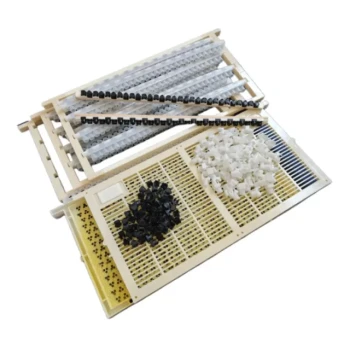
The portable transport box acts as a critical protective shield within the royal jelly supply chain. Its primary function is to maintain a stable, controlled micro-environment for grafted rearing frames and harvested jelly during transit from the apiary to the laboratory, protecting these sensitive biological materials from environmental degradation.
By isolating biological samples from external fluctuations, the transport box ensures that the physiological stability of larvae and the quality of the royal jelly remain uncompromised during the vulnerable transit phase.
Preserving Biological Integrity
Regulating the Micro-Environment
The transition from a beehive to a processing facility exposes biological materials to chaotic conditions. The transport box mitigates this by creating a sealed, consistent internal atmosphere.
This ensures that the immediate environment surrounding the samples remains stable, regardless of the weather conditions outside.
Blocking Environmental Stressors
External factors are the primary enemy of royal jelly quality and larval health. The transport box effectively blocks high temperatures and direct sunlight.
It also prevents exposure to dry air, which can rapidly dehydrate sensitive organic materials.
Protecting Larval Vitality
For the production process to succeed, the grafted larvae must remain alive and healthy until they reach the lab.
The transport box prevents physical stress and physiological shock. This protection is vital for maintaining larval vitality throughout the extraction phase.
Supporting High-Efficiency Production
Enabling Consistency
Modern beekeeping systems have increased royal jelly production from less than 0.3 kg to over 10 kg per colony. This volume requires absolute consistency in biological management.
The transport box ensures that the "consistent performance" of the equipment chain is not broken during the logistics phase.
Safeguarding the Harvest
High-efficiency production relies on precision operations. A lapse in temperature control during transport can ruin a high-yield harvest.
The transport box serves as the bridge between the field and the lab, ensuring the hard-won gains in production volume are not lost to transit errors.
Understanding the Operational Trade-offs
Equipment Integrity is Paramount
The protection offered is only as good as the box's condition. If seals are worn or insulation is compromised, the box may trap heat rather than block it.
Users must regularly inspect the unit, as a damaged box offers a false sense of security while exposing samples to the very elements you are trying to avoid.
The Risk of Thermal Inertia
While the box blocks external heat, it also retains internal heat.
If the box is loaded with frames that are already overheating, the micro-environment will maintain that high temperature. Pre-cooling or careful monitoring of internal temperatures is often required.
Ensuring Quality During Transit
To maximize the efficacy of your royal jelly production, select and utilize transport boxes based on your specific operational focus:
- If your primary focus is Larval Rearing: Prioritize boxes with excellent humidity control to prevent dry air from desiccating fragile larvae.
- If your primary focus is Jelly Extraction: Ensure the box features superior thermal insulation to prevent heat-induced degradation of the royal jelly's active compounds.
The portable transport box is not merely a container; it is an essential preservation tool that secures the value of the entire harvest.
Summary Table:
| Key Function | Primary Benefit | Protection Mechanism |
|---|---|---|
| Micro-Environment Control | Preserves biological integrity | Maintains stable internal humidity and temperature |
| Environmental Shielding | Prevents degradation | Blocks UV exposure, high heat, and dry air |
| Larval Vitality Support | Ensures rearing success | Prevents physiological shock during field-to-lab transit |
| Quality Assurance | Safeguards harvest value | Protects active compounds in royal jelly from thermal damage |
Maximize Your Royal Jelly Yield with Professional Equipment
At HONESTBEE, we understand that commercial success in beekeeping depends on the integrity of your supply chain. Whether you are a large-scale commercial apiary or a global distributor, our comprehensive wholesale offering provides the specialized tools you need to excel.
From high-performance transport boxes and beekeeping machinery to advanced honey-filling systems and hive-making equipment, we deliver the hardware and consumables that drive efficiency. Don't let environmental stressors compromise your production—leverage our industry expertise to secure your harvest quality and optimize your operations.
Contact HONESTBEE Today to Explore Our Wholesale Solutions
References
- O. Mischenko, D. Kryvoruchko. The influence of honey harvest conditions on the production of the royal jelly by queen bees. DOI: 10.31073/agrovisnyk202104-06
This article is also based on technical information from HonestBee Knowledge Base .
Related Products
- No Grafting Queen Rearing Kit: System for Royal Jelly Production and Queen Rearing
- Plastic Chinese Queen Grafting Tool for Bee Queen Rearing
- Professional Queen Bee Introduction and Transport Cage
- Portable Bee Mating Hive Boxes Mini Mating Nucs 8 Frames for Queen Rearing
People Also Ask
- What is the primary function of a queen rearing kit? Eliminate Manual Grafting for Superior Bee Breeding
- How do specialized queen rearing kits and queen management tools improve the success rate of bee colony expansion?
- What are some alternative methods to grafting for queen cell production? Discover Graft-Free Queen Rearing Systems
- Are queen rearing systems generally suitable for all honeybee species? Master Efficient Breeding Methods
- Are queen rearing systems suitable for all beekeepers? Modern Tools for Every Experience Level