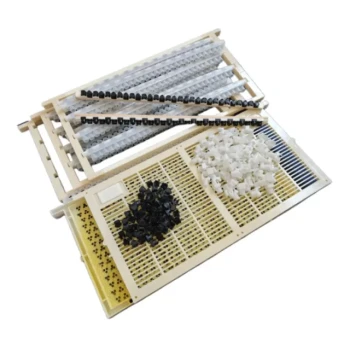
Yes, common queen rearing systems are generally suitable for use with a variety of honeybee species, specifically including European honeybees (Apis mellifera) and their locally adapted subspecies. While the hardware itself is broadly compatible, the success of these systems relies heavily on the beekeeper's ability to adapt their methods to the specific behaviors and biological requirements of the bee species in question.
Equipment is universal, but biology is specific. While standard rearing tools work across various species, they are merely vessels; success is dictated by how well the beekeeper aligns the system with the unique lifecycle and instincts of the specific colony.
The Mechanics of Integrated Rearing
Eliminating Mechanical Risks
Modern integrated queen rearing systems are designed to bypass the most delicate part of traditional breeding: the physical transfer of larvae.
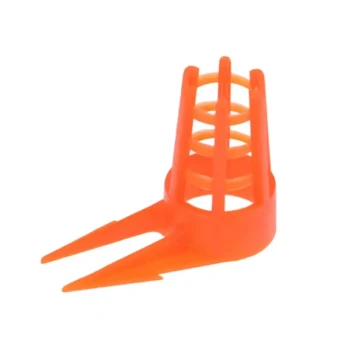
By allowing the queen to lay eggs directly into specialized plastic cell cups, these systems utilize a non-grafting process.
This eliminates the risk of mechanical damage to young larvae, which is a frequent cause of failure in manual grafting methods.
Efficiency and Acceptance
The primary advantage of these systems is the significant reduction in labor intensity.
Because the larvae are never touched by human hands and remain in the hive environment, acceptance rates by nurse bees are typically higher.
This leads to improved survival rates for the developing queens compared to traditional methods.
Scaling for Commercialization
For beekeepers aiming to commercialize breeding results, these tools are essential infrastructure.
Once superior breeder colonies are identified via a selection index, these systems allow for the mass production of virgin queens.
This ensures that desirable genetic traits can be stabilized and efficiently distributed across commercial apiaries.
Understanding the Trade-offs
The Knowledge Gap
A common pitfall is assuming that owning the system guarantees success.
While the tools are "generally suitable" for various species, they do not replace the need for biological expertise.
A system that works perfectly for one subspecies may fail if the beekeeper does not account for slight variations in the developmental timeline or swarming drive of a different local subspecies.
Equipment Dependency
Relying solely on integrated systems can sometimes atrophy a beekeeper's manual skills.
If the system fails or components are unavailable, a breeder without manual grafting experience may be unable to continue production.
Furthermore, these systems often require specific nucleus colony equipment for fertilization confirmation, increasing the initial hardware investment.
Making the Right Choice for Your Goal
To maximize the effectiveness of a queen rearing system, you must match your objective with the correct operational approach.
- If your primary focus is Commercial Production: Utilize integrated non-grafting systems to minimize labor costs and maximize the volume of standardized queens.
- If your primary focus is Genetic Quality: Use the system to replicate superior breeder colonies, but ensure you strictly monitor the biological requirements of your specific local subspecies.
- If your primary focus is Larval Survival: Adopt a system that allows the queen to lay directly into cups to completely negate the risk of handling damage.
The tool provides the efficiency, but your understanding of the bee's biology provides the results.
Summary Table:
| Feature | Non-Grafting Systems | Traditional Manual Grafting |
|---|---|---|
| Larvae Handling | No direct contact; queen lays in cups | Manual transfer using tools |
| Risk of Injury | Negligible mechanical risk | High risk of larval damage |
| Acceptance Rate | Generally higher (less stress) | Variable based on skill |
| Labor Intensity | Significantly reduced | High labor requirement |
| Suitability | Ideal for commercial mass production | Best for small-scale/manual skills |
Scale Your Apiary Operations with HONESTBEE
Maximize your breeding success and commercial output with high-performance queen rearing equipment. HONESTBEE specializes in supporting commercial apiaries and distributors with a comprehensive range of professional tools—from non-grafting rearing systems and hive-making machinery to honey-filling lines and essential consumables.
Whether you are stabilizing genetic traits or scaling for mass production, our wholesale solutions are designed to enhance efficiency and reliability across your entire operation.
Ready to elevate your beekeeping business? Contact us today to explore our full spectrum of beekeeping hardware and industry-leading supplies.
Related Products
- No Grafting Queen Rearing Kit: System for Royal Jelly Production and Queen Rearing
- Nicot Queen Rearing Kit for Beekeeping and Grafting in Nicot System
- Premium Nicot Style Queen Rearing Kit with Hair Roller Bee Cages
- JZBZ Langstroth Queen Rearing Frame for Beekeeping
- Premium Nicot Style Cell Bar Holder and Queen Cell Cup Holder System
People Also Ask
- What is the primary function of a queen rearing kit? Eliminate Manual Grafting for Superior Bee Breeding
- How do specialized queen rearing kits and queen management tools improve the success rate of bee colony expansion?
- What are some alternative methods to grafting for queen cell production? Discover Graft-Free Queen Rearing Systems
- Are queen rearing systems suitable for all beekeepers? Modern Tools for Every Experience Level
- How do workers interact with the queen in the Jenter and Nicot systems? Graft-Free Queen Rearing Explained