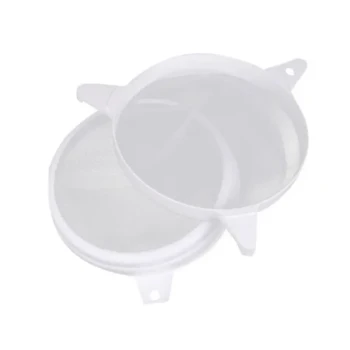
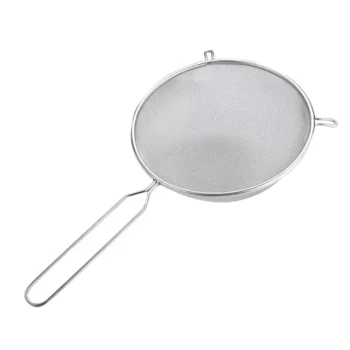
The industrial-grade polyamide filter serves a critical dual function in refining drone larva homogenate: it acts as both a precise mechanical sieve and a chemically inert safeguard. By processing the pressed larva liquid through a fine mesh, the filter physically separates the valuable fluid from solid debris like hive wax and larval shells. Simultaneously, its specific material properties prevent the accidental loss of vital bioactive compounds during the filtration process.
The choice of polyamide is not just about cleaning the liquid; it is about preserving potency. Its high chemical stability ensures that complex nutrients—specifically hormones and unsaturated fatty acids—are retained in the final product rather than being lost to adsorption.
Achieving Physical Purity
Removal of Macroscopic Debris
The initial stage of processing pressed larva liquid results in a mixture containing significant solid matter. An industrial-grade filter is required to handle this viscosity and volume.
Targeting Specific Residues
The fine mesh size of the filter is calibrated to capture specific impurities inherent to the extraction process. It effectively removes hive wax and larval shell residues, resulting in a uniform liquid consistency.
Preserving Bioactive Potency
The Role of Chemical Stability
Filtration is not merely a physical process; it is a chemical interaction. The polyamide material is selected specifically for its high chemical stability.
This stability prevents the filter material itself from reacting with or degrading the delicate organic compounds found in the larva homogenate.
Preventing Nutrient Adsorption
A common failure point in filtration is "adsorption," where valuable molecules stick to the filter media and are discarded with the waste.
Polyamide minimizes this risk. It ensures that complex bioactive substances, particularly hormones and unsaturated fatty acids, pass through the filter freely. This retention is essential for producing a highly active raw material.
Understanding the Trade-offs
Material Specificity vs. General Filtration
Using a generic filter medium rather than industrial-grade polyamide introduces a significant risk to product quality.
While a standard filter might achieve physical clarity, it lacks the anti-adsorption properties of polyamide. This would likely result in a "clean" looking liquid that is significantly lower in nutritional value and biological activity.
The Cost of Purity
Achieving a pure and highly active raw material requires strict adherence to this material specification. Attempts to cut costs by using less stable filtration materials will directly correlate with a loss of the homogenate's most valuable bioactive components.
Ensuring Quality in Homogenate Preparation
To maximize the quality of your final product, assess your filtration goals against the capabilities of the polyamide filter:
- If your primary focus is Physical Consistency: The fine mesh effectively eliminates particulate matter like wax and shells to create a smooth liquid.
- If your primary focus is Bioactive Potency: The polyamide material is non-negotiable to prevent the loss of hormones and fatty acids through adsorption.
Selecting the correct filtration medium is the defining factor in transitioning from a crude extract to a premium, bioactive raw material.
Summary Table:
| Feature | Function in Homogenate Processing | Benefit to Final Product |
|---|---|---|
| Fine Mesh Sieve | Removes hive wax and larval shell residues | Ensures physical purity and uniform consistency |
| Chemical Stability | Prevents reactions between filter and organic compounds | Safeguards the integrity of delicate nutrients |
| Anti-Adsorption | Allows hormones and fatty acids to pass freely | Maximizes bioactive potency and nutritional value |
| Industrial Grade | Handles high viscosity and large volumes | Efficient processing for commercial-scale production |
Elevate Your Beekeeping Production with HONESTBEE
Transition from crude extracts to premium, bioactive raw materials with professional-grade filtration and processing equipment. At HONESTBEE, we specialize in supporting commercial apiaries and distributors with a comprehensive wholesale offering. Whether you require specialized hive-making machinery, honey-filling systems, or high-performance filtration tools, our portfolio is designed to maximize your efficiency and product quality.
Our value to your business:
- Comprehensive Range: From industrial hardware to essential consumables.
- Bioactive Preservation: Equipment selected specifically to protect the potency of your bee products.
- Scalable Solutions: Specialized tools tailored for both large-scale honey production and artisanal merchandise.
Ready to optimize your processing line? Contact us today to discover how HONESTBEE can empower your commercial apiary operations.
References
- Д. В. Митрофанов, Н.В. Будникова. Physico-chemical parameters of drone brood homogenate adsorbed on lactose-free adsorbents during storage. DOI: 10.32417/1997-4868-2024-24-03-358-367
This article is also based on technical information from HonestBee Knowledge Base .
Related Products
- Professional Honey Filter with Tripod Support Stand
- Nylon Honey Strainer Square Filter Cloth for Honey Filters
- Heavy-Duty Ergonomic Grip Galvanized Pollen Shovel
- Conical Nylon Honey Strainer Filter Bag for Beekeeping and Honey Filtration
- Professional Stainless Steel Honey Filtering Machine with Water Bath Heating for Beekeeping
People Also Ask
- What are the benefits of using honey filters? Achieve Purity, Efficiency, and Market Appeal
- What are the types of honey filters? Choose the Right System for Your Honey's Clarity & Quality
- Should I filter my honey? A Guide to Clarity, Crystallization & Quality
- How is honey filtered after being extracted? Master the Best Techniques for Pure, Clean Honey
- What micron filter should I use for honey? Choose the Right Filter for Sales or Competitions