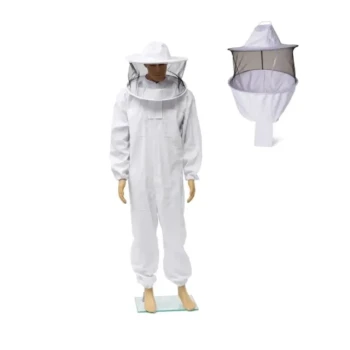
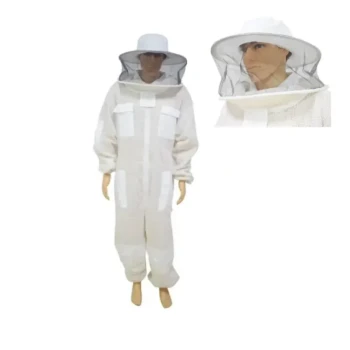
For commercial beekeepers, evaluate a suit as a complete protection system—not simply as a garment. The most important structural features are secure wrist, ankle, and neck seals; a properly supported veil with clear visibility; breathable, ventilated construction; smooth and durable outer fabric; and a roomy cut that preserves movement without reducing sting resistance. Full-body suits generally provide the most consistent protection, while jacket-and-overall systems can offer flexibility when correctly matched with gloves and boots.
The best commercial bee suit combines full coverage, reliable entry barriers, facial clearance, ventilation, and unrestricted movement. Buyers should assess how these features perform during long hive inspections, hot weather, repeated laundering, and daily professional use.
Start With Complete Body Protection
Full-body coverage reduces weak points
A full-body suit protects the torso, arms, legs, and neck as one integrated system. This minimizes gaps between separate garments where bees could enter during bending, lifting, or hive manipulation.
For commercial operations, full-body designs are often the most straightforward option for standardizing worker protection across different tasks and experience levels.
Layered alternatives require compatibility
A beekeeping jacket paired with heavy-duty overalls can be practical for experienced users or specific operating conditions. However, the jacket, trousers, gloves, and boots must overlap securely at every connection point.
A modular system should not be evaluated by individual components alone. The complete combination must prevent exposed skin when the wearer reaches, crouches, or handles equipment.
Examine the Suit’s Entry Barriers
Wrists, ankles, and neck need secure seals
Elasticized or snugly gathered cuffs at the wrists and ankles help prevent bees from crawling inside the suit. The neck closure must connect securely with the veil or hood to avoid a gap around the head and collar.
These details are small but operationally critical. A suit with strong fabric can still fail if its openings are poorly sealed.
Zippers and closures must withstand repeated use
Commercial suits experience frequent dressing, removal, washing, and field handling. Look for sturdy zippers and closures that operate smoothly while maintaining a continuous protective barrier.
The zipper arrangement should also be easy to inspect. Hidden defects, misalignment, or weak fastening points can create avoidable exposure during busy apiary work.
Evaluate the Veil as a Structural Component
Facial clearance matters more than mesh alone
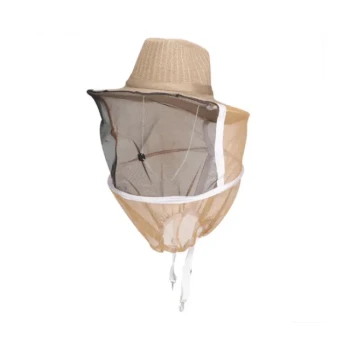
A structured veil should remain comfortably away from the face, eyes, ears, and mouth. This clearance reduces the likelihood that a bee can sting through mesh pressed against the wearer’s skin.
Integrated zip-up hoods or veils also help prevent bees from entering around the hairline and neck. The connection between the veil and suit should be secure and easy to verify before work begins.
Visibility must support precise hive work
The mesh should provide clear, unobstructed vision while maintaining reliable facial protection. Poor visibility can cause handling errors, slower inspections, and increased worker fatigue.
For commercial buyers, evaluate visibility in realistic conditions, including bright sunlight, shadows, and prolonged wear. A veil that protects well but restricts field of view may reduce productivity.
Veil materials need field durability
The veil should retain its shape and protective distance during normal movement and repeated use. Where operations involve intense sunlight, UV-resistant mesh can help support longer service life.
The mesh should also be securely joined to the hood or suit. Weak seams or poorly finished edges can compromise both durability and protection.
Assess Fabric and Construction Quality
Smooth fabric helps prevent snagging
A smooth outer texture makes it harder for bees to catch their feet or stingers on the material. It also reduces the risk of rough or coarse surfaces becoming a point of contact during handling.
Light-colored fabrics, particularly white or similar traditional shades, can help reflect solar heat and make bees clinging to the suit easier to identify before removal.
Durable materials must resist routine wear
Commercial suits should use heavy-duty fabric capable of withstanding active hive work and repeated movement. The material should maintain protective spacing rather than stretching tightly across the body.
Double-stitched seams are useful indicators of construction quality, especially at high-stress areas such as the shoulders, crotch, sleeve joins, and zipper locations.
Washability supports hygiene and operating continuity
Machine-washable construction can simplify laundering after exposure to sweat, dirt, wax, or propolis. Buyers should confirm that cleaning instructions are practical for commercial use and do not rapidly degrade the fabric, elastic, or veil.
For distributors and resellers, clear care instructions and consistent construction across sizes can reduce customer complaints and simplify after-sales support.
Prioritize Ventilation Without Creating Openings
Multi-layered ventilation reduces heat buildup
Ventilated or multi-layered mesh fabrics promote airflow through the suit and help reduce overheating during extended outdoor work. This is particularly important in warm climates, summer operations, and rooftop apiaries.
Ventilation should be distributed through the garment rather than concentrated in a way that creates uncomfortable pressure points or weak protective zones.
Breathability must coexist with sting resistance
A breathable suit is not automatically a protective suit. The fabric structure must preserve adequate separation from the skin and remain protective when the wearer moves, bends, or reaches.
The most suitable design balances airflow, fabric strength, and loose-fitting construction instead of maximizing ventilation at the expense of coverage.
Check Fit and Freedom of Movement
Roomy cuts improve both comfort and protection
A loose, roomy fit allows workers to move their arms, bend, lift, and manipulate frames without stretching the fabric tightly over the body. Tight garments can restrict movement and reduce the protective distance between the outer material and skin.
The suit should accommodate normal work clothing underneath without becoming excessively loose around openings or joints.
Movement should be tested in working positions
Evaluate the suit while reaching above shoulder height, crouching, leaning over a hive, and carrying equipment. These movements reveal whether the sleeves ride up, the trouser legs pull tight, or the veil shifts toward the face.
Sizing consistency is especially important for commercial fleets. A standardized size chart and broad size range can simplify purchasing for teams with varied body types.
Consider Operational Details
Pockets should support field tasks
Multiple pockets can hold small tools and accessories, reducing unnecessary trips away from the hive. They should be positioned so that contents do not interfere with bending, veil clearance, or safe movement.
Pocket openings must also avoid creating exposed gaps or loose flaps that can catch on equipment.
Gloves and boots complete the design
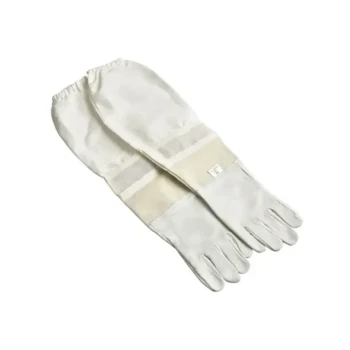
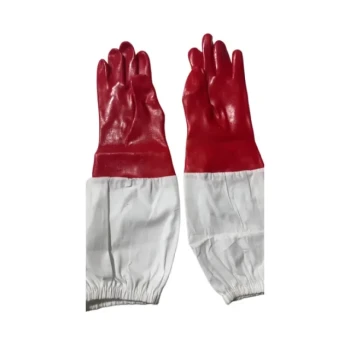
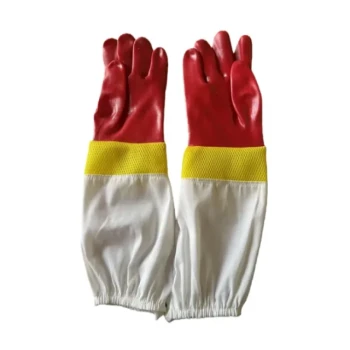
Protective gloves should overlap securely with the sleeve cuffs, while tall rubber boots should meet the trouser legs without leaving an exposed transition. These interfaces deserve the same attention as the main suit.
A full-body suit cannot compensate for poorly matched hand and footwear protection. Commercial packages should therefore be assessed as coordinated protective systems.
Color and finish affect field usability
Light-colored, smooth finishes support heat management and make stray bees easier to see. They also provide a consistent professional appearance for commercial teams and service providers.
Color should remain secondary to construction quality, however. A light-colored suit with weak seals or poor veil structure is still an inadequate choice.
Understanding the Trade-offs
Full-body suits offer consistency but less flexibility
Full-body suits generally simplify protection and reduce garment gaps. They may, however, be warmer or less convenient to remove than a jacket-and-overall configuration.
Modular apparel can improve flexibility, but it requires disciplined selection of compatible components and more attention to fit at every overlap.
Ventilation can increase complexity
Ventilated suits are valuable in hot working conditions, but their layered construction may affect weight, bulk, price, and laundering requirements. Buyers should verify that ventilation panels remain durable after repeated use.
The correct choice depends on the operating climate and work duration, not on ventilation claims alone.
More features can affect serviceability
Additional pockets, reinforced panels, complex closures, and integrated veils can improve function while increasing the number of components that may require repair. Commercial buyers should examine replacement options for veils, zippers, elastic, and other wear parts.
For wholesalers and distributors, dependable spare-part availability and responsive supplier support can be as important as the initial product specification.
Low price can conceal lifecycle costs
A lower purchase price may be offset by premature seam failure, degraded elastic, difficult cleaning, or poor size consistency. Commercial evaluation should consider durability, replacement frequency, worker comfort, and order reliability together.
How to Apply This to Your Project
Use a documented checklist when comparing products, and request samples or technical specifications before committing to a large commercial order.
- If your primary focus is maximum worker protection: Prioritize full-body coverage, integrated structured veils, durable fabric, sturdy zippers, and secure wrist, ankle, and neck seals.
- If your primary focus is hot-weather productivity: Choose multi-layered ventilated construction, light-colored fabric, clear UV-resistant veil mesh, and a roomy fit that preserves airflow.
- If your primary focus is operational flexibility: Consider a jacket-and-overall system only when the garments, gloves, and boots provide secure overlap during all working movements.
- If your primary focus is fleet standardization: Select suppliers offering consistent sizing, a broad product portfolio, repeatable quality, clear care instructions, and dependable order fulfillment.
- If your primary focus is long-term value: Compare seam construction, fabric durability, washability, replaceable components, customer service, and delivery reliability—not just unit price.
The right commercial suit is the one that keeps every protective layer secure, breathable, durable, and usable throughout the realities of daily apiary work.
Summary Table:
| Structural Feature | Why It Matters | Key Considerations |
|---|---|---|
| Full-body coverage | Minimizes gaps where bees can enter | Standardizes protection; consider jacket+overalls as coordinated system |
| Wrist, ankle, neck seals | Prevent bees from crawling inside | Secure elastic or gathers; zippers must withstand repeated use |
| Veil design | Keeps mesh away from face; clear vision | Structured or zip-up hood; secure connection; UV-resistant material |
| Fabric and construction | Resistance to snags and wear; hygiene | Smooth, light-colored, heavy-duty; double-stitched seams; machine-washable |
| Ventilation | Reduces heat stress during long work | Multi-layered mesh; must balance airflow with sting resistance |
| Fit and movement | Comfort and protection in working positions | Roomy cut; test in realistic movements; consistent sizing |
| Pockets and accessories | Convenience without compromising safety | Positioned to avoid interference; secure closures |
| Operational details | Overall usability and lifecycle costs | Glove/boot overlap; color; replaceable parts; supplier support |
Protect your team with our premium bee suits and full beekeeping equipment range. For commercial apiaries and distributors, HONESTBEE offers one-stop sourcing, rapid delivery, and responsive support. OEM/ODM available. Contact us today for tailored solutions!
Related Products
- Premium Cotton Beekeeper Suit with Reinforced Fencing Veil
- White Cotton Beekeeping Jacket and Veil for Bee Keepers
- Professional Beekeeping Suit for Kids and Girls Childrens Bee Keeper Suit
- Beekeeping Jacket with Hood and Veil for Beekeepers
- Professional Cotton Beekeeper Suit with Round Veil Design for Commercial Apiaries
People Also Ask
- What material and design specifications are recommended for a high-quality beekeeper suit? Top Gear Selection Guide
- How to Pre-treat Propolis Stains on Beekeeping Suits? Master Advanced Fabric Care and Soil Removal
- What features should be considered for sting protection in a beekeeping suit? Ensure Total Safety and Comfort
- What are the differences between full suits and jackets with veils in beekeeping? Choose Your Best Protection
- What features should be looked for in a beekeeping suit for maximum comfort? Prioritize Ventilation and Fit