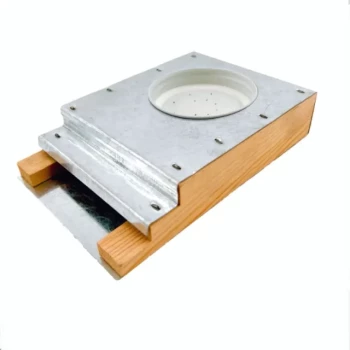
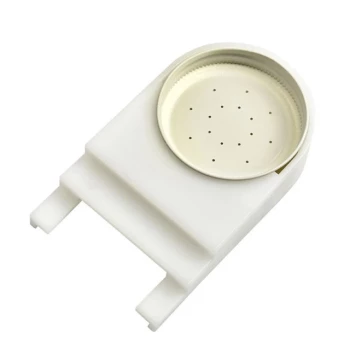
Doolittle-type feeders are utilized for probiotic administration because they are placed directly inside the hive, protecting the suspension from external environmental factors. This internal positioning ensures the precise delivery of specific concentrations to worker bees and larvae, facilitating efficient absorption that external methods cannot guarantee.
By isolating the feed from the outside world, Doolittle-type feeders treat the probiotic suspension as a controlled medication rather than simple nutrition. This maximizes biological activity and ensures the additive reaches the colony's digestive systems intact.
The Mechanics of Effective Delivery
Internal Placement for Maximum Uptake
The defining feature of a Doolittle-type feeder is its location inside the beehive.
Unlike external methods, this placement puts the nutrient source directly in the colony's core. This proximity allows worker bees to access the syrup immediately and continuously.
Targeting the Vulnerable
Effective probiotic treatment requires that the solution reaches not just the adult bees, but the developing brood.
Because the feeder is internal, nurse bees can quickly transport the specific concentrations of probiotics to the larvae. This ensures the additives are absorbed efficiently across the colony's varying life stages.
Protecting Biological Integrity
Shielding from Environmental Stress
Probiotics are living microorganisms that can be degraded by external variables.
Doolittle-type feeders prevent external environmental factors from interfering with the probiotic activity. By keeping the suspension inside the hive, you protect the solution from elements that might denature or weaken the additive before the bees consume it.
Precision in Dosing
In scientific and therapeutic contexts, knowing exactly what the bees are consuming is vital.
These feeders allow for the administration of syrup containing specific concentrations of additives. This precision makes them a critical tool for in vivo administration where dosage control is paramount.
Understanding the Trade-offs
The Cost of Disturbance
While Doolittle feeders offer superior delivery, they lack the convenience of entrance feeders.
Entrance feeders allow for monitoring without opening the hive, minimizing disturbance to the colony. To refill or check a Doolittle feeder, you must open the hive, which disrupts the colony's internal climate and routine.
Accessibility vs. Efficacy
Entrance feeders are excellent for general feeding because they are easy to access and feature built-in deterrents against robbing.
However, for sensitive biological treatments, convenience is secondary to efficacy. You trade the ease of the entrance feeder for the protection and absorption efficiency of the Doolittle feeder.
Making the Right Choice for Your Goal
When deciding between feeder types, align your choice with your specific objective for the colony.
- If your primary focus is general maintenance: Use entrance feeders to monitor feed levels easily and minimize hive disturbance.
- If your primary focus is probiotic treatment: Use Doolittle-type feeders to ensure the biological suspension is protected and absorbed efficiently by larvae.
Select the tool that prioritizes the biological needs of the treatment over the operational convenience of the beekeeper.
Summary Table:
| Feature | Doolittle-Type Feeder | Entrance Feeder |
|---|---|---|
| Placement | Internal (Inside the hive) | External (Hive entrance) |
| Probiotic Protection | High (Shielded from elements) | Low (Exposed to environment) |
| Target Audience | Adult bees and larvae | Primarily adult bees |
| Dosage Precision | High (Controlled concentrations) | Moderate |
| Colony Disturbance | High (Requires opening hive) | Low (Easy access) |
| Best Use Case | Biological treatments & probiotics | General syrup maintenance |
Maximize Your Colony’s Potential with HONESTBEE
At HONESTBEE, we understand that commercial success in beekeeping relies on precision and the right equipment. Whether you are a distributor looking to expand your catalog or a commercial apiary aiming to optimize health protocols, we provide the industrial-grade tools you need. From specialized Doolittle feeders and hive-making machinery to advanced honey-filling systems, our comprehensive wholesale offering ensures your operations remain efficient and productive.
Partner with HONESTBEE to access:
- High-performance beekeeping machinery and specialized hardware.
- A full spectrum of essential industry consumables and tools.
- Professional-grade equipment designed for large-scale probiotic administration.
Ready to elevate your beekeeping business? Contact us today to discuss your wholesale needs!
References
- Marcos Raúl Tejerina, Marcelo Rafael Benítez-Ahrendts. Strains of Lactobacillus spp. reduce chalkbrood in Apis mellifera. DOI: 10.1016/j.jip.2020.107521
This article is also based on technical information from HonestBee Knowledge Base .
Related Products
- In-Hive Dual Compartment Frame Bee Feeder for Targeted Colony Nutrition
- 3.5L Plastic Beehive Frame Feeder Deep Frame Water Feeder for In Hive Use
- Rapid Bee Feeder White Plastic 2L Round Top Feeder for 8 or 10-Frame Bee Hives
- Professional Hive Top Bee Feeder for Beekeeping
- Professional In-Hive Bee Feeder HONESTBEE Frame for Beekeeping
People Also Ask
- What are the advantages of using a frame feeder for bee colonies? Boost Growth and Prevent Robbing Efficiently
- Why should sugar syrup or dry sugar not be left out in the open when feeding bees? Avoid a Dangerous Feeding Frenzy
- What precautions should be taken when feeding bees inside the hive? Safeguard Your Colony from Robbing and Leaks
- How do in-hive feeders support honey bee colonies during autumn? Ensure Overwintering Success for Your Apiary
- Why is an in-hive feeder necessary for stimulatory feed? Protect Nano-Particle Integrity and Dosage Accuracy