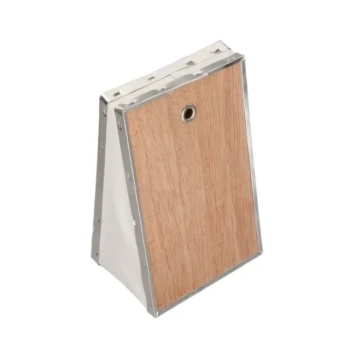
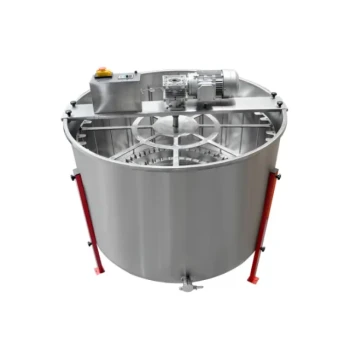
High-power bee blowers are utilized to resolve the critical bottleneck of separating bees from honey frames at speed. They employ high-velocity air currents to instantly displace bees, replacing labor-intensive manual methods that are unsustainable in large-scale operations.
The Core Utility: In industrial apiaries, the bee blower is not just a tool for removal, but an engine for efficiency and safety. It transforms honey harvesting from a slow, physically taxing manual process into a rapid, non-contact workflow that protects the physical health of the beekeeper while maximizing daily yield.
Accelerating Operational Workflow
The Speed Advantage
Time is the most valuable resource in commercial beekeeping. Traditional manual brushing or shaking requires handling frames individually, which creates a massive drag on productivity. High-power blowers utilize high-speed air currents to clear entire supers rapidly, drastically shortening the time required for field operations.
Streamlining Logistics
Efficient transport requires bee-free equipment. For large-scale apiaries, moving honey supers to a central processing facility requires that they be free of bees to maintain hygiene standards. Blowers ensure that supers entering the facility are "clean" immediately, facilitating a smooth transition from the field to the extraction line.
Enhancing Worker Health and Safety
Reducing Physical Strain
Manual harvesting is ergonomically hazardous. Traditional methods force beekeepers into strained postures, involving repetitive shaking and prolonged bending. This significantly increases the risk of static lumbar muscle loads and repetitive strain injuries to the upper limbs.
Eliminating Repetitive Motion
Automation preserves the workforce. By acting as an "efficiency accelerator," the blower removes the need for violent physical shaking of heavy frames. This reduction in physical exertion is essential for maintaining worker stamina and safety during high-volume harvest seasons.
Prioritizing Product and Colony Integrity
Harmless Physical Separation
Force without damage is the goal. The high-speed airflow provides a non-contact method of separation. Unlike brushes, which can roll or injure bees if used improperly, the air current effectively removes bees from the honey frames without harming the colony or the honeycomb structure.
Contactless Hygiene
Minimizing contact reduces contamination risks. Because the blower removes bees without touching them, it maintains a higher standard of hygiene. This ensures the honey remains pure and the frames remain intact for the extraction machinery.
Understanding the Trade-offs: Blowers vs. Escapes
Immediate vs. Passive Removal
Active removal puts the beekeeper in control. While "bee escapes" offer a passive way to clear supers using a one-way passage principle, they require time to function effectively. Blowers provide an immediate solution, allowing for instant removal and transport, which is often required in commercial schedules where waiting is not an option.
Making the Right Choice for Your Goal
To determine if high-power blowers fit your operational strategy, consider your primary constraints:
- If your primary focus is maximum throughput: Implement blowers to eliminate the time-consuming bottleneck of manual frame clearing.
- If your primary focus is workforce longevity: Adopt blowers to mitigate the risk of lumbar strain and repetitive motion injuries caused by manual shaking.
In industrial contexts, the bee blower is the standard for converting manual labor into scalable mechanical efficiency.
Summary Table:
| Feature | Manual Harvesting | Bee Blower Technology |
|---|---|---|
| Speed | Slow, individual frame handling | Rapid, multi-frame processing |
| Labor Intensity | High physical strain & lumbar load | Low; mechanical airflow does the work |
| Bee Safety | Risk of injury via brushing/shaking | Non-contact, harmless air separation |
| Hygiene | Higher contact risk | Contactless, "clean" super logistics |
| Operational Logic | Passive/Traditional | High-throughput Industrial |
Scale Your Honey Harvest with HONESTBEE Precision
Transitioning to industrial-scale beekeeping requires more than just tools—it requires high-performance machinery that protects your workforce and your colonies. HONESTBEE specializes in empowering commercial apiaries and distributors with a full spectrum of wholesale beekeeping solutions. From high-velocity bee blowers and automated honey-filling machines to advanced hive-making equipment, our portfolio is designed to convert manual labor into scalable mechanical efficiency.
Whether you are upgrading your extraction line or stocking a distribution network, our comprehensive range of machinery and industry consumables ensures your operation remains at the cutting edge. Partner with HONESTBEE today to enhance your harvest throughput and secure your operational success.
References
- Veli Öztürk, Mehmet Turgut. Bal Üreten İşletmelerde Maliyet Analizi, Türkiye Muhasebe Standartları Açısından İncelenmesi ve Maliyet Belirleme Üzerine Bir Örnek Uygulama (Cost Analysis of Honey Producing Property, Investigation of Turkey Accounting Standards and A Case Study on Cost . DOI: 10.20491/isarder.2016.171
This article is also based on technical information from HonestBee Knowledge Base .
Related Products
- Heavy Duty Manual Bee Smoker Blower for Beekeeping
- High Performance Cordless Electric Bee Shaker for Beekeeping
- Heavy-Duty Bee Smoker with Durable Plastic Bellows for Beekeeping
- Professional Replacement Bee Smoker Bellows for Beekeeping Equipment
- Professional Bee Smoker with Elongated Spout and Durable Bellows for Beekeeping
People Also Ask
- What are bee smokers made out of? Choose the Right Material for Your Apiary
- What are the advantages of a manual bee smoker? Enhance Hive Safety with Controlled Cool Smoke Technology
- What is the primary function of a manual bee smoker? Master Hive Control for Safe Inspections
- What is the proper technique for applying smoke to a beehive? Master Calm and Effective Hive Management
- What is the purpose of using a bee smoker for Small Hive Beetle inspections? Master Chemical Control & Hive Safety