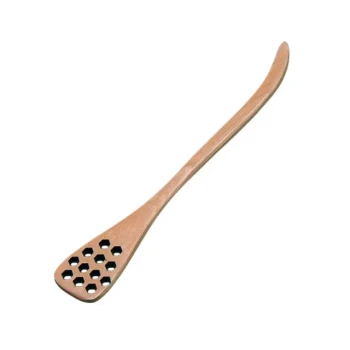
Wooden spoons are the preferred tool for harvesting royal jelly primarily because they are chemically inert relative to the substance's acidic nature. Royal jelly is a highly sensitive substance containing complex bioactive compounds that react negatively when placed in contact with metal, leading to oxidation and contamination. By using wood, harvesters prevent these chemical reactions, ensuring the jelly retains its purity, texture, and nutritional value.
Core Takeaway Royal jelly is naturally acidic and prone to rapid degradation when exposed to reactive materials. Using wooden tools prevents metal ion contamination and oxidation, specifically preserving the stability of critical nutrients like 10-HDA (royal jelly acid).
The Chemistry of Compatibility
The Acidity Factor
Royal jelly is not a neutral substance; it possesses a distinctly acidic pH.
Because of this acidity, it acts as a mild solvent. When it comes into contact with reactive surfaces, it can initiate chemical breakdown almost immediately.
Preventing Metal Reactivity
Metal tools, particularly those made of reactive metals like aluminum or lower-grade steel, are incompatible with acidic substances.
Contact with royal jelly can cause the metal to release ions. This results in metal ion contamination, which alters the flavor and compromises the safety of the harvest.
Stopping Oxidation
Oxidation is the enemy of potency. Metal acts as a catalyst for oxidative processes in royal jelly.
Using a wooden spoon eliminates this catalyst. It ensures the jelly remains chemically stable during the critical moments of extraction from the cell cups.
Preserving Bioactive Integrity
Protecting 10-HDA
The most valuable component of royal jelly is 10-HDA (royal jelly acid). This is the marker used to determine the quality and authenticity of the product.
Research indicates that metal contact can degrade 10-HDA. Wood maximizes the preservation of this specific biological activity, ensuring the final product meets high-quality standards.
Maintaining Physical Texture
Beyond chemistry, the material impacts the physical state of the jelly.
Chemical reactions with metal can lead to spoilage that alters the jelly's consistency. Wood helps maintain the natural, creamy texture expected of fresh royal jelly.
Understanding the Trade-offs
The Limitations of Wood
While wood is superior to metal chemically, it is not without physical flaws.
Wood is porous and absorptive. Over time, it can trap moisture and organic matter, making sterilization difficult compared to non-porous materials.
The Superior Alternative: Glass or Plastic
While the traditional preference is wood over metal, modern practices often utilize glass or high-grade plastic spatulas.
Glass is chemically inert like wood but offers a smoother, non-porous surface. This allows for cleaner scraping and better hygiene, minimizing product loss even more effectively than wood.
Making the Right Choice for Your Goal
Selecting the right tool depends on your specific harvesting environment and the materials you have available.
- If your primary focus is Avoiding Contamination: Choose wood or glass to ensure the acidic jelly does not leach ions from metal tools.
- If your primary focus is Maximizing Nutrient Potency: Avoid metal entirely to protect the sensitive 10-HDA content from oxidation.
- If your primary focus is Hygiene and Longevity: Consider a glass spatula, which offers the chemical safety of wood without the porosity issues.
Ultimately, the exclusion of metal tools is the single most important factor in preserving the biological activity of royal jelly.
Summary Table:
| Feature | Wooden/Glass Tools | Metal Tools |
|---|---|---|
| Chemical Reactivity | Inert / Non-reactive | Highly reactive with acids |
| Acidity Compatibility | Ideal for low pH | Causes ion leaching |
| Oxidation Risk | Minimal | High (acts as a catalyst) |
| Nutrient Preservation | Protects 10-HDA potency | Causes rapid degradation |
| Texture Maintenance | Maintains creamy consistency | Can lead to spoilage/discoloration |
Maximize Your Harvest Quality with HONESTBEE
At HONESTBEE, we understand that commercial success in royal jelly production depends on preserving every drop of its bioactive potency. As a leading partner for commercial apiaries and distributors, we provide the specialized tools necessary to maintain industry-leading standards.
From high-grade inert harvesting spatulas to professional-grade hive-making and honey-filling machinery, our comprehensive wholesale portfolio is designed to scale your operations. Whether you are sourcing essential industry consumables or looking for honey-themed cultural merchandise to expand your brand, we deliver the hardware and expertise you need.
Ready to upgrade your apiary equipment? Contact us today to discuss our wholesale offerings and discover how HONESTBEE can enhance your production efficiency.
References
- A. Hussain, Amr Badwy. Effect of Different Seasons on the Royal Jelly Production Under Nasr City Conditions – Cairo - Egypt. DOI: 10.21608/eajbsa.2020.110603
This article is also based on technical information from HonestBee Knowledge Base .
Related Products
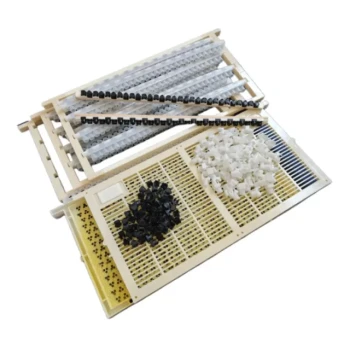
- No Grafting Queen Rearing Kit: System for Royal Jelly Production and Queen Rearing
- Modern Honeycomb Pattern Wooden Honey Dipper for Stirring and Drizzling
- Plastic Chinese Queen Grafting Tool for Bee Queen Rearing
People Also Ask
- What is the primary function of a queen rearing kit? Eliminate Manual Grafting for Superior Bee Breeding
- How do specialized queen rearing kits and queen management tools improve the success rate of bee colony expansion?
- What are some alternative methods to grafting for queen cell production? Discover Graft-Free Queen Rearing Systems
- Are queen rearing systems generally suitable for all honeybee species? Master Efficient Breeding Methods
- Are queen rearing systems suitable for all beekeepers? Modern Tools for Every Experience Level