A 45-degree blade inclination is optimal because it generates the precise penetration force needed to access deep-seated honey cells. Unlike shallower angles, this specific inclination allows the blade to cut effectively into low-set areas with minimal frictional resistance, enabling a rapid processing cycle of approximately 22 seconds.
Effective honey scraping requires a balance between speed and depth; a 45-degree angle ensures the blade reaches irregular, low-set cells that shallower angles miss, without slowing down the operation.
The Mechanics of Penetration Force
Overcoming Surface Irregularities
Honeycombs are rarely perfectly uniform surfaces. Low-set or deep-seated cells present a significant challenge for automated scraping units.
If a blade is set at a shallow angle, such as 15 or 30 degrees, it tends to skim over these depressions. The 45-degree angle provides the necessary "bite" to penetrate these lower sections, ensuring the cells are actually opened.
The Physics of the Cut
The geometry of the blade interaction is critical for efficiency. At 45 degrees, the blade achieves the ideal cutting depth.
This angle directs enough force downward to pierce the wax capping but maintains enough forward momentum to slice cleanly. This prevents the blade from skipping over tough wax or digging in too aggressively and damaging the comb structure.
Efficiency and Cycle Speed
Minimizing Frictional Resistance
One might assume that a deeper cut generates significantly more drag, but the 45-degree setup is optimized to counter this.
The primary reference indicates that this specific angle results in minimal frictional resistance during the cut. By reducing drag, the machinery undergoes less stress and maintains a consistent speed throughout the operation.
Optimizing Throughput
The combination of effective penetration and low resistance directly impacts production speed.
With the blade set to this inclination, the entire honey scraping process can be completed in roughly 22 seconds per cycle. This speed allows for high-volume processing without sacrificing the thoroughness of the uncapping.
Understanding the Trade-offs
The Limitations of Shallower Angles
It is important to understand why the industry moves away from flatter angles like 15 or 30 degrees.
While a shallower angle might theoretically reduce the risk of gouging the cell walls, it lacks the vertical force component needed for thoroughness. Using these angles often results in untouched low-set cells, requiring manual rework or resulting in wasted honey that remains trapped in the comb.
Precision vs. Speed
The 45-degree angle is a calculated compromise. It prioritizes a universal fit for varying comb depths.
While it is highly efficient, it relies on the consistency of the frame. If frames are severely warped beyond the norm, the standard 45-degree cut may still require operator oversight, though it remains statistically superior to other fixed angles.
How to Apply This to Your Project
If your primary focus is Maximum Extraction Yield:
- Ensure your equipment is calibrated strictly to 45 degrees to verify that low-set and deep-seated cells are fully opened.
If your primary focus is Processing Speed:
- Maintain the 45-degree standard to leverage the minimal frictional resistance, keeping your cycle times close to the 22-second benchmark.
Adopting the 45-degree inclination standardizes your process, ensuring you are not leaving honey behind in deep cells or wasting time on inefficient cutting mechanics.
Summary Table:
| Feature | 15° - 30° Shallow Angles | 45° Optimal Angle |
|---|---|---|
| Deep-Set Cell Access | Poor (skims over depressions) | Excellent (precise penetration) |
| Frictional Resistance | Low, but ineffective | Minimal and balanced |
| Cycle Speed | Slower (requires rework) | Rapid (~22 seconds) |
| Cutting Force | Primarily horizontal | Perfect vertical/forward balance |
| Result | Wasted honey in low-set cells | High-yield, clean extraction |
Maximize Your Honey Production with HONESTBEE
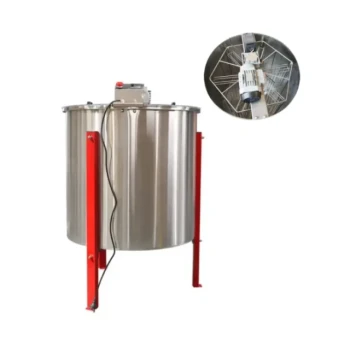
At HONESTBEE, we understand that every second and every drop of honey counts for commercial apiaries and distributors. Our professional-grade honey-filling machines and specialized beekeeping tools are engineered with precision—incorporating the physics of optimal cutting angles to ensure high-volume processing with minimal waste.
Whether you need robust machinery for high-speed uncapping or essential industry consumables, HONESTBEE provides the comprehensive wholesale solutions your business requires. Contact us today to discover how our advanced beekeeping equipment can streamline your operations and enhance your extraction yield!
References
- M. A. Al-Rajhi. An Innovative Unit for Scraping Honeycombs. DOI: 10.21608/jssae.2019.43215
This article is also based on technical information from HonestBee Knowledge Base .
Related Products
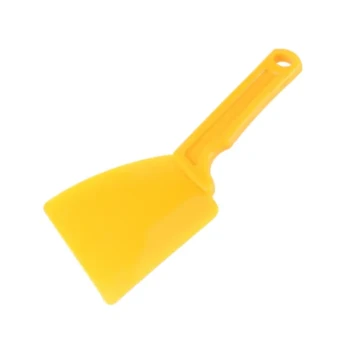
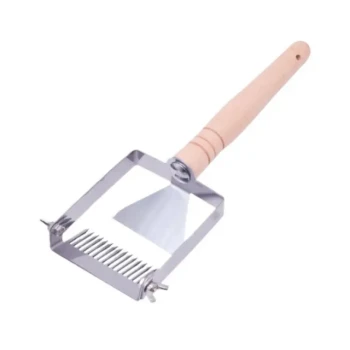
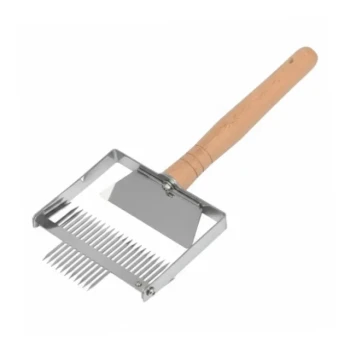
- Professional Wide Blade Honey Scraper for Beekeeping and Honey Processing
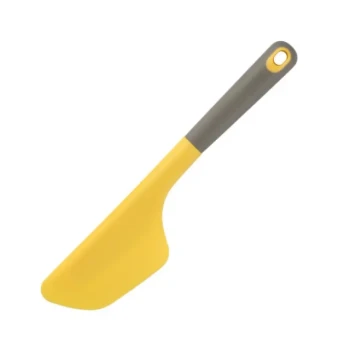
- Professional Long-Handled Silicone Honey Scraper for Beekeeping
- Professional Honey Scraper for Efficient Apiary Maintenance
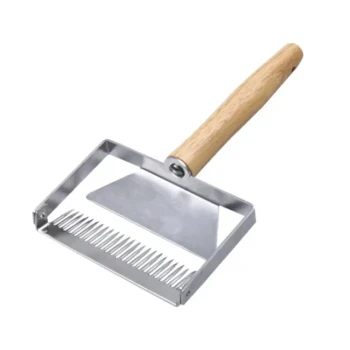
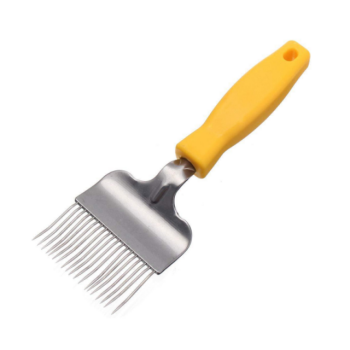
- Extra Wide Stainless Steel Honey Uncapping Fork with Scraper Beekeeping Tool
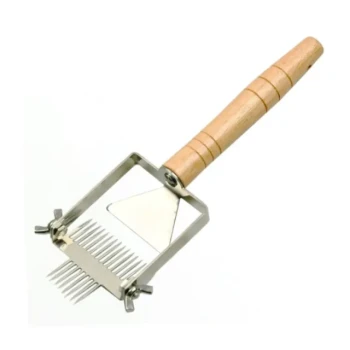
- Wide Adjustable Stainless Steel Honey Uncapping Fork with Scraper
People Also Ask
- What tools and machinery are essential to resolve common operational constraints such as equipment shortages and improper honey harvesting? Discover the complete honey-harvesting equipment lineup for commercial apiaries and distributors.
- How does environmental temperature control influence the efficiency of honey scraping equipment? Optimize Your Flow
- What operational considerations are critical during honey harvesting, and how do specialized honey processing tools add value to the final product? Optimize Quality and Yield
- What are the core functions of a honey processor? Master Moisture Control and Purification for Quality Honey
- What are the technical requirements for beekeeping equipment used in the production of comb honey compared to filtered honey?