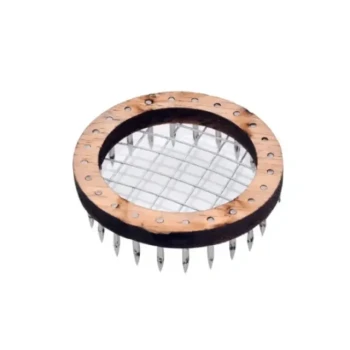
The precision of a 355 to 390-micron mesh aperture is the technical benchmark for pollination isolation because it balances biological exclusion with environmental stability. This specific range is engineered to physically block pollinators like honeybees and prevent the drift of unwanted exogenous pollen while maintaining the airflow and light transmission necessary for plant health.
This aperture range serves as a critical selective barrier, ensuring the genetic purity of botanical experiments by excluding external biological factors without compromising the internal micro-environment of the cage.
The Science of Biological Exclusion
Precise Pollinator Blocking
The 355 to 390-micron range is specifically sized to stop honeybees (Apis mellifera) and other common pollinators from entering the isolation area. It acts as a definitive physical wall that prevents both the insects and the mechanical transfer of pollen they carry.
Maintaining Scientific Integrity
For seed production and genetic research, preventing cross-contamination from "foreign" or exogenous pollen is the highest priority. These precise polymer grids ensure that the experimental results remain untainted by outside genetic material.
Optimizing the Internal Micro-environment
Maximizing Air Permeability
Plants inside isolation cages are susceptible to heat stress and fungal pathogens if the air becomes stagnant. An aperture of 355 to 390 microns provides high air permeability, allowing for natural gas exchange and moisture regulation.
Optimized Light Transmission
Experimental crops require specific light spectra for healthy photosynthesis and growth. This mesh size is designed to minimize light attenuation, ensuring that the shading effect does not lead to "leggy" plants or skewed research data.
Strategic Value for B2B Resellers
Professional Industry Expertise
Distributors who stock specific micron-rated grids position themselves as technical partners rather than simple commodity vendors. This level of detail appeals to high-end research facilities and commercial agricultural firms that demand exact specifications.
Comprehensive Portfolio Management
Sourcing these specialized grids from a "one-stop" provider allows wholesalers to offer a full-spectrum product line. This reduces procurement complexity and ensures that your clients have immediate access to the exact tools required for their seasonal windows.
Understanding the Trade-offs
Filtration vs. Environmental Health
While a smaller aperture might block even finer particles, it would significantly restrict airflow and increase internal temperatures. The 355-390 micron range is a calculated compromise that prioritizes the plant's physiological health over absolute microscopic filtration.
Material Durability and Precision
Polymer grids must maintain their aperture size even under environmental stress such as UV exposure or wind. If the material stretches or degrades, the "precision" is lost, which is why sourcing high-quality polymers is more important than price alone.
Optimizing Your Inventory for Professional Clients
To best serve your client base, consider how these technical specifications align with their specific operational goals:
- If your primary focus is Scientific Research: Emphasize the 355-390 micron range as the industry standard for maintaining zero-breach pollinator isolation and data purity.
- If your primary focus is Supply Chain Reliability: Highlight your ability to provide rapid response times and ultra-fast delivery on these specialized mesh sizes to meet tight agricultural deadlines.
- If your primary focus is Customer Service: Use your technical expertise to guide clients on the benefits of micro-environment management, helping them achieve better crop yields and experimental outcomes.
Providing the right technical specifications with efficient fulfillment is the key to building long-term trust in the professional agricultural market.
Summary Table:
| Key Factor | Impact of 355-390μm Aperture | Research & Commercial Benefit |
|---|---|---|
| Biological Barrier | Blocks honeybees & unwanted pollen | Ensures 100% genetic purity and data integrity |
| Air Permeability | High natural gas exchange | Prevents heat stress and fungal pathogens |
| Light Transmission | Minimal spectral attenuation | Promotes healthy photosynthesis and growth |
| Material Integrity | UV-resistant precision polymer | Maintains exact aperture size under environmental stress |
Partner with HONESTBEE for Premium Agricultural Solutions
Elevate your inventory with technical-grade components designed for precision. HONESTBEE is a leading one-stop sourcing partner for commercial apiaries and B2B distributors worldwide. We provide a full-spectrum product portfolio, including specialized pollination grids, hive-making machinery, and industrial honey-filling equipment.
Why choose HONESTBEE?
- Industry Expertise: Technical support for high-end research and agricultural requirements.
- Supply Reliability: Rapid response times and ultra-fast fulfillment to meet seasonal demands.
- Wholesale Value: Competitive profit margins and OEM/ODM support tailored to your brand.
Ready to streamline your procurement and offer superior quality to your clients?
Contact our team today to explore our wholesale offerings!
References
- Sultan Saurov, Chief researcher of AgroInnovaConsalt LLP. BUCKWHEAT: AN ESSENTIAL CROP FOR A SUSTAINABLE NECTAR-BEARING CONVEYOR IN THE STEPPE ZONE OF THE AKMOLA REGION. DOI: 10.52269/ntdg2541156
This article is also based on technical information from HonestBee Knowledge Base .
Related Products
People Also Ask
- When is a queen introduced with a push-in cage ready for full release? Key Signs for Maximum Colony Acceptance
- How are queen cages used to protect newly hatched queens? Secure Your Virgin Queens During Development
- Why are queen cages or grid cages used in bee studies? Achieve Precise Biological Data for Research
- What advantages do push-in queen cages offer? Boost Acceptance Rates for Artificially Inseminated Queens
- What is a push-in queen cage and how does it differ from a standard queen cage? Boosting Your Queen Acceptance Rates