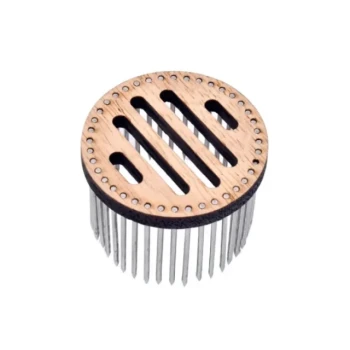
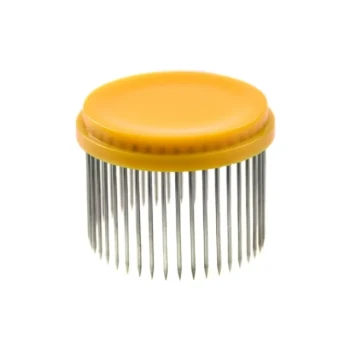
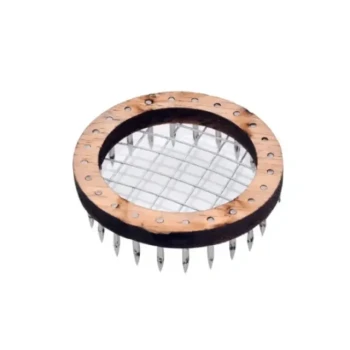
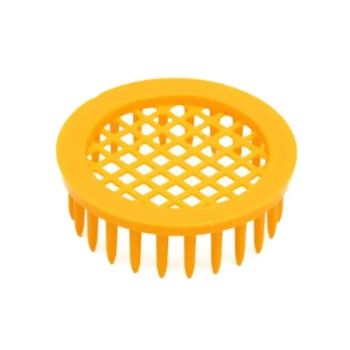
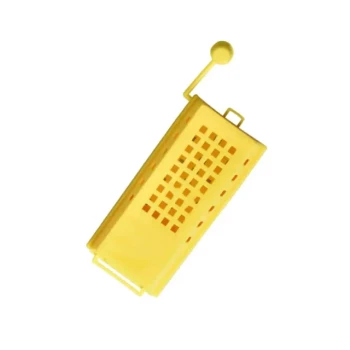
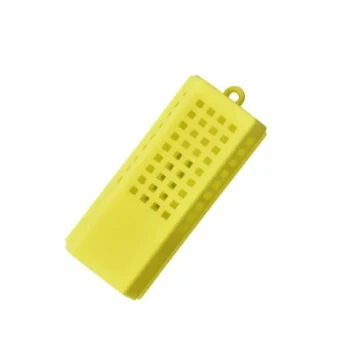
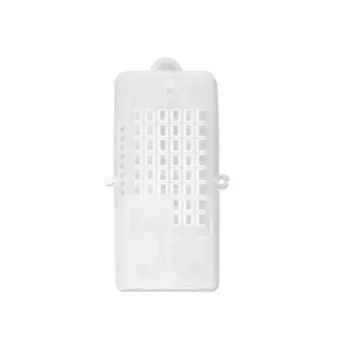
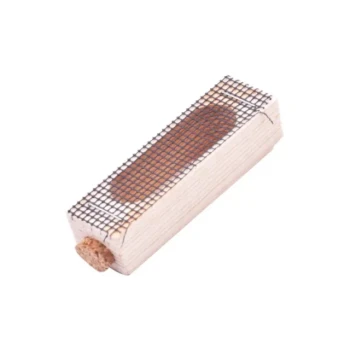
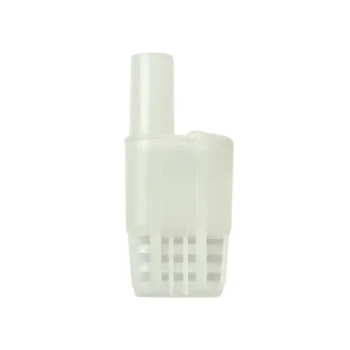
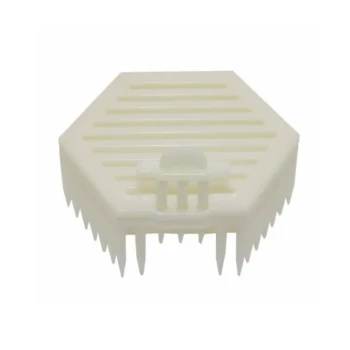
Push-in queen cages significantly increase the acceptance rate of artificially inseminated queens by allowing them to be installed directly over a patch of emerging brood on the comb. Unlike standard cages that isolate the queen in an artificial environment, push-in cages provide immediate access to natural food stores within the cells and facilitate early social contact with young nurse bees while maintaining physical protection.
The core advantage of the push-in cage is that it transitions the queen from isolation to integration within the colony's natural context, rather than introducing her as a complete outsider in a foreign vessel.
The Biological Advantages of Push-In Cages
Immediate Environmental Integration
The primary benefit of the push-in cage is its placement directly onto the honeycomb.
Because the cage covers actual cells, the queen has direct access to honey and pollen stored in the comb. This eliminates the reliance on artificial sugar candy or manual feeding often required in standard transport cages.
Early Contact with Nurse Bees
The most critical feature described in the primary reference is the inclusion of emerging brood under the cage.
As young bees emerge from their cells inside the cage, they immediately encounter the queen. These young bees are generally less aggressive and more accepting than older foragers, allowing the queen to establish a small, safe retinue before being released to the wider colony.
Enhanced Pheromonal Exchange
Success in introducing artificially inseminated queens often hinges on scent.
The push-in mechanism combines physical isolation with effective pheromonal exchange. The mesh allows the colony's scent to permeate the cage, while the use of scented syrups can further mask foreign odors, smoothing the transition and reducing the likelihood of rejection.
Contrast with Standard Cages
Limitations of Standard Wooden Cages
Standard wooden cages are designed primarily for transport, banking, and total isolation.
As noted in the supplementary references, these cages create an independent physical space designed to prevent fatal conflicts and allow for the manual addition of supplements like sugar candy. While effective for survival during shipping or banking, they do not simulate a natural hive environment.
The Missing Social Element
Standard cages limit the queen's social interactions to a few attendant worker bees included manually.
This configuration simulates a basic survival environment rather than a functional colony unit. For high-value artificially inseminated queens, this lack of natural integration can increase the risk of the colony viewing the queen as an intruder upon release.
Understanding the Trade-offs
Installation Complexity
While push-in cages offer superior acceptance rates, they require more effort to install than standard cages.
You must identify an appropriate frame with emerging brood and food, and physically press the cage into the wax. Standard cages, by comparison, are simply hung between frames or placed at the entrance.
Disruption to the Comb
The push-in method is invasive to the physical structure of the hive.
Pressing the cage into the comb can damage the wax and potentially injure brood if not done with precision. Standard cages are self-contained and do not alter the comb structure.
Making the Right Choice for Your Goal
For high-value genetics, the method of introduction is just as critical as the breeding process itself.
- If your primary focus is introducing a high-value AI queen: Prioritize the push-in cage to maximize acceptance through immediate contact with emerging brood and natural food sources.
- If your primary focus is shipping or banking multiple queens: Utilize standard wooden cages to ensure independent physical isolation and prevent fatal conflicts during transport.
The push-in cage moves beyond simple protection, acting as a nursery that acclimatizes the colony to the queen before the physical barriers are removed.
Summary Table:
| Feature | Push-In Queen Cages | Standard Wooden Cages |
|---|---|---|
| Primary Use | Hive Introduction & Integration | Shipping, Banking & Transport |
| Food Source | Natural comb (honey/pollen) | Artificial sugar candy |
| Social Contact | Immediate (via emerging brood) | Limited to manual attendants |
| Acceptance Rate | Significantly higher for AI queens | Moderate (higher rejection risk) |
| Installation | Requires frame selection/pressing | Simple hanging/placement |
| Comb Impact | Potential minor wax damage | Non-invasive |
Secure Your High-Value Genetics with HONESTBEE
At HONESTBEE, we understand that every artificially inseminated queen represents a significant investment for your apiary. As a leading global supplier for commercial apiaries and distributors, we provide the professional-grade tools you need to ensure successful colony integration.
Our comprehensive wholesale portfolio includes:
- Precision Beekeeping Tools: From high-acceptance push-in cages to specialized hive-making machinery.
- Commercial Equipment: Honey-filling machines and industrial-scale processing hardware.
- Industry Consumables: A full spectrum of essential supplies for large-scale operations.
Don't leave your queen's acceptance to chance. Partner with HONESTBEE for the specialized equipment and expertise your business deserves.
Contact Our Wholesale Team Today to discuss your equipment needs and elevate your beekeeping efficiency.
References
- Ségolène Maucourt, Pierre Giovenazzo. Observation of Genetic Gain with Instrumental Insemination of Honeybee Queens. DOI: 10.3390/insects14030301
This article is also based on technical information from HonestBee Knowledge Base .
Related Products
- Premium Wood and Steel Push In Queen Cage
- Professional Round Push-In Queen Cage with Metal Tines
- Wood and Mesh Push-In Queen Cage
- Durable Plastic Push In Queen Bee Cage
- JZBZ Style Push-In Cell Protector for Professional Queen Rearing Kits
People Also Ask
- What is a push-in queen cage and how does it differ from a standard queen cage? Boosting Your Queen Acceptance Rates
- What is a push-in queen cage and how does it differ from standard cages? Achieve Higher Queen Acceptance Rates
- How can a beekeeper obtain a push-in queen cage? DIY vs. Professional Sourcing Guide
- When is a queen introduced with a push-in cage ready for full release? Key Signs for Maximum Colony Acceptance
- What is the step-by-step process for marking a bee using a push-in cage? Safe and Precise Queen Marking Guide