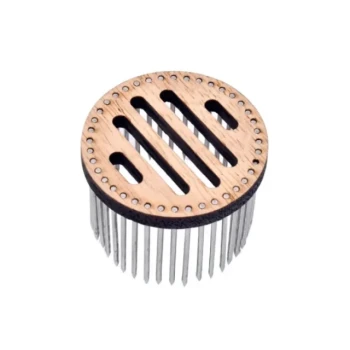
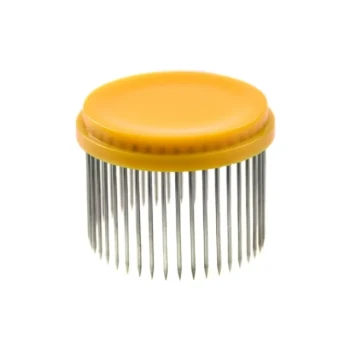
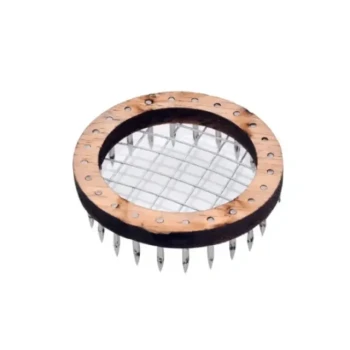
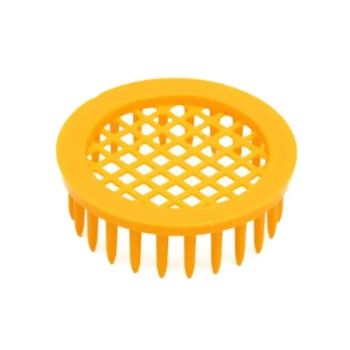
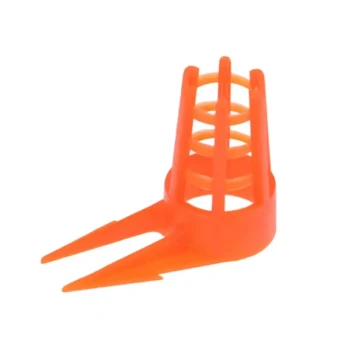
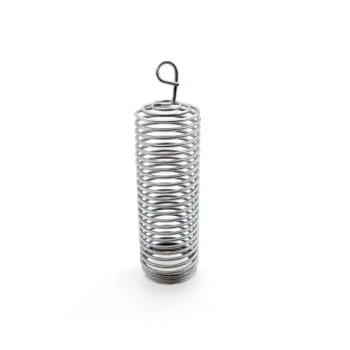
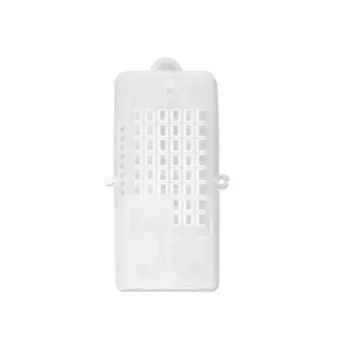
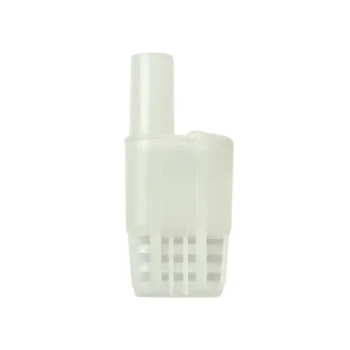
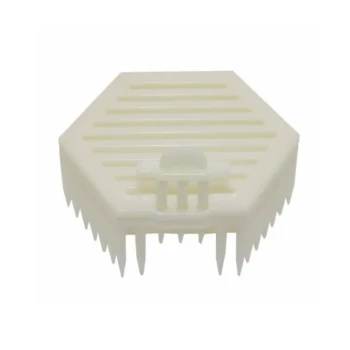
A push-in queen cage is a specialized introduction device designed to fit over a section of comb, allowing a new queen to lay eggs while remaining protected from the colony. Unlike a standard cage, which completely confines the queen within a wire or plastic box, the push-in cage creates a secure zone directly on the comb where the queen can behave naturally before full release.
The critical distinction is biological integration. While standard cages rely solely on pheromone acclimation, push-in cages allow the queen to begin laying eggs immediately, significantly increasing her acceptance rate by demonstrating her value to the colony before full contact.
The Baseline: How Standard Cages Work
Total Confinement
The standard queen cage is the most widely used device for introduction. It typically consists of a wire mesh enclosure with a metal frame and a clip.
Suspension Mechanism
To use this device, the beekeeper inserts the queen and secures the cage, often hanging it between frames or placing it near the hive entrance. The queen is suspended in the hive but is physically isolated from the comb and the colony's infrastructure.
Reliance on Pheromones
The success of a standard cage depends entirely on scent. A sliding screen allows worker bees to smell the new queen and adjust to her pheromones, but she cannot perform her primary function—egg laying—while confined.
The Push-In Advantage: Function over Form
Access to the Comb
As the name implies, a push-in cage is physically pressed into the wax comb. It encloses a specific area of the frame, trapping the queen against the comb rather than inside a suspended box.
The Biological Trigger
Because the queen has access to open cells within this enclosure, she can begin laying eggs immediately. This is the fundamental functional difference between the two methods.
Increased Acceptance
A queen that is already laying eggs is significantly more desirable to a colony than one that is not. By the time the beekeeper releases the queen from a push-in cage, she has already established herself as a productive mother, making the introduction safer and more reliable.
Understanding the Trade-offs
Availability and Construction
Standard cages are ubiquitous and come pre-packaged with almost every purchased queen. Push-in cages are less common; beekeepers often must purchase them separately as specialized equipment or construct them manually using hardware cloth.
Installation Complexity
Using a standard cage is a simple matter of placement. A push-in cage requires more technique: you must identify a suitable patch of comb (ideally with some nectar or hatching brood) and securely seat the cage into the wax to prevent workers from burrowing under.
Making the Right Choice for Your Goal
Choosing the right tool depends on the value of the queen and your tolerance for risk.
- If your primary focus is maximum success rates: Use a push-in cage, as the act of egg-laying creates the strongest possible biological bond with the new colony.
- If your primary focus is convenience: Stick to the standard cage, which is sufficient for most routine introductions and requires no fabrication or specialized placement.
The extra effort required to use a push-in cage provides the highest level of insurance against queen rejection.
Summary Table:
| Feature | Standard Queen Cage | Push-In Queen Cage |
|---|---|---|
| Design | Suspended wire/plastic box | Mesh frame pressed into wax comb |
| Queen Activity | Completely confined; no laying | Access to comb; allows immediate egg-laying |
| Acceptance Basis | Pheromone acclimation only | Pheromones + biological proof of productivity |
| Ease of Use | High (simple placement) | Moderate (requires specific comb selection) |
| Best For | Routine introductions | High-value queens and difficult introductions |
Elevate Your Beekeeping Success with HONESTBEE
At HONESTBEE, we understand that successful queen introduction is the heartbeat of a productive apiary. Whether you are a commercial beekeeper looking for high-performance queen management tools or a distributor seeking reliable supplies, we offer a comprehensive wholesale portfolio tailored to your needs. From specialized push-in cages and hive-making machinery to essential consumables and honey-themed merchandise, we provide the quality hardware and expertise to grow your business.
Ready to scale your operations with professional-grade equipment?
Contact HONESTBEE today to explore our full spectrum of beekeeping tools and machinery.
Related Products
- Premium Wood and Steel Push In Queen Cage
- Professional Round Push-In Queen Cage with Metal Tines
- Wood and Mesh Push-In Queen Cage
- Durable Plastic Push In Queen Bee Cage
- JZBZ Style Push-In Cell Protector for Professional Queen Rearing Kits
People Also Ask
- What advantages do push-in queen cages offer? Boost Acceptance Rates for Artificially Inseminated Queens
- What is a push-in queen cage and how does it differ from standard cages? Achieve Higher Queen Acceptance Rates
- How can a beekeeper obtain a push-in queen cage? DIY vs. Professional Sourcing Guide
- When is a queen introduced with a push-in cage ready for full release? Key Signs for Maximum Colony Acceptance
- What is the step-by-step process for marking a bee using a push-in cage? Safe and Precise Queen Marking Guide