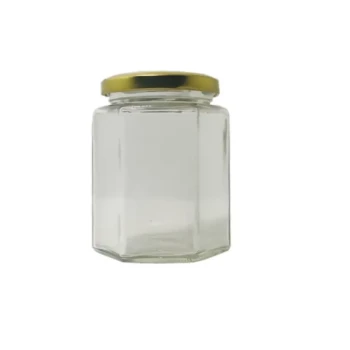
Sample integrity is the single most critical factor in obtaining a reliable diagnosis for Varroosis. A well-sealed glass container is required primarily to prevent the escape of live bees or Varroa mites during transport, ensuring the sample analyzed in the laboratory exactly matches the conditions found in the hive.
By preventing the loss of biological material and blocking external contaminants, a sealed glass container secures the mathematical accuracy of infestation rates while maintaining strict biological safety protocols.
Securing Diagnostic Accuracy
Preventing Sample Loss
The primary function of the sealed container is containment. Varroa mites are small and mobile, and live bees are active; without a secure seal, mites can easily fall out or bees can escape during transit.
If any portion of the sample is lost, the resulting data becomes useless. The laboratory relies on a precise count of both host (bees) and parasite (mites) to calculate the infestation rate.
Guaranteeing Accurate Ratios
Diagnosis often relies on determining a percentage of infestation (e.g., mites per 100 bees). A sealed environment locks in this ratio at the moment of collection.
If mites escape but bees remain, the infestation level will appear artificially low. If bees escape but mites remain in the jar, the level may appear artificially high.
Biological Safety and Purity
Excluding External Contaminants
Laboratory environments require samples to be free from "noise." A well-sealed glass container acts as a barrier against external impurities such as dust, pollen, or other insects that could enter an open vessel.
Contamination can obscure microscopic examination or introduce foreign biological agents that complicate the diagnosis.
Maintaining Biosafety
Transporting parasitic organisms requires adherence to safety standards. The sealed container ensures that the biological hazard is contained throughout the journey from the apiary to the lab bench.
This prevents the accidental spread of Varroa mites or associated pathogens to other environments or samples during the logistics process.
Distinguishing Methods: A Critical Distinction
Sealed vs. Mesh Containers
It is vital not to confuse transport protocols with field testing methods.
While a sealed glass container is required for laboratory submission, field diagnostic methods like the "sugar shake" utilize jars with mesh lids.
The Role of Mesh in Field Tests
In the sugar shake method, the mesh lid allows powdered sugar and dislodged mites to fall through into a collection tray while keeping the bees inside.
This is a mechanical separation process, not a transport method. Attempting to transport samples in mesh-lidded jars risks the loss of mites, which would invalidate a subsequent laboratory diagnosis.
Making the Right Choice for Your Goal
To ensure your data is valid and your protocols are safe, match your containment method to your objective.
- If your primary focus is laboratory diagnosis: Use a strictly sealed glass container to prevent the escape of mites or bees and ensure the infestation rate is calculated accurately.
- If your primary focus is immediate field estimation: Use a container with a mesh lid (such as for a sugar shake) to physically separate and count mites on-site without harming the bees.
True diagnostic precision begins the moment the lid is secured.
Summary Table:
| Feature | Sealed Glass Container (Lab) | Mesh-Lidded Jar (Field) |
|---|---|---|
| Primary Use | Laboratory Diagnostic Submission | Immediate Field Estimation (e.g., Sugar Shake) |
| Function | Total containment of bees and mites | Mechanical separation of mites from bees |
| Sample Integrity | High - Prevents loss of biological material | Variable - Risk of mite loss during transport |
| Biosafety | High - Prevents spread of pathogens | Low - Not suitable for long-distance transport |
| Metric Accuracy | Essential for precise infestation ratios | Used for quick on-site thresholds |
Maximize Your Colony Health with HONESTBEE Precision Equipment
At HONESTBEE, we understand that accurate diagnosis is the cornerstone of successful commercial beekeeping. Whether you are a large-scale apiary or a global distributor, we provide the high-quality tools necessary to maintain sample integrity and hive productivity.
Our comprehensive wholesale portfolio includes:
- Specialized Beekeeping Hardware: From hive-making machinery to precise honey-filling solutions.
- Essential Consumables: Professional-grade containers and tools for secure biological sampling.
- Advanced Machinery: Innovative equipment designed to scale your operations efficiently.
Partner with HONESTBEE to access premium beekeeping tools and industry-leading expertise that safeguard your honey production and business growth.
Ready to elevate your apiary's standards? Contact us today to explore our wholesale offerings!
References
- Mirjana Bojanić-Rašović, Mirjana Joksimović-Todorović. Measures to protect bee health against varroosis in Montenegro. DOI: 10.5937/aaser1846177b
This article is also based on technical information from HonestBee Knowledge Base .
Related Products
- Hexagonal Glass Honey Jars with Metal Lug Caps Elegant Versatile Packaging
- Hexagonal Glass Honey Jar with Wooden Lid Integrated Dipper Elegant Functional Storage
People Also Ask
- What is the aesthetic appeal of using glass jars for honey? Elevate Your Brand with Premium Packaging
- What are the logistical challenges associated with using glass jars for honey packaging? Navigating Weight & Fragility
- What are the advantages of glass containers for honey? Elevate Quality and Market Value with Premium Packaging
- What are the technical advantages of using glass jars for honey? Master Commercial Packaging for Premium Purity
- What are the advantages of using glass jars for honey packaging? Preserve Purity & Elevate Your Brand