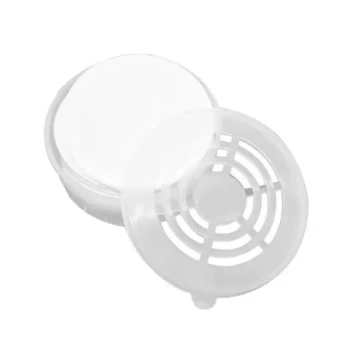
Varroa control is a colony-survival requirement, not an optional treatment. Varroa destructor weakens larvae, pupae, and adult bees by feeding on their internal tissues, reducing body weight, longevity, and overall colony resilience. More importantly, the mites transmit serious viruses—including Deformed Wing Virus, Sacbrood Virus, Acute Bee Paralysis Virus, and Kashmir Bee Virus—while direct antiviral treatments for honey bees remain largely unavailable.
Acaricide consumables protect colonies indirectly but decisively: they reduce mite populations, interrupt the mite-to-bee virus transmission cycle, and help prevent weakened colonies from progressing to overt viral disease and collapse.
Why Varroa Mites Are a Critical Commercial Risk
They damage bees at every development stage
Varroa mites reproduce in capped brood cells and feed on developing and adult bees. This can produce smaller, weaker workers with reduced lifespans and lower capacity to perform essential tasks such as thermoregulation, nursing, and foraging.
A high mite burden also reduces the colony’s ability to raise healthy replacement bees. For commercial apiaries, that directly affects colony productivity, pollination contracts, honey yields, and overwintering survival.
They can drive progressive colony decline
Varroa pressure often develops gradually rather than appearing as an immediate, visible crisis. A colony may continue functioning while mite numbers and associated viral loads increase beneath the surface.
Without effective intervention, weakened colonies can suffer poor brood quality, population loss, and eventual collapse. The risk is especially difficult to manage in mild climates where brood production—and therefore mite reproduction—may continue through much of the year.
They act as biological vectors for viruses
Varroa mites do more than consume bee resources. During feeding, they can acquire and transmit viruses between bees and developing brood.
This makes the mite a vector, not merely a parasite. A colony with a modest-looking mite infestation may still face serious disease pressure if the mites are carrying and spreading virulent viruses.
How Acaricide Consumables Reduce Viral Risk
They lower the number of infectious mite contacts
Acaricides directly suppress Varroa populations inside the hive. Fewer mites means fewer opportunities for feeding injuries and fewer potential transmission events between mites and bees.
This is an indirect antiviral strategy: the treatment does not generally eliminate the virus itself, but it reduces the vector responsible for amplifying and distributing it.
Slow-release strips extend treatment exposure
Ready-to-use acaricide strips commonly use a controlled-release design. The active ingredient remains available within the hive over an extended treatment period, allowing bees to contact and distribute it through normal colony movement.
This sustained exposure can improve control across successive mite life cycles, including mites that emerge from brood cells after treatment begins. However, performance depends on correct placement, treatment duration, colony conditions, and compliance with the product label.
They interrupt the mite–virus cycle
The disease pathway can be understood as:
- Mites reproduce in brood cells.
- Mites feed on developing or adult bees.
- Mites acquire or transmit viruses.
- Infected or weakened bees reduce colony resilience.
- A weaker colony becomes more vulnerable to further mite and virus pressure.
Acaricide consumables intervene near the start of this cycle. By reducing mite density, they help prevent the parasite population from continuously reinforcing viral transmission.
They help preserve overwintering strength
Colonies entering winter with high mite loads or significant virus exposure are less likely to maintain a healthy population. Controlling Varroa before critical seasonal transitions helps preserve long-lived winter bees and supports stronger spring buildup.
Treatment is therefore a preventive health-management measure, not merely a response to visible symptoms.
Choosing Treatment Consumables for Commercial Operations
Synthetic acaricide strips offer operational convenience
Commercial apiaries often use ready-to-apply products containing active ingredients such as amitraz or fluvalinate, subject to local registration and label requirements. Strips can simplify deployment across many hives and provide consistent, extended exposure when used correctly.
For distributors and wholesalers, this format also supports standardized fulfillment, predictable inventory planning, and rapid deployment during seasonal treatment windows.
Organic-acid treatments provide additional management options
Formic acid and oxalic acid are widely used organic-acid tools in Varroa management, although their suitability depends on temperature, brood conditions, application method, and local regulations. Formic acid can affect mites in capped brood, while oxalic acid is commonly most effective when mite reproduction is limited and brood is absent or reduced.
These treatments are not automatically risk-free. Incorrect concentration, timing, or temperature conditions can injure bees and queens, so professional users must follow approved instructions.
Treatment tools matter as much as the active ingredient
A reliable program requires more than purchasing an acaricide. Distributors should be able to support customers with compatible strips, applicators, protective equipment, monitoring tools, and clear usage information.
A one-stop supply model reduces procurement delays and helps apiaries complete treatments within the narrow periods when intervention is most effective.
Why Monitoring Must Accompany Treatment
Mite levels determine whether intervention is needed
Routine monitoring helps beekeepers identify rising infestation levels before colony damage becomes obvious. Common monitoring approaches include alcohol washes, sugar rolls, natural mite-drop counts, and inspection of brood and adult bees.
The specific method should be standardized across the operation so results can be compared between yards and treatment cycles.
Follow-up testing confirms treatment performance
A treatment should not be considered successful merely because strips were installed. Post-treatment monitoring helps reveal inadequate coverage, incorrect application, reinfestation, or reduced product efficacy.
This information is particularly valuable for commercial operations managing multiple apiaries, where localized treatment failure can spread through bee drift, robbing, or movement of colonies and equipment.
Supply reliability supports seasonal execution
Treatment delays can allow mite populations to expand rapidly during vulnerable periods. Suppliers serving commercial apiaries should therefore prioritize fast response times, dependable stock availability, accurate order fulfillment, and dedicated technical support.
For B2B buyers, these service factors are part of product quality because a suitable treatment that arrives too late may have limited practical value.
Understanding the Trade-offs
Resistance can reduce treatment effectiveness
Repeated reliance on one synthetic active ingredient can select for resistant mite populations. Fluvalinate, amitraz, and other chemical options should not be treated as permanently interchangeable or universally effective.
Commercial programs should use monitoring data and, where appropriate, rotate treatments with different modes of action rather than repeating the same product indefinitely.
Residues require strict control
Acaricides must be used only according to approved labels, including dose, placement, timing, and honey-super restrictions. Misuse can increase the risk of chemical residues in hive products and may violate food-safety or export requirements.
Honey and wax management should therefore be integrated into the treatment plan, especially for apiaries supplying regulated markets.
Environmental conditions affect organic acids
Organic-acid performance and bee safety can vary substantially with temperature, humidity, colony strength, and brood status. These products require more situational judgment than a simple “one treatment fits all” approach.
Professional guidance, accurate application tools, and clear product documentation reduce the risk of treatment-related colony stress.
Acaricides are not a complete disease solution
Reducing mites lowers viral transmission pressure, but it does not guarantee that every virus will be eliminated. Colonies may already carry infections, and other stressors—including nutrition, queen quality, pesticides, and poor apiary hygiene—can affect disease outcomes.
The strongest approach combines Varroa control with colony nutrition, biosecurity, equipment management, queen management, and ongoing health surveillance.
How to Apply This to Your Apiary or Supply Program
A practical commercial program should combine reliable consumables with monitoring, rotation, compliance, and responsive supply support.
- If your primary focus is colony survival: Maintain routine Varroa monitoring and apply an approved treatment before mite pressure compromises brood quality and winter-bee production.
- If your primary focus is viral-risk reduction: Use acaricides to reduce the mite vectors that spread viruses, while recognizing that treatment is preventive vector control rather than direct antiviral therapy.
- If your primary focus is operational efficiency: Source ready-to-use strips, organic-acid products, application tools, and protective equipment through a dependable one-stop supplier with rapid fulfillment.
- If your primary focus is resistance management: Rotate products with different control mechanisms and verify efficacy through pre- and post-treatment mite counts.
- If your primary focus is honey and wax compliance: Follow local labels precisely, respect treatment-free periods and honey-super restrictions, and maintain traceable treatment records.
- If your primary focus is B2B distribution: Build a full-spectrum portfolio supported by technical expertise, stable inventory, fast response times, and clear documentation for professional users.
Effective Varroa management protects commercial apiaries by controlling both the parasite’s direct damage and the viral transmission network it enables.
Summary Table:
| Aspect | Impact |
|---|---|
| Direct Damage | Mites feed on bees, reducing weight, longevity, and colony resilience. |
| Viral Transmission | Mites vector viruses like DWV, causing severe disease. |
| Acaricide Role | Reduces mite numbers, interrupting virus spread. |
| Monitoring | Essential to time treatments and confirm efficacy. |
| Resistance | Rotation and monitoring prevent resistance buildup. |
| Compliance | Label adherence avoids residues and food safety issues. |
Protect your apiary's health and productivity with reliable Varroa control solutions. At HONESTBEE, we supply a full spectrum of beekeeping consumables, including acaricide strips, organic acids, and monitoring tools, tailored for commercial apiaries and distributors. Our one-stop sourcing model ensures rapid delivery, technical support, and product availability when you need it. For B2B partners, we offer OEM/ODM support, certified products, and supply chain reliability to enhance your margins and customer satisfaction. Contact us today to secure your Varroa management supplies and optimize your operations. Get in touch with our experts.
Related Products
- Adjustable Formic and Acetic Acid Dispenser for Bee Mite Treatment
- Compact Circular Bee Mite Treatment Dispenser
People Also Ask
- How is the process regulation function of a Formic Acid Dispenser implemented? Achieve Safe, Effective Varroa Control
- Why is a specialized formic acid evaporator necessary? Ensure Safe & Effective Varroa Mite Treatment
- What role do Formic Acid Dispensers play in the biochemical control of Varroa mites? Precision Mite Management
- What is the primary function of a specialized evaporation dispenser? Master Formic Acid Varroa Control
- What is the function of specialized application devices for Varroa? Precision Control for Healthier Bee Colonies