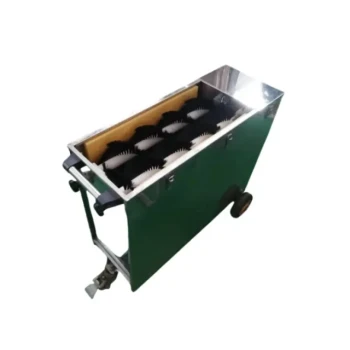
Specialized application devices serve as precision delivery systems for administering organic miticides within a beehive. These tools, which include sublimators and evaporation strips, are engineered to release agents such as thymol, oxalic acid, or formic acid at exact concentrations to eradicate Varroa destructor without compromising the safety of the honeybees.
The core function of these devices is to decouple effective mite eradication from colony toxicity. By mechanically controlling dosage and release rates, they enable the use of potent organic treatments that maintain brood activity and foraging capacity while ensuring the final honey product remains free of chemical residues.
The Mechanism of Precision Control
Regulating Active Ingredients
The primary challenge in sanitary management is the volatility of organic agents. Specialized devices regulate the evaporation or sublimation of active ingredients like formic and oxalic acid.
This control prevents rapid spikes in chemical concentration that could harm the bees, while ensuring levels remain high enough to be lethal to the mites.
Ensuring Uniform Distribution
To be effective, the treatment must reach every corner of the hive. Applicators ensure that miticides are distributed uniformly throughout the colony structure.
This comprehensive coverage targets mites through physical contact or vapor penetration, leaving no safe harbor for the parasites within the hive.
Targeting Capped Brood
Advanced professional equipment is designed to penetrate difficult-to-reach areas, including capped brood cells where mites often reproduce.
By targeting these protected areas, the devices reduce the overall parasite intensity, breaking the reproductive cycle of the Varroa mite more effectively than surface-level treatments alone.
Physiological Benefits to the Colony
Preserving Bee Health Markers
The ultimate function of these devices is to lower the parasitic load that drains bee vitality. Reducing mite intensity directly decreases the loss of honeybee fat bodies.
By preserving these fat bodies, individual bees maintain higher protein storage levels, which alleviates nutritional stress and improves their resilience against viruses.
Maintaining Productivity
Sanitary management via these devices directly supports the colony's operational capacity.
By keeping the workforce healthy, the colony maintains robust brood activity and foraging capacity, which are essential for survival and honey production.
Facilitating Organic Certification
For apiaries targeting the organic market, these devices are indispensable.
They allow for the effective application of organic acids that dissipate without leaving long-term chemical residues, meeting strict criteria for organic honey certification.
Understanding the Trade-offs
Equipment Lifespan and Hygiene
While application devices are effective, their utility is limited by the condition of the hive itself. Research indicates that hives in use for two years or more suffer from higher infestation rates regardless of treatment.
Therefore, reliance on devices must be paired with the regular replacement or thorough disinfection of hive equipment to prevent re-infestation.
The Necessity of Diagnostic Timing
Possessing the right application device is insufficient without accurate timing. The efficacy of these tools relies heavily on deploying them at critical points in the mite life cycle.
Beekeepers must use precision diagnostic tools to quantify infestation levels first, ensuring that the application coincides with the colony's specific needs for overwintering survival.
Making the Right Choice for Your Goals
To maximize the effectiveness of your sanitary management strategy, align your equipment choice with your specific apiary objectives:
- If your primary focus is Organic Certification: Prioritize sublimators or evaporation strips designed for organic acids to ensure zero chemical residue in your honey.
- If your primary focus is Colony Recovery: Utilize devices capable of penetrating capped brood to rapidly reduce viral loads and preserve honeybee fat bodies.
- If your primary focus is Long-Term Viability: Pair your application devices with a strict schedule of hive replacement and quantitative diagnostics to lower baseline infestation rates.
Precision in application is the single most critical factor in balancing aggressive pest management with the delicate biology of the honeybee.
Summary Table:
| Feature | Function & Purpose | Impact on Colony |
|---|---|---|
| Precision Sublimators | Regulates the sublimation of organic acids (e.g., Oxalic) | Ensures lethal mite dosage without bee toxicity |
| Evaporation Strips | Controls the release rate of volatile agents like Thymol | Prevents chemical spikes; maintains brood safety |
| Deep Vapor Penetration | Targets parasites within capped brood cells | Breaks the mite reproductive cycle effectively |
| Residue Management | Facilitates use of dissipating organic treatments | Supports organic certification and honey purity |
Maximize Your Apiary Productivity with HONESTBEE Solutions
At HONESTBEE, we specialize in empowering commercial apiaries and distributors with the precision tools needed for modern sanitary management. From advanced sublimators and hive-making machinery to professional honey-filling equipment and essential consumables, we provide the full spectrum of hardware to scale your operations.
Our equipment ensures your colony recovery is efficient, chemical-free, and commercially viable. Contact us today to explore our wholesale offerings and equipment catalogs and see how our tailored solutions can support your business growth.
References
- Fernanda Baena‐Díaz, Luciana Porter‐Bolland. Apis mellifera en México: producción de miel, flora melífera y aspectos de polinización. Revisión. DOI: 10.22319/rmcp.v13i2.5960
This article is also based on technical information from HonestBee Knowledge Base .
Related Products
- Compact Circular Bee Mite Treatment Dispenser
- Adjustable Formic and Acetic Acid Dispenser for Bee Mite Treatment
- 12V Bee Mite Removal Evaporator Oxalic Acid Vaporizer for Bee Fumigation Treatment 180W Atomization
- Varroa Easy Check Mite Tester Kit Counter Alcohol Wash Jar
- European Stainless Steel Bee Smoker for Honey Bee Hive
People Also Ask
- What is the function of specialized prevention consumables? Protect Hives from Varroa Mites & European Foulbrood
- What technical factors influence chemical Varroa treatments? Optimize Your Hive Health with Precise Timing
- How do different application forms of oxalic acid or formic acid affect Varroa mite treatments? Maximize Your Hive Efficacy
- Why is glycerin used in oxalic or formic acid for Varroa mite control? Unlock Better Efficacy and Slow Release
- What is the primary purpose of organic acids and synthetic acaricides in honeybee colony management? Varroa Control Guide