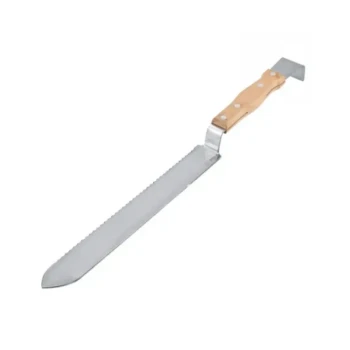
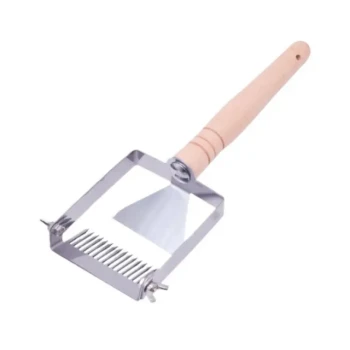
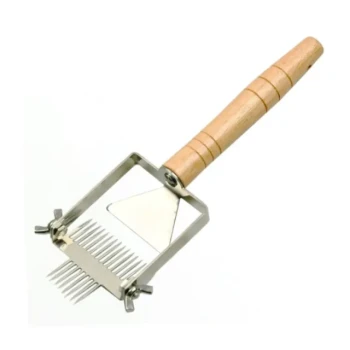
The use of plastic knives and combs is a mandatory protocol to ensure the chemical accuracy of trace element analysis. During the primary separation and collection stages, using standard metal tools risks introducing microscopic metal particles into the honey, which leads to cross-contamination.
Core Takeaway Honey serves as a sensitive bio-monitor for environmental pollution, often requiring the detection of elements at extremely low concentrations. Utilizing plastic tools eliminates the variable of metallic interference, ensuring that any heavy metals or pollutants detected originate strictly from the environment and not from the sampling equipment.
The Critical Role of Material Inertness
Preventing Artificial Inflation of Data
The primary objective of using plastic tools is to avoid "false positives" in environmental assessments.
Honey requires analysis at the trace level. Even slight contact with metal instruments can leach ions into the sample, causing inflated detection results that obscure the true levels of environmental pollution.
Ensuring Chemical Stability
Plastic materials, particularly those used in laboratory sampling, are chosen for their chemical inertness.
Unlike metal, which can react with the acidic nature of honey or degrade over time, high-quality plastic ensures the tool itself does not alter the physicochemical composition of the sample during the physical separation process.
Maintaining Sample Integrity
Eliminating Cross-Contamination
In scientific sampling, the goal is to assess the environment, not the equipment.
Using disposable or easily cleaned plastic combs and knives helps eliminate the risk of transferring contaminants between different colonies or apiaries. This isolation is essential for generating data that accurately reflects the specific characteristics of a single location.
Preserving the "Original State"
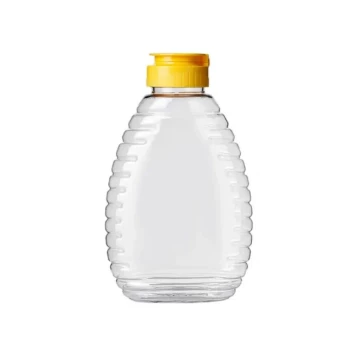
The rigor applied to selecting knives and combs aligns with the use of polyethylene and sealed plastic storage containers.
The entire sampling ecosystem—from the knife used to cut the comb to the bottle used for transport—is designed to be non-reactive. This guarantees that the moisture content, enzyme activity, and trace element profile remain exactly as they were in the hive.
Common Pitfalls to Avoid
The Danger of "Standard" Beekeeping Tools
Standard hive tools are almost exclusively made of stainless steel or galvanized metal.
While durable for general beekeeping, these are unacceptable for environmental monitoring. Using a standard hive tool for even a moment can compromise the validity of an entire batch of samples intended for trace metal analysis.
Overlooking the Separation Phase
Some researchers carefully use plastic bottles but forget the separation tools.
Contamination happens at the moment of contact. If the honeycomb is cut with a metal knife, the sample is contaminated before it ever reaches the sterile storage container.
Making the Right Choice for Your Goal
To ensure your sampling data is valid for laboratory analysis, follow these guidelines:
- If your primary focus is Environmental Pollution Monitoring: You must strictly use plastic knives and combs to prevent metal ions from skewing trace element data.
- If your primary focus is Pollen or Microbial Analysis: While metal contamination is less critical here, plastic tools are still recommended to prevent cross-contamination and maintain general sample sterility.
By treating the sampling tool as a potential contaminant, you safeguard the integrity of your data and ensure your analysis reflects the true state of the environment.
Summary Table:
| Feature | Metal Tools | Plastic Tools (Recommended) |
|---|---|---|
| Chemical Inertness | Low (Reactive with acidic honey) | High (Non-reactive/Inert) |
| Contamination Risk | High (Leaches metal ions/trace elements) | Zero (Maintains sample purity) |
| Data Accuracy | Risks "False Positives" in pollution tests | Ensures high-precision trace analysis |
| Best Use Case | General hive maintenance | Environmental monitoring & Lab sampling |
| Protocol Compliance | Unacceptable for trace metal study | Mandatory for scientific standards |
Elevate Your Apiary’s Precision with HONESTBEE
At HONESTBEE, we understand that whether you are conducting scientific environmental monitoring or managing a large-scale commercial operation, the quality of your tools dictates the quality of your honey. As a premier partner for commercial apiaries and distributors, we provide a comprehensive wholesale range of beekeeping equipment designed for excellence.
From specialized honey-filling and hive-making machinery to professional-grade sampling tools and essential industry consumables, our portfolio is built to support your growth and technical rigor. Let us help you safeguard your product integrity and optimize your production efficiency.
Ready to scale your operation with professional tools?
References
- Manfred Sager. The Honey as a Bioindicator of the Environment. DOI: 10.1515/eces-2017-0038
This article is also based on technical information from HonestBee Knowledge Base .
Related Products
- Stainless Steel Pivoting Honey Uncapping Fork with Plastic Handle
- Professional Stainless Steel Double-Sided Honey Uncapping Knife
- Professional Plastic Honey Dipper for Easy Honey Drizzling
- Large Size Honey Uncapping Knife and Scraper for Beekeeping
- Serrated Honey Uncapping Knife for Beekeeping and Bee Hive Maintenance
People Also Ask
- What is the design purpose of honey uncapping forks and honey uncapping tanks? Maximize Your Harvest Efficiency
- How does a honey uncapping fork supplement the use of an uncapping knife? Boost Your Honey Yield and Extraction Efficiency
- What are the essential tools for uncapping honey frames? Choose the Right Tool for Your Apiary
- What other tools are available for honey uncapping besides knives? Find the Right Tool for Your Apiary's Scale
- What tools are used for honey uncapping? Choose the Right Knife for Your Harvest