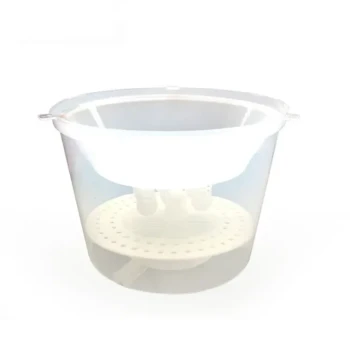
The installation of high-efficiency pollen traps is the fundamental prerequisite for mechanically intercepting pollen pellets from foraging bees to establish a viable sample. By placing these devices at the hive entrance, you enable the continuous, automated collection of raw pollen without harming the insects, serving as the primary physical method for securing the biological material required for analysis.
The core value of a high-efficiency trap lies in its ability to standardize data collection. It transforms a biological process into a measurable workflow, providing the consistent, uncontaminated samples necessary for accurate nutritional assessment, botanical identification, and chemical profiling.
The Critical Role in Data Accuracy
Assessing Colony Nutritional Intake
The primary scientific necessity for these traps is to measure exactly what the colony is consuming.
Without a mechanical interception method, estimating a colony's protein intake is largely speculative. The trap provides physical evidence of the pollen loads entering the hive, allowing for a direct assessment of the colony's nutritional status.
Mapping Floral Resources and Landscapes
High-efficiency traps are essential for correlating specific timeframes with specific landscape types.
They allow researchers and apiarists to analyze pollen sources within a precise window of time. This data is critical for understanding floral resource abundance and identifying which plant species are supporting the colony during different seasons.
Enabling Chemical and Botanical Analysis
To identify plant species or analyze chemical composition in the laboratory, you need a stable stream of raw material.
These traps act as the initial harvest point, transitioning pollen from a biological source into a laboratory specimen. They ensure that the sample volume is sufficient for valid botanical identification and subsequent chemical analysis.
Operational Efficiency and Sample Purity
Automated Filtration and Collection
Manual collection of pollen is impractical for large-scale analysis or commercial production.
Traps utilize a specific physical grid design to automate the process, brushing pollen off the hind legs of returning bees. This physical filtration helps reduce the introduction of impurities that might occur with more intrusive collection methods.
Preserving Biochemical Integrity
Speed and separation are vital to maintaining the quality of the sample.
High-quality traps often include dry collection trays that quickly separate the pollen from the environment. This design feature is necessary to minimize the impact of environmental humidity, preventing microbial contamination and the degradation of biochemical activity.
Understanding the Trade-offs
Balancing Collection vs. Colony Health
While necessary for sampling, these traps physically block resources that the hive intends to consume.
Over-use of high-efficiency traps can lead to nutritional deficits within the colony if not managed correctly. It is essential to balance the duration of trapping with the colony's need for protein to rear brood.
Physical Interaction with the Colony
The mechanism relies on friction against the bee's body to dislodge the pollen pellet.
Although designed to be non-harmful, the grid aperture must be precise. Poorly fitted or low-quality traps can impede the normal passage of bees or cause unnecessary physical stress to the foragers.
Making the Right Choice for Your Goal
To select and utilize pollen traps effectively, consider your primary objective:
- If your primary focus is Nutritional Research: Prioritize traps with high interception rates to get a statistically significant representation of the total forage entering the hive.
- If your primary focus is Chemical/Heavy Metal Analysis: Ensure the trap material is non-reactive and distinct from the collection consumables to prevent background interference in atomic absorption spectroscopy.
- If your primary focus is Commercial Production: Select traps with larger capacity collection drawers and moisture control features to ensure product hygiene and prevent spoilage.
Successful pollen sampling relies on the trap acting not just as a barrier, but as a precise instrument for biological standardization.
Summary Table:
| Feature | Scientific Benefit | Operational Advantage |
|---|---|---|
| Mechanical Interception | Standardizes data collection for precise nutritional profiles. | Automates harvesting, replacing impractical manual collection methods. |
| Precision Grid Design | Enables accurate botanical identification and landscape mapping. | Minimizes physical stress to foragers while ensuring high yields. |
| Dry Collection Trays | Prevents biochemical degradation and microbial growth. | Protects sample integrity from environmental humidity and contaminants. |
| Standardized Workflow | Provides consistent material for chemical and heavy metal analysis. | Simplifies large-scale production for commercial distributors. |
Elevate Your Apiary Operations with HONESTBEE
At HONESTBEE, we understand that precision is the backbone of successful commercial beekeeping. Whether you are a large-scale apiary or a global distributor, our comprehensive wholesale portfolio offers everything from high-efficiency pollen traps and hive-making machinery to advanced honey-filling systems and industry consumables.
Our specialized beekeeping tools and hardware are engineered to enhance your efficiency and protect your biological yields. Partner with us to access professional-grade equipment and honey-themed cultural merchandise designed for growth.
Ready to scale your production? Contact us today to discover how our tailored solutions can benefit your business.
References
- Mary Chege, Beatrice T Nganso. Seasonal and Landscape‐Driven Variations in Forage Resources of <scp><i>Apis mellifera scutellata</i></scp>: Implications for Pollination Sustainability and Colony Health in Taita Taveta County, Kenya. DOI: 10.1002/ece3.71613
This article is also based on technical information from HonestBee Knowledge Base .
Related Products
- High-Efficiency Diamond Maze Bee Escape for Clearing Supers
- Removable Plastic Pollen Trap With Ventilated Tray for Bees Pollen Collector
- 30 cm Plastic Entrance Hole Bee Pollen Trap and Collector
- Plastic Bee Pollen Trap Strips Comb Catcher Collector
- Heavy-Duty Ergonomic Grip Galvanized Pollen Shovel
People Also Ask
- How can a bee escape be adapted for use in a Warre hive? Effective Customization Methods for Successful Harvesting
- How can bees be cleared off honey supers in a Langstroth hive? Use a Gentle Bee Escape
- What is a bee escape and why is it used in beekeeping? A Guide to Gentle Honey Harvesting
- What are some common types of bee escapes and how are they typically mounted? Optimize Your Honey Harvest Efficiency
- What is the primary function of a bee escape? Simplify Your Honey Harvest with Stress-Free Hive Management