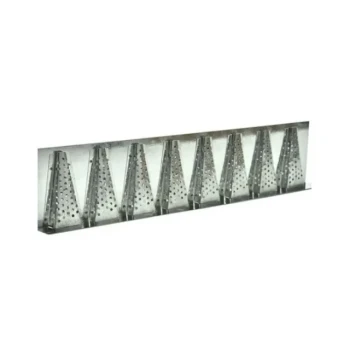
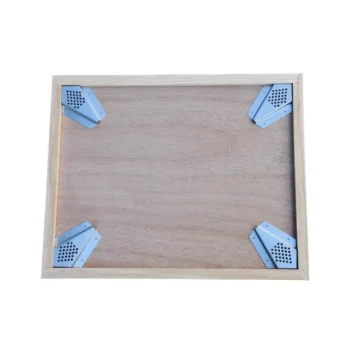
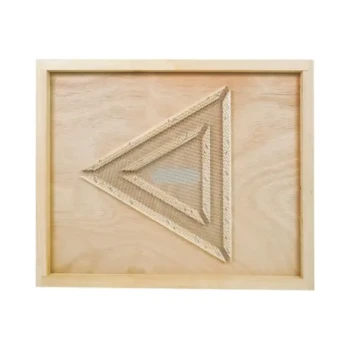
The installation of specialized bee traps at hive entrances acts as a critical biological filter. By strategically closing these traps, researchers can directionally capture foragers returning from the field, rather than random colony members. This ensures the collection of samples with a uniform physiological state—specifically high-activity bees approximately 23 days old—which is a prerequisite for accurate and reproducible scientific data.
The necessity of entrance traps lies in their ability to guarantee sample homogeneity. By physically isolating returning foragers, researchers eliminate variable factors like bee age or role, ensuring that toxicity tests reflect the true impact on the colony’s most exposed population.
The Science of Sample Standardization
Eliminating Demographic Variability
A honeybee colony is composed of bees with vastly different roles and biological profiles. Young bees act as nurses inside the hive, while older bees forage outside.
Random collection methods fail to distinguish between these groups. Specialized traps resolve this by targeting only those entering from the outside. This isolates the specific demographic of foragers, who are typically around 23 days old.
Ensuring Physiological Consistency
For scientific testing, particularly regarding pesticide toxicity, the "health" baseline of the test subjects must be identical.
Nurses and foragers metabolize chemicals differently. By using entrance traps to collect only active foragers, researchers ensure every bee in the sample possesses a similar physiological state. This removes biological noise from the data.
Representativeness of Field Exposure
Foragers are the primary vector for bringing contaminants into the hive.
Collecting bees at the entrance guarantees the sample represents the population with the highest level of field activity. These are the bees most likely to have encountered environmental stressors, making them the ideal subjects for relevant impact studies.
The Mechanics of Controlled Collection
Managing Entrance Chaos
Hive entrances are notoriously congested environments. Bees frequently enter, exit, hover, and drift, creating a chaotic flow that is difficult to monitor manually.
Without a physical trap, distinguishing a returning forager from a departing guard bee is prone to error. The trap imposes a directional constraint, physically capturing only the incoming traffic required for the study.
Temporal Precision
Traps allow for collection during specific time intervals.
Researchers can trigger the traps during peak foraging hours to maximize sample relevance. This precise timing prevents the accidental collection of bees that may be engaging in orientation flights rather than true foraging.
Understanding the Trade-offs
Balancing Sampling vs. Colony Health
While necessary for science, trapping removes labor from the colony.
Continuous trapping can deplete the workforce and stress the hive. To mitigate this, traps are often designed to be engaged only intermittently or to capture a specific percentage of traffic (similar to pollen traps which often retain only ~10%). This preserves the normal life and viability of the colony.
Hardware Limitations
Physical traps alter the entrance architecture.
While they organize flow, they can occasionally cause bottlenecks or alter trajectory behaviors. Advanced monitoring sometimes requires virtual boundaries to account for these behavioral changes, ensuring that the presence of the trap itself does not skew the data by discouraging entry.
Making the Right Choice for Your Goal
- If your primary focus is Pesticide Toxicity Testing: Prioritize traps that guarantee the collection of returning foragers (~23 days old) to ensure physiological homogeneity in your sample.
- If your primary focus is Environmental Monitoring: Use traps designed for continuous, low-volume sampling (like pollen traps) to assess landscape resources without disrupting colony growth.
- If your primary focus is Traffic Analysis: Consider virtual entrance monitoring to count behaviors without the physical interference of a catch-trap.
The specialized entrance trap transforms a chaotic biological system into a precise, standardized instrument for scientific measurement.
Summary Table:
| Feature | Importance in Bee Collection | Scientific Benefit |
|---|---|---|
| Demographic Targeting | Selects foragers (~23 days old) | Eliminates age-related biological noise |
| Directional Control | Captures only incoming traffic | Guarantees bees have had field exposure |
| Temporal Precision | Enables collection during peak hours | Maximizes sample relevance and activity levels |
| Sample Homogeneity | Uniform physiological state | Ensures reproducible pesticide toxicity results |
| Colony Preservation | Intermittent or partial trapping | Maintains hive workforce and colony health |
Elevate Your Apiary Operations with HONESTBEE Professional Solutions
Precision in honeybee collection is just the beginning. At HONESTBEE, we empower commercial apiaries and global distributors with the high-performance tools required for modern beekeeping excellence. Whether you are scaling up production or conducting critical field research, our comprehensive wholesale portfolio has you covered.
Our value to your business includes:
- Industrial Machinery: Advanced hive-making and honey-filling machines designed for high-volume efficiency.
- Specialized Equipment: A full spectrum of professional beekeeping tools and essential industry consumables.
- Cultural Merchandise: Unique honey-themed merchandise to expand your market reach.
Ready to optimize your yield and streamline your operations? Contact us today to discuss your wholesale needs and discover how HONESTBEE can support your growth in the competitive beekeeping industry.
References
- Thaís S. Bovi, Ricardo de Oliveira Orsi. Toxicity and motor changes in Africanized honey bees (Apis mellifera L.) exposed to fipronil and imidacloprid. DOI: 10.1590/0001-3765201820150191
This article is also based on technical information from HonestBee Knowledge Base .
Related Products
- 30 cm Plastic Entrance Hole Bee Pollen Trap and Collector
- Multi-Functional Sliding Hive Entrance for Beekeeping
- Beehive Entrance Reducer Guardian Metal Hive Entrance for Bees
- Professional Hive Front Entrance Bee Feeder
- Professional Reversible Beehive Hive Entrance
People Also Ask
- What are the design principles and advantages of pollen traps in the collection of bee pollen? Boost Your Apiary Yield
- Why is frequent harvesting of bee pollen from traps necessary for quality control? Ensure Freshness and Prevent Mold.
- How often should bee pollen be harvested from a trap and why? Master Freshness and Prevent Spoilage
- What function do pollen traps serve in quantitative collection? Boost Your Apiary's Data & Production Efficiency
- What is the primary function of bee pollen traps? Optimize Your Pollen Harvest with Advanced Extraction Efficiency