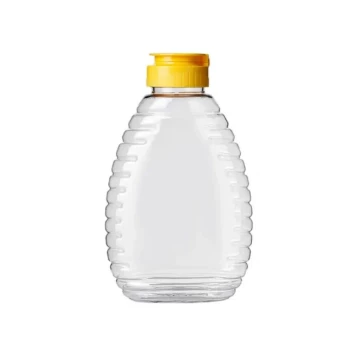
Food-grade polyethylene (PE) containers are the critical standard for trace analysis due to their exceptional chemical inertness. When testing honey and pollen for minute contaminants, such as pesticides or Polycyclic Aromatic Hydrocarbons (PAHs), the storage vessel must not interact with the sample. PE containers specifically prevent the leaching of plasticizers and effectively block external impurities, ensuring the chemical profile remains unaltered.
The reliability of trace analysis depends on the purity of the sample at the molecular level. Food-grade PE acts as a chemically neutral shield, preventing "false positives" caused by material migration from the container itself.
Preserving Sample Integrity for Trace Analysis
Preventing Chemical Migration
The primary danger in storing samples for chemical analysis is material migration. Standard plastics can leach plasticizers or other additives into the honey or pollen over time.
Food-grade polyethylene offers excellent chemical stability. This prevents container materials from dissolving into the sample, which is essential when looking for volatile or semi-volatile organic compounds.
Eliminating False Positives
In trace analysis, you are looking for contaminants at the parts-per-billion level. If the container introduces even a microscopic amount of foreign material, it can ruin the results.
High-purity PE containers prevent false-positive results, particularly during the analysis of PAHs and pesticide residues. By using PE, analysts can be certain that detected residues originated from the environment or agricultural practices, not the storage jar.
Blocking External Impurities
Honey and pollen are sensitive biological matrices. Beyond chemical leaching, the container must provide a robust physical barrier.
PE containers effectively block external impurities, such as dust or atmospheric pollutants. This maintenance of original characteristics is a necessary safeguard to ensure the sample reflects the true botanical and chemical composition collected by the bees.
Understanding the Trade-offs
Chemical Analysis vs. Sensory Evaluation
While PE is superior for trace chemical analysis, it is not the universal solution for all honey storage.
Supplementary data suggests that sealed glass is often preferred for sensory evaluation (taste and smell) or long-term moisture control. Glass is impermeable to gases and does not react with natural acids, preserving flavor profiles better than plastic.
However, for the specific goal of detecting PAHs and pesticides, the risk of seal contamination or specific interactions makes food-grade PE the safer technical choice.
The Hygroscopic Challenge
Honey is highly hygroscopic, meaning it absorbs moisture from the air, which can lead to fermentation.
While PE is chemically stable, the seal must be industrial-grade to prevent moisture ingress. If the seal fails, the sample may spoil, rendering it useless for both pollen analysis (melissopalynology) and chemical testing.
Making the Right Choice for Your Goal
Select your storage material based on the specific analytical outcome you require.
- If your primary focus is trace chemical analysis (PAHs/Pesticides): Use food-grade polyethylene (PE) to prevent plasticizer migration and eliminate false positives.
- If your primary focus is sensory evaluation or pollen identification: Consider sealed glass to ensure absolute gas impermeability and preservation of botanical flavor profiles.
By matching the storage material to the analytical target, you ensure your data remains undeniable and chemically accurate.
Summary Table:
| Feature | Food-Grade Polyethylene (PE) | Sealed Glass |
|---|---|---|
| Primary Use | Trace Analysis (Pesticides/PAHs) | Sensory Evaluation & Taste |
| Chemical Stability | High (No plasticizer leaching) | Excellent (Inert to acids) |
| Risk Factor | Requires industrial-grade seal | Fragility and seal contamination |
| Benefit | Eliminates false-positive results | Absolute gas impermeability |
| Sample Goal | Chemical Purity | Flavor & Moisture Preservation |
Elevate Your Beekeeping Standards with HONESTBEE
At HONESTBEE, we understand that the integrity of your honey and pollen defines your success in the global market. As a dedicated partner to commercial apiaries and distributors, we provide more than just supplies; we provide precision-engineered solutions.
From high-purity storage containers that ensure your trace analysis remains accurate, to professional-grade honey-filling machines, hive-making equipment, and a full spectrum of beekeeping machinery, our wholesale portfolio is designed to scale your operations efficiently. Whether you are seeking essential consumables or specialized hardware, our products help you maintain the highest quality from the hive to the laboratory.
Ready to optimize your apiary’s performance? Contact HONESTBEE Today to explore our comprehensive wholesale offerings and discover how our expertise can drive your business forward.
References
- Milica Jovetić, Dušanka Milojković‐Opsenica. Urban honey - the aspects of its safety. DOI: 10.2478/aiht-2018-69-3126
This article is also based on technical information from HonestBee Knowledge Base .
Related Products
- Food Grade Plastic Honey Bucket Pail for Beekeeping
- Squeezable No-Drip Beehive-Shaped Honey Jars with Flip-Top Cap
- Plastic Transporting Bee Packages and Nuc Boxes for Beekeeping
People Also Ask
- What key operational precautions should be taken when using honey buckets and extractors fitted with bottom drain taps?
- What functions do food-grade honey buckets perform? Safeguard Your Harvest and Optimize Apiary Logistics
- Why are food-grade plastic buckets preferred for honey? Protect Quality with Modern Honey Collection Tools
- What is the significance of food-grade plastic honey collection buckets? Boost Quality in Forest Honey Logistics
- What is a honey pail? The Essential Container for Protecting Your Honey's Value