The Beekeeper's Instinct
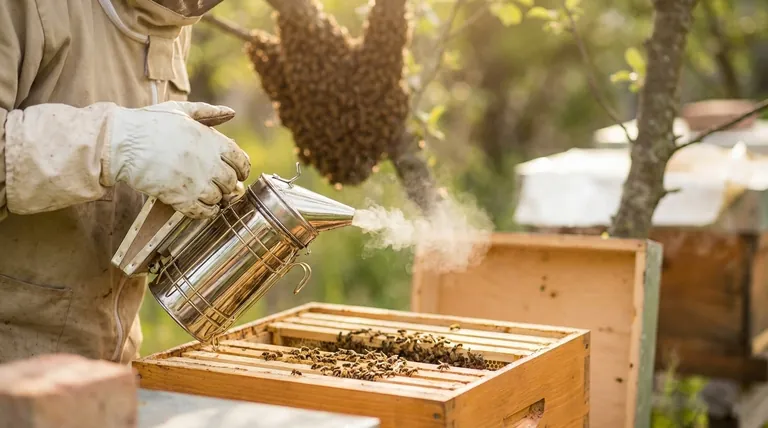
A cloud of thousands of bees hangs from a low branch. It's a mesmerizing, humming vortex of life. For a beekeeper, the first instinct is often to reach for the smoker. It’s the universal symbol of our craft, the tool of calm.
But in this specific scenario, that instinct is wrong.
To work effectively with bees, we must move beyond instinct and understand their psychology. The decision to use a smoker isn't about the bees; it's about their current state of mind. And a swarm and an established hive are in two completely different worlds.
A Tale of Two Colonies: Mindset of a Swarm vs. a Hive
The behavior of bees is dictated entirely by their circumstances. Before you can choose the right tool, you must diagnose their collective goal.
The Swarm: A Colony on a Mission
A swarm is a colony in transit. They are refugees, not defenders.
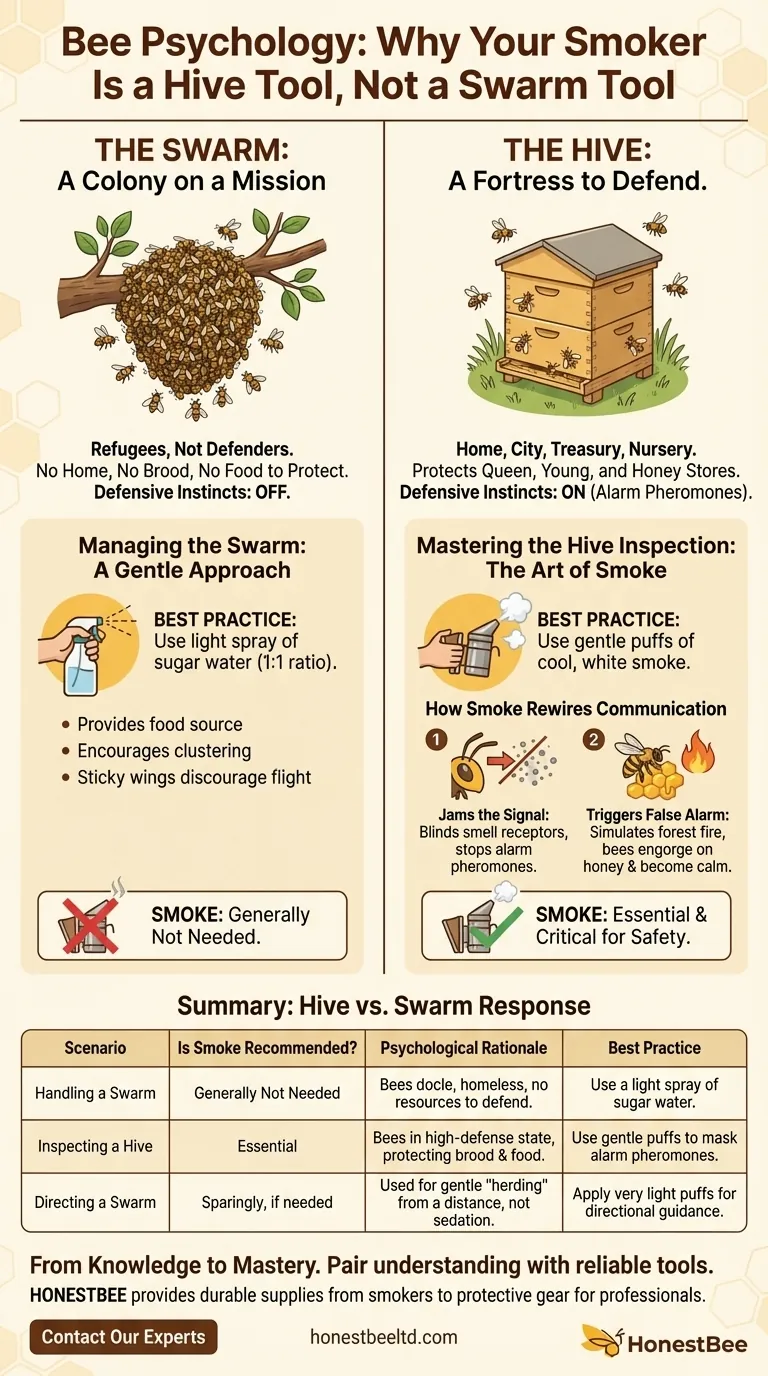
Their singular focus is finding a new home. In preparation for this journey, every bee has engorged itself on honey from the old hive. A bee with a full abdomen is not only physically less able to sting but is also psychologically preoccupied with survival and relocation.
They have no home, no brood, and no food stores to protect. Without a territory to defend, their defensive instincts are switched off. They are at their most docile.
The Hive: A Fortress to Defend
An established hive is the opposite. It is a home, a city, a treasury, and a nursery all in one.
It contains everything the colony needs to survive: a queen, thousands of developing young, and precious stores of honey and pollen. Any disturbance—a shadow, a vibration, a clumsy hand—is perceived as a direct threat to their existence.
This triggers a sophisticated defense protocol. Guard bees release alarm pheromones, a chemical signal that screams "ATTACK!" and mobilizes the entire colony to defend their home.
The Mechanics of Calm: How Smoke Rewires Bee Communication
Smoke isn’t a sedative. It’s a tool of misdirection that exploits two core bee instincts.
Jamming the Signal
The primary function of smoke is to disrupt the hive's alarm system. When a bee releases alarm pheromones, it’s like sending out a distress signal over a network.
The fine particles in cool, white smoke overwhelm the sensory receptors on the bees' antennae. It effectively "blinds" their sense of smell, preventing the alarm signal from spreading. It stops a chain reaction of aggression before it can even start.
Triggering a False Alarm
A secondary effect is that smoke can trigger an ancient, instinctual response to a forest fire. Believing their home is threatened, the bees’ first impulse is to consume as much honey as possible in case they need to abandon the hive.
As we know, a bee full of honey is a calm bee.
The Right Tool for the Right Mindset
This psychological difference dictates your entire approach. Using the wrong tool is not just ineffective; it reveals a misunderstanding of the creatures you're working with.
Managing the Swarm: A Gentle Approach
For a swarm clustered on a branch, smoke is almost always unnecessary. They are already calm.
A far more effective tool is a light spray of sugar water (1:1 ratio). This serves multiple purposes:
- It provides a welcome food source.
- It encourages the bees to cluster together more tightly.
- It makes their wings slightly sticky and heavy, discouraging flight during collection.
Mastering the Hive Inspection: The Art of Smoke
Here, the smoker is not just useful; it is essential. This is the scenario it was designed for. Gentle puffs of smoke at the entrance and under the lid before an inspection are critical for a calm, safe interaction.
For commercial apiaries and serious beekeepers, where dozens of hives are inspected daily, this isn't just a technique—it's a fundamental safety protocol. The reliability and performance of your smoker directly impact the stress levels of your colonies and your own efficiency. This is why professionals depend on durable, high-quality equipment.
Summary: Hive vs. Swarm Response
| Scenario | Is Smoke Recommended? | Psychological Rationale | Best Practice |
|---|---|---|---|
| Handling a Swarm | Generally Not Needed | Bees are docile, homeless, and have no resources to defend. | Use a light spray of sugar water to encourage clustering. |
| Inspecting a Hive | Essential | Bees are in a high-defense state, protecting brood and food. | Use gentle puffs to mask alarm pheromones and calm the colony. |
| Directing a Swarm | Sparingly, if needed | Used not for sedation, but to gently "herd" bees. | Apply very light puffs from a distance for directional guidance. |
From Knowledge to Mastery
Understanding bee psychology is what elevates beekeeping from a hobby to a craft. It's the difference between forcing your will upon the bees and working in harmony with their nature.
But knowledge alone isn't enough. It must be paired with the right tools for the job. For professionals managing commercial apiaries and distributors supplying them, using reliable, purpose-built equipment is non-negotiable. HONESTBEE provides the wholesale-focused, durable supplies—from high-performance smokers to protective gear—that allow you to apply your expertise safely and effectively across all your hives.
To ensure your equipment matches your expertise, Contact Our Experts.
Visual Guide
Related Products
- Stainless Steel Honey Bee Smoker Hive and Honeycomb Smoker for Beekeeping
- Professional Bee Smoker with Elongated Spout and Durable Bellows for Beekeeping
- Premium Traditional Copper Bee Smoker with Bellows
- Heavy Duty Manual Bee Smoker Blower for Beekeeping
- European Stainless Steel Bee Smoker for Honey Bee Hive
Related Articles
- The End of 'Hot Hives': Why Your Bee Smoker Is More Important Than Your Suit
- Why Your Bee Smoker Might Be Making Your Hives More Aggressive—And How to Fix It
- Why Your Bee Smoker Keeps Going Out—And the 3-Layer Fix
- How to Operate a Bee Smoker Safely: Expert Techniques for Calmer Hives
- How to Choose the Right Bee Smoker Size for Your Beekeeping Operation