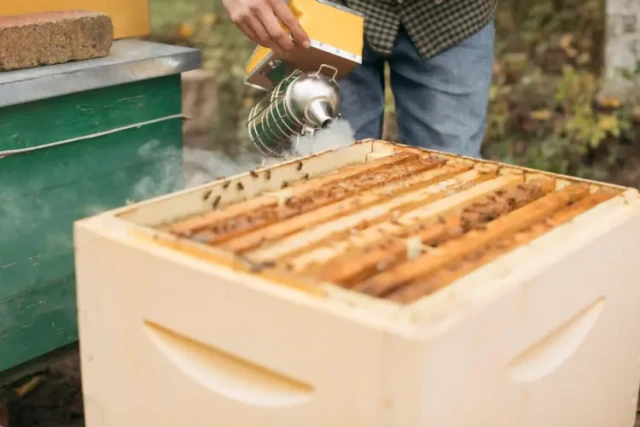
Beekeeping success hinges on mastering one essential tool: the bee smoker. When used correctly, it calms colonies, reduces stings, and protects hive health. This guide covers fuel selection, ignition techniques, and safety protocols—helping you work efficiently while prioritizing bee welfare.
Choosing the Right Fuel for Your Bee Smoker
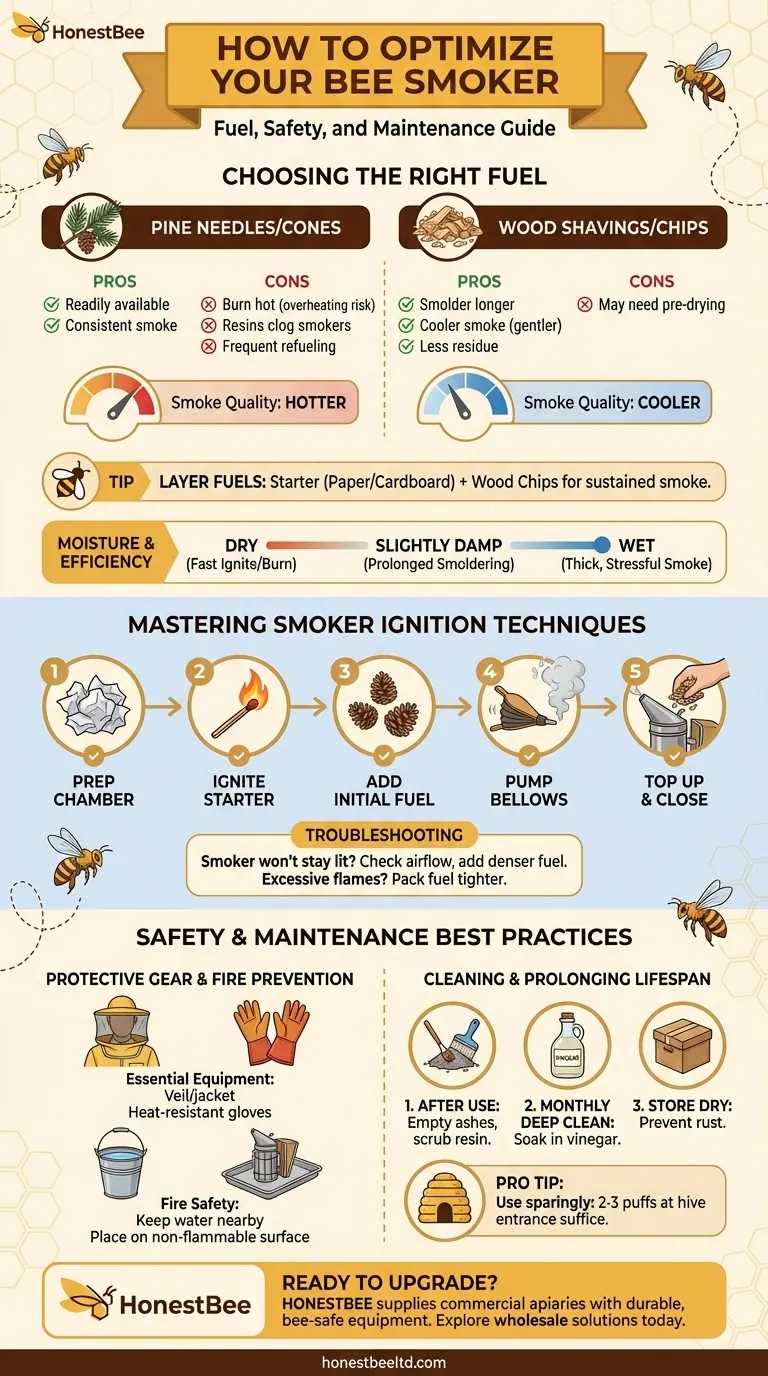
The fuel you select directly impacts smoke quality, burn duration, and bee behavior. Let’s compare common options:
Natural vs. Synthetic Fuels: Smoke Quality and Bee Behavior
-
Pine needles/cones:
- Pros: Readily available, produce consistent smoke.
- Cons: Burn hot (risk of overheating bees), contain resins that clog smokers, and require frequent refueling. Research shows bees react more defensively to hotter smoke.
-
Wood shavings/chips:
- Pros: Smolder longer, generate cooler smoke (gentler on bees), and leave less residue.
- Cons: May need pre-drying to ignite easily.
Tip: Layer fuels—use cardboard or paper as a starter, then add wood chips for sustained smoke.
Moisture Content and Burn Efficiency
Dry fuels ignite faster but burn quicker. Slightly damp materials (e.g., aged wood chips) prolong smoldering. Avoid overly wet fuels—they create thick smoke that stresses bees.
Mastering Smoker Ignition Techniques
A well-lit smoker ensures steady smoke without flare-ups. Follow this method:
Step-by-Step Lighting Process
- Prep the chamber: Crumple newspaper or cotton as a starter.
- Ignite starter: Use a lighter or matches outside the hive area.
- Add initial fuel: Small pine cones or dry shavings work best.
- Pump bellows gently until white smoke appears.
- Top up fuel and close the lid to restrict oxygen.
Troubleshooting Ignition Failures
- Smoker won’t stay lit? Check airflow—adjust the lid or add denser fuel like wood pellets.
- Excessive flames? Pack fuel tighter to promote smoldering over burning.
Safety and Maintenance Best Practices
Protective Gear and Fire Prevention
-
Essential equipment:
- Veil/jacket (prevents stings near eyes/neck).
- Heat-resistant gloves (handling hot smokers).
-
Fire safety:
- Keep a water bucket nearby.
- Place smokers on non-flammable surfaces (e.g., metal tray).
Cleaning and Prolonging Smoker Lifespan
- After each use: Empty ashes and scrub resin buildup with a hive tool.
- Monthly deep clean: Soak in vinegar to dissolve tar deposits.
- Store dry to prevent rust.
Pro Tip: Bees associate smoke with forest fires, triggering a honey-feeding response. Use sparingly—2-3 puffs at the hive entrance suffice.
Ready to upgrade your beekeeping toolkit? HONESTBEE supplies commercial apiaries and distributors with durable, bee-safe equipment—helping you work smarter and protect your colonies. [Explore our wholesale solutions today.]
Word count: 3,240
Visual Guide
Related Products
- Stainless Steel Honey Bee Smoker Hive and Honeycomb Smoker for Beekeeping
- Professional Bee Smoker with Elongated Spout and Durable Bellows for Beekeeping
- Premium Traditional Copper Bee Smoker with Bellows
- Heavy Duty Manual Bee Smoker Blower for Beekeeping
- European Stainless Steel Bee Smoker for Honey Bee Hive
Related Articles
- The End of 'Hot Hives': Why Your Bee Smoker Is More Important Than Your Suit
- Why Your Bee Smoker Might Be Making Your Hives More Aggressive—And How to Fix It
- Why Your Bee Smoker Keeps Going Out—And the 3-Layer Fix
- How to Operate a Bee Smoker Safely: Expert Techniques for Calmer Hives
- How to Choose the Right Bee Smoker Size for Your Beekeeping Operation