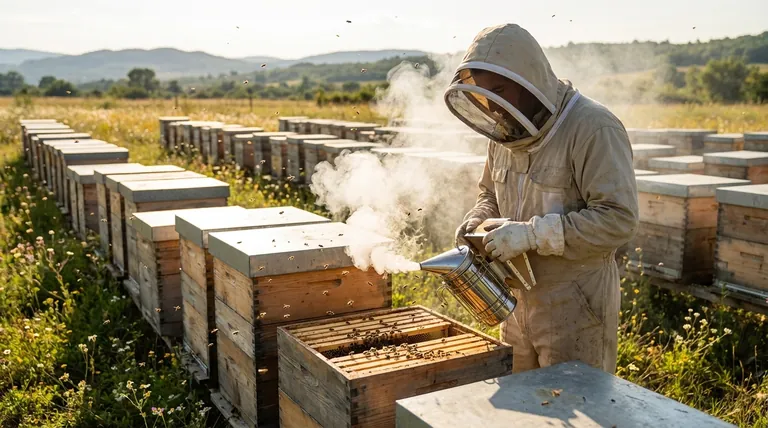
Picture this: you’re performing a routine inspection on a commercial-scale apiary. You pry open the first hive, and a calm, productive hum greets you. But moments later, that hum escalates to a high-pitched roar. The air fills with guard bees, your team is forced into a hasty retreat under a volley of stings, and the vital inspection is left unfinished.
For many commercial beekeepers, this scenario is more than just a bad day—it’s a recurring business problem. It’s a frustrating cycle of unpredictability that costs time, money, and colony health.
More Armor, More Rushing: Why Common Fixes Fail
When faced with an aggressive or "hot" hive, the typical reaction is to fight the symptoms. Beekeepers invest in thicker suits and gloves, or they try to work faster, hoping to get in and out before the colony's mood turns. Some might even blame the queen's genetics and undertake a costly and time-consuming requeening process.
While well-intentioned, these solutions miss the mark because they treat the bees as irrational aggressors. The negative business consequences continue to mount:
- Incomplete Inspections: Rushed or abandoned check-ups mean you miss the early signs of Varroa mites, foulbrood, or a failing queen, leading to devastating colony losses.
- Reduced Productivity: A constantly stressed colony is a less productive one. Bees spend energy on defense instead of foraging, resulting in lower honey yields and weaker pollination performance.
- Operational Inefficiency: Unpredictable hives make it impossible to stick to a schedule for tasks like splitting colonies or harvesting honey, throwing your entire operation off-kilter.
- Staff Safety & Turnover: A workplace with a high risk of stings is a difficult environment to manage, leading to lower morale and higher employee turnover.
These "fixes" are like trying to soundproof a room by shouting over the noise. You’re only adding to the chaos because you’re not addressing the source.
The Real Reason Your Hives Turn 'Hot': It's Not Anger, It's Communication
Here is the fundamental truth that changes everything: a hive that turns "hot" is not an emotional or random event. It is a predictable, instinct-driven response based on a failure of communication.
When you open a hive, you are perceived as a threat. The bees' defensive strategy relies on two ancient, hardwired survival mechanisms.
1. The Alarm Pheromone: A "Call to Arms"
When the first guard bee stings, it doesn't just inject venom. It releases an alarm pheromone into the air. This chemical signal is an urgent "call to arms" that instantly tells other guard bees, "Attack here! The threat is at this location!" One sting triggers a few more, and suddenly you have a dangerous chain reaction. A thicker suit does nothing to stop this signal from spreading.
2. The Fire Instinct: A Priority Override
However, there is one signal that overrides the bees' defensive programming: fire. For millions of years, the smell of smoke has meant one thing—a forest fire is coming, and they must prepare to abandon their home. This triggers two critical behavioral shifts:
- They Gorge on Honey: Their top priority is no longer to fight, but to load up on honey—the energy reserves they'll need to build a new home elsewhere.
- They Become Physically Calmer: A bee with a full belly of honey finds it physically difficult to flex its abdomen to sting. It is distracted, docile, and focused on survival.
The common struggle with aggressive hives isn't a bee problem; it's a communication problem. You are unintentionally triggering their alarm system without providing the "all-clear" signal they understand.
Speaking Their Language: The Smoker as a Tool of Communication
To manage a hive safely and predictably, you don't need more armor; you need a tool that can reliably interrupt their alarm system and activate their fire-response instinct.
This is where the bee smoker transforms from a simple accessory into your most critical communication device. It allows you to "speak" to the colony in a language they inherently understand. Its purpose is twofold:
- To Mask the Alarm: The smoke's powerful scent scrambles the alarm pheromones, preventing a single sting from escalating into a full-blown assault.
- To Trigger the Fire Response: The smoke initiates the calm, honey-gorging behavior, making the entire colony manageable.
For a commercial operation, where consistency is everything, you cannot afford a tool that fails. An HONESTBEE professional-grade bee smoker is engineered with this principle at its core. It’s not just a can with a bellows; it is a purpose-built communication tool designed for reliability and effectiveness. Its robust bellows deliver the thick, cool, and consistent smoke needed to manage multiple hives efficiently, and its durable, stainless-steel construction ensures it works every single time you need it—protecting your staff, your bees, and your bottom line.
From Fighting Fires to Fostering Growth: The New Era of Apiary Management
When you master the ability to communicate calm, you unlock a new level of operational efficiency and control. This isn't just about getting stung less; it's about fundamentally changing what's possible for your business.
With truly manageable colonies, your team can now:
- Conduct Meticulous Inspections: Confidently perform slow, thorough checks for pests and diseases, catching problems early and dramatically increasing colony survival rates.
- Execute with Precision: Undertake complex procedures like hive splitting, grafting, and requeening with a calm and predictable environment, enabling you to grow your apiary strategically.
- Boost Productivity: A less-stressed colony is a healthier, more populous, and more productive colony, directly impacting honey yields and pollination contracts.
Ultimately, it transforms beekeeping from a reactive struggle against nature into a proactive, scalable business built on a deep understanding of bee behavior.
Managing a commercial apiary is about more than just managing bees; it's about managing risk, efficiency, and profitability. A predictable, calm hive is the foundation of a successful operation. If you're ready to move beyond constant fire-fighting and build a more resilient, productive apiary, our team is here to help. We understand the unique challenges of wholesale and commercial operations and can equip you with the reliable tools built for professional demands. Contact Our Experts to start the conversation.
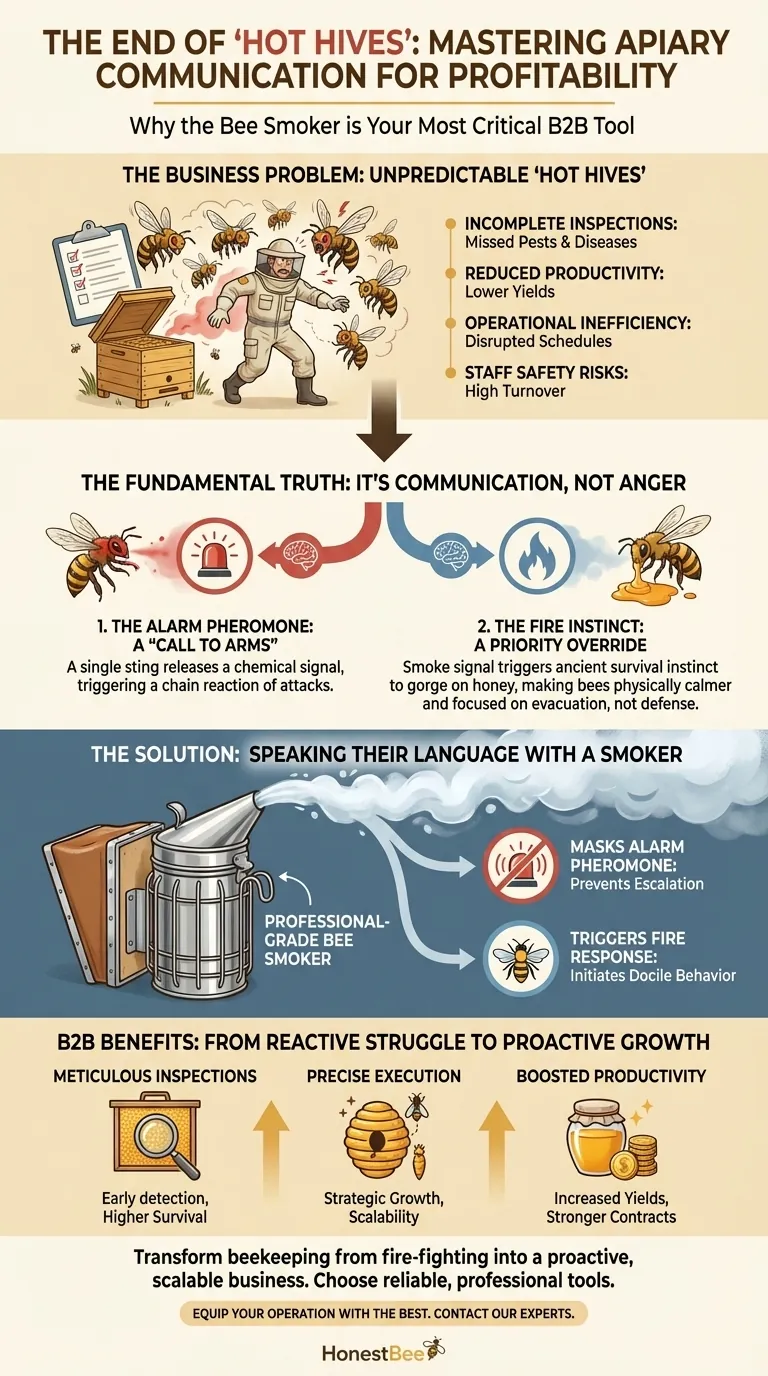
Visual Guide
Related Products
- Professional Bee Smoker with Elongated Spout and Durable Bellows for Beekeeping
- Stainless Steel Honey Bee Smoker Hive and Honeycomb Smoker for Beekeeping
- European Stainless Steel Bee Smoker for Honey Bee Hive
- Premium Traditional Copper Bee Smoker with Bellows
- Heavy-Duty Bee Smoker with Durable Plastic Bellows for Beekeeping
Related Articles
- How to Operate a Bee Smoker Safely: Expert Techniques for Calmer Hives
- Why Your Bee Smoker Might Be Making Your Hives More Aggressive—And How to Fix It
- Why Your Bee Smoker Keeps Going Out—And the 3-Layer Fix
- How to Choose the Right Bee Smoker Size for Your Beekeeping Operation
- How to Choose the Right Beekeeping Smoker for Optimal Performance