Pest infestations in honey bee feeders can devastate colonies, spread disease, and reduce honey production. This guide provides actionable strategies for beekeepers to minimize pests through hive design optimization, feeder placement, seasonal adjustments, and long-term maintenance.
Minimizing Pests in Honey Bee Feeding Systems
How Hive Design Impacts Pest Infestation Risk
The right feeder design is your first defense against pests. Research shows that pests like ants, wasps, and small hive beetles exploit poorly designed feeders. Key considerations include:
- Barrier Systems: Choose feeders with moats or physical barriers (e.g., floating lids) to block crawling insects.
- Drowning Prevention: Opt for designs with shallow drinking areas or textured surfaces to keep bees safe while deterring pests.
- Material Durability: Avoid porous materials that can harbor mold or attract pests.
Pro Tip: Match feeder capacity to colony size—overfilled feeders attract more pests.
Optimizing Feeder Placement to Deter Common Pests
Location matters as much as design. Improper placement turns feeders into pest magnets.
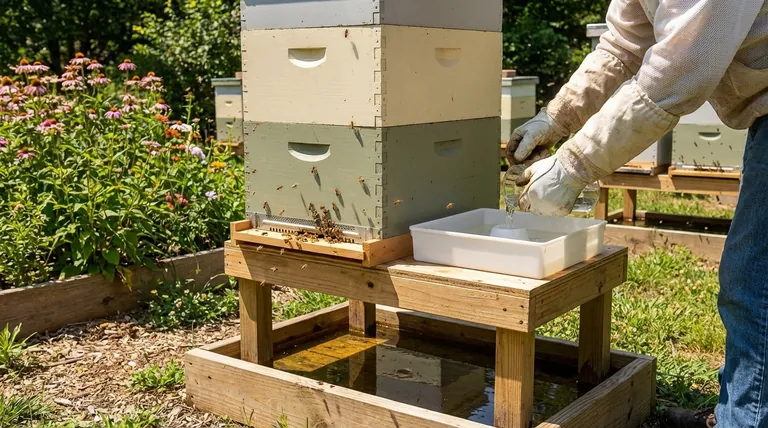
- Elevate Feeders: Mount them on stands with ant-proof legs (coated in grease or placed in water moats).
- Avoid Ground Contact: Keep feeders at least 12 inches off the ground to deter crawling insects.
- Shade and Ventilation: Place feeders in shaded, well-ventilated areas to reduce fermentation, which attracts pests like yellowjackets.
Did You Know? Wasps scout for food sources in early morning—placing feeders near hives (but not touching them) reduces detection.
Seasonal Adjustments for Year-Round Pest Control
Pest pressure fluctuates with seasons. Adapt your strategy:
- Spring/Summer: Use entrance reducers and robbing screens to protect high-sugar syrup from opportunistic wasps.
- Fall: Switch to dry sugar or pollen patties; liquid feeders in cold weather can freeze and crack, creating pest entry points.
- Winter: Remove dead colonies promptly—abandoned hives attract wax moths and rodents.
Long-Term Maintenance Practices for Feeders
Cleaning Protocols to Prevent Pest Attraction
Residue buildup invites pests. Follow these steps:
- Weekly Rinses: Use hot water and vinegar to dissolve sugar crystals.
- Deep Cleaning: Scrub with a bleach solution (1:5 ratio) monthly to eliminate mold spores.
- Inspect Seals: Replace cracked lids or gaskets that allow pests to infiltrate.
Monitoring and Early Intervention Strategies
Regular checks stop infestations before they escalate:
- Sticky Traps: Place near feeders to monitor beetle or ant activity.
- Bait Stations: Set up borax-based ant bait 3–5 feet from hives to divert pests.
- Hive Autopsies: Examine deadouts for pest larvae—a sign to revise your feeder strategy.
Key Insight: Colonies under stress (e.g., from poor nutrition) are more vulnerable to pests. Ensure feeders support—not undermine—hive health.
Ready to upgrade your pest management? HONESTBEE’s wholesale beekeeping supplies include ant-proof feeder stands, modular hive tops, and durable cleaning tools—helping commercial apiaries and distributors safeguard their colonies efficiently. Contact us to explore solutions tailored to your operation’s scale.
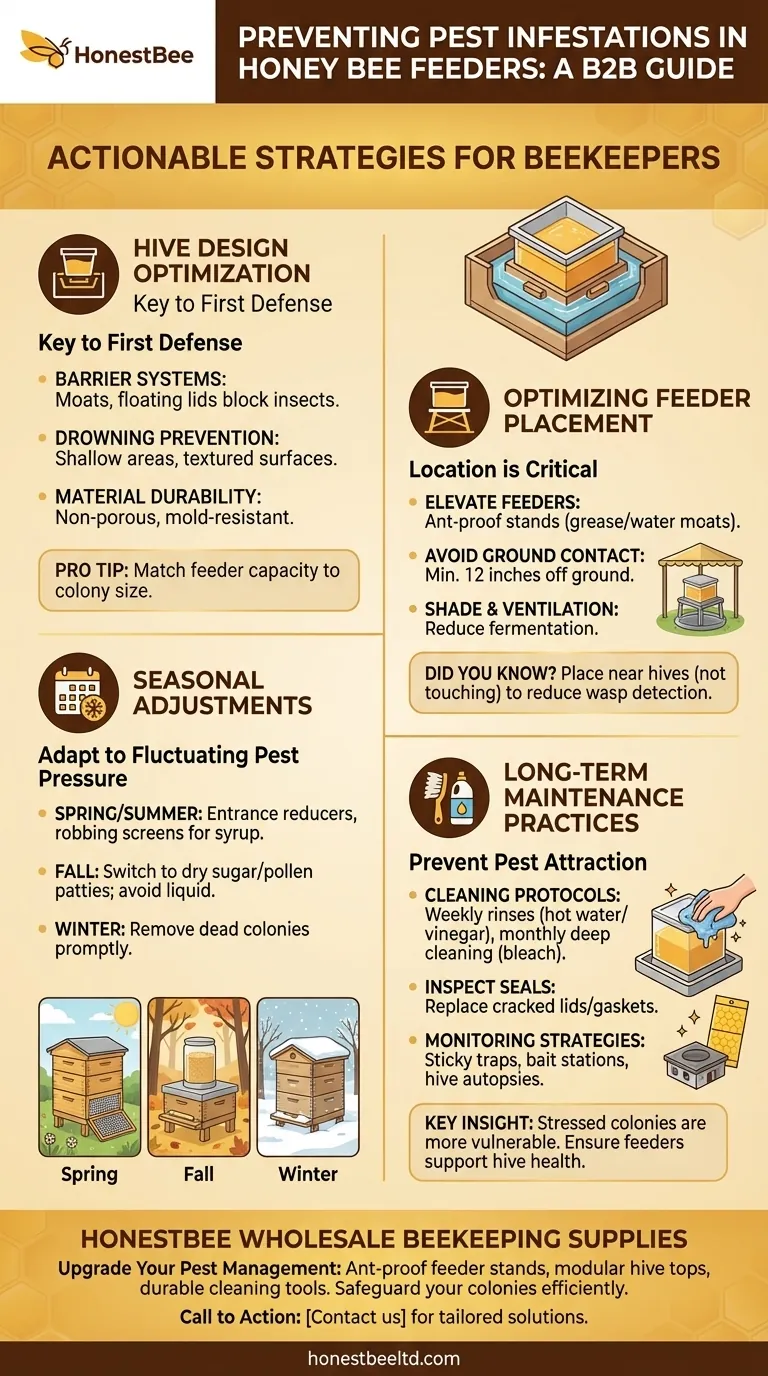
Visual Guide
Related Products
- HONESTBEE Round Hive Top Bee Feeder for Syrup
- HONESTBEE Entrance Bee Feeder Efficient Hive Front Liquid Feeding Solution for Beekeeping
- HONESTBEE Entrance Bee Feeder Professional Hive Nutrition Solution for Beekeeping
- HONESTBEE Professional Entrance Bee Feeder Hive Nutrition Solution
- HONESTBEE Square Top Hive Bee Feeder Top Bee Feeder
Related Articles
- How Round Hive Top Feeders Solve 3 Critical Beekeeping Challenges
- How to Choose the Right Bee Feeder for Your Hive’s Health and Efficiency
- How to Choose Between Frame and Gravity Feeders for Healthy Honey Bee Colonies
- How to Prevent Bee Drowning in Top Feeders Without Sacrificing Efficiency
- The Winter Fortress: Engineering Colony Survival with the Hive Top Feeder

















