Mason jar feeders offer beginner beekeepers a simple, cost-effective way to support colony health. This guide covers their advantages, setup, and troubleshooting—helping you avoid common pitfalls while maximizing efficiency.
Why Mason Jar Feeders Are Ideal for Beginner Beekeepers
How Mason Jar Feeders Work
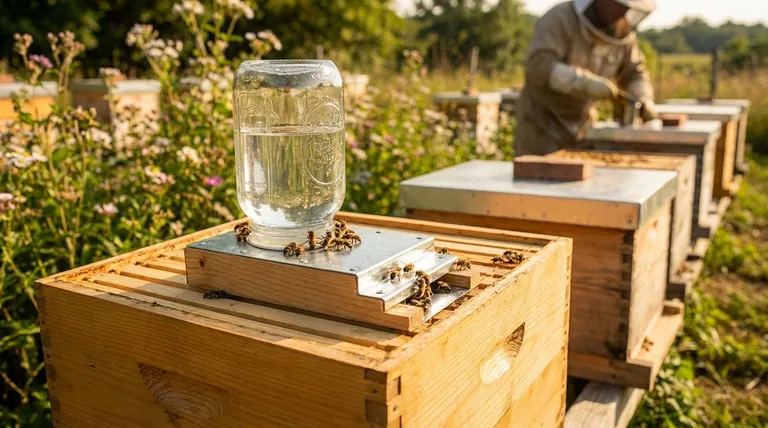
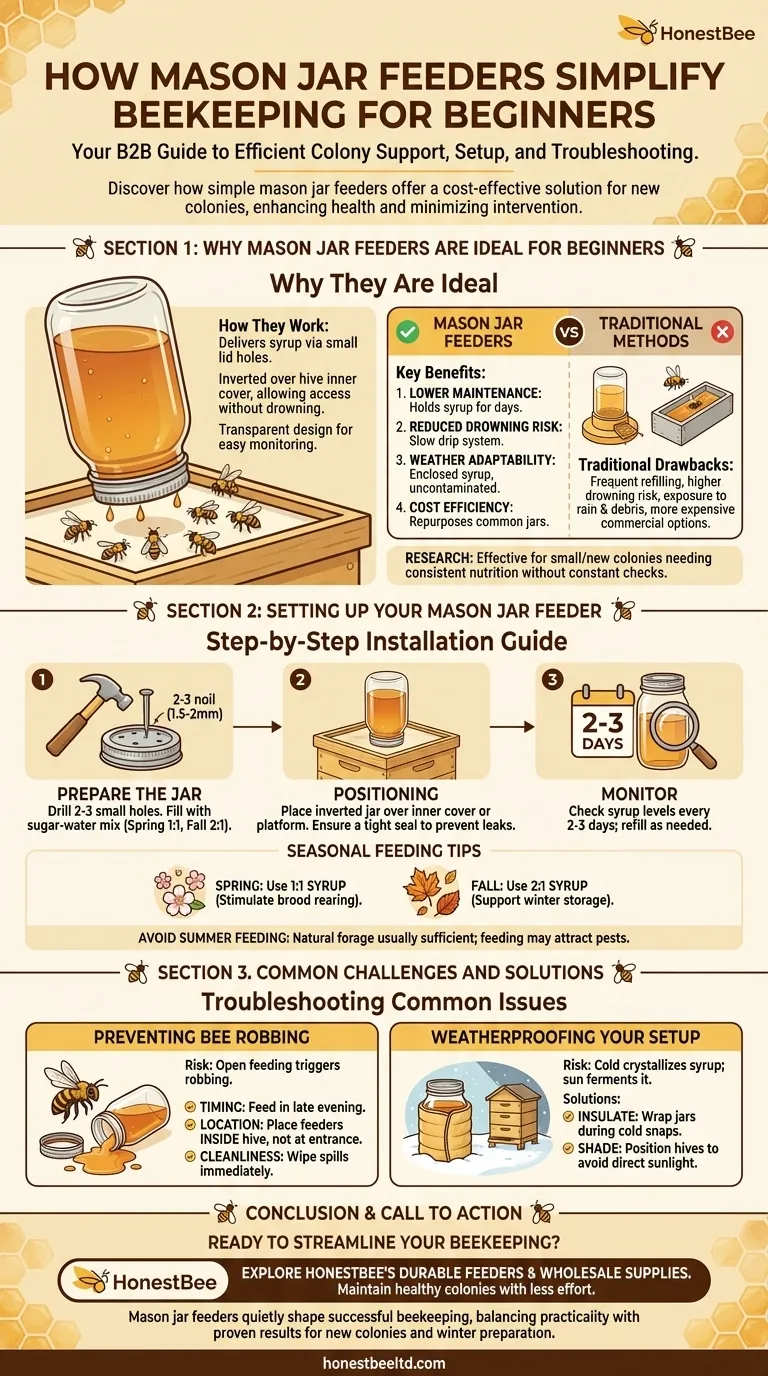
Mason jar feeders deliver sugar syrup through small holes drilled in the lid. Inverted over the hive’s inner cover or a dedicated feeding platform, they allow bees to access food without drowning. Their transparent design lets you monitor syrup levels at a glance.
Key Benefits Over Traditional Feeding Methods
- Lower Maintenance: Unlike entrance feeders that require frequent refilling, mason jars hold enough syrup for several days.
- Reduced Drowning Risk: The slow drip system minimizes accidents common in open-trough feeders.
- Weather Adaptability: Enclosed syrup stays uncontaminated during rain or wind—unlike frame feeders exposed to hive debris.
- Cost Efficiency: Repurposing mason jars cuts costs compared to commercial feeders.
Research shows mason jar feeders are particularly effective for small or new colonies needing consistent nutrition without constant intervention.
Setting Up Your Mason Jar Feeder
Step-by-Step Installation Guide
- Prepare the Jar:
- Drill 2–3 small holes (1.5–2mm diameter) in the lid using a hammer and nail.
- Fill with a 1:1 sugar-water mix for spring stimulation or 2:1 for fall storage.
- Positioning:
- Place the inverted jar over the inner cover’s hole or a feeding platform.
- Ensure a tight seal to prevent leaks.
- Monitor: Check syrup levels every 2–3 days and refill as needed.
Seasonal Feeding Tips
- Spring: Use 1:1 syrup to mimic natural nectar and stimulate brood rearing.
- Fall: Switch to 2:1 syrup to support winter honey stores.
- Avoid Summer Feeding: Natural forage is usually sufficient; feeding may attract pests.
Common Challenges and Solutions
Preventing Bee Robbing
Open feeding can trigger robbing behavior. Mitigate risks by:
- Timing: Feed in late evening when foraging activity slows.
- Location: Place feeders inside the hive, not at the entrance.
- Cleanliness: Wipe spills immediately to avoid attracting rival colonies.
Weatherproofing Your Setup
- Insulate: Wrap jars in insulation during cold snaps to prevent syrup from crystallizing.
- Shade: Position hives to avoid direct sunlight, which ferments syrup faster.
Ready to streamline your beekeeping? HONESTBEE’s durable feeders and wholesale supplies help commercial apiaries maintain healthy colonies with less effort. Explore our solutions today.
Final Notes: Mason jar feeders exemplify how simple tools can address complex needs—offering reliability that quietly shapes successful beekeeping. Whether you’re nurturing a new colony or preparing for winter, this method balances practicality with proven results.
Visual Guide
Related Products
- Classic Boardman Entrance Bee Feeder Hive Front Feeding Solution
- Automated Rotary Bottle Unscrambler for Honey Production Line
- Rapid Bee Feeder White Plastic 2L Round Top Feeder for 8 or 10-Frame Bee Hives
- White Plastic 0.5L Beekeeping Entrance Feeder for Bees
- Boardman Entrance Bee Feeder Durable Galvanized Steel and Wood Construction for Beekeeping
Related Articles
- How to Choose Between Frame and Gravity Feeders for Healthy Honey Bee Colonies
- How to Choose the Right Bee Feeder for Your Hive’s Health and Efficiency
- Hive Security: Why Bee Feeder Placement is a Matter of Life and Death
- An Engineer's Guide to Bee Feeders: Strategy, Psychology, and Hive Dynamics
- The Rate and the Ratio: How Bee Feeders Communicate with a Colony's Collective Mind