The Manager's Dilemma
A beekeeper stands before a hive in early spring. The air is cool but holds the promise of warmth. The colony is alive, but not yet thriving. The instinct is to help, to provide a sudden abundance of food to jumpstart the season.
So they fill a large, rapid feeder with sugar syrup and place it in the hive.
Weeks later, they find a hive clogged with syrup but a dwindling population. The queen has nowhere to lay. The well-intentioned act of generosity backfired, confusing a biological system finely tuned by millions of years of evolution.
This isn't a failure of resources. It's a failure of communication.
A Beehive Runs on Two Signals
Feeding a bee colony isn't about nutrition alone. It is about sending a clear, unambiguous signal that the colony's collective intelligence can interpret. The tools we use—the feeder and the syrup—are the interface for that communication.
There are only two messages that matter: "It's time to grow" or "It's time to prepare for winter."
The Spring Signal: A Whisper of Nectar
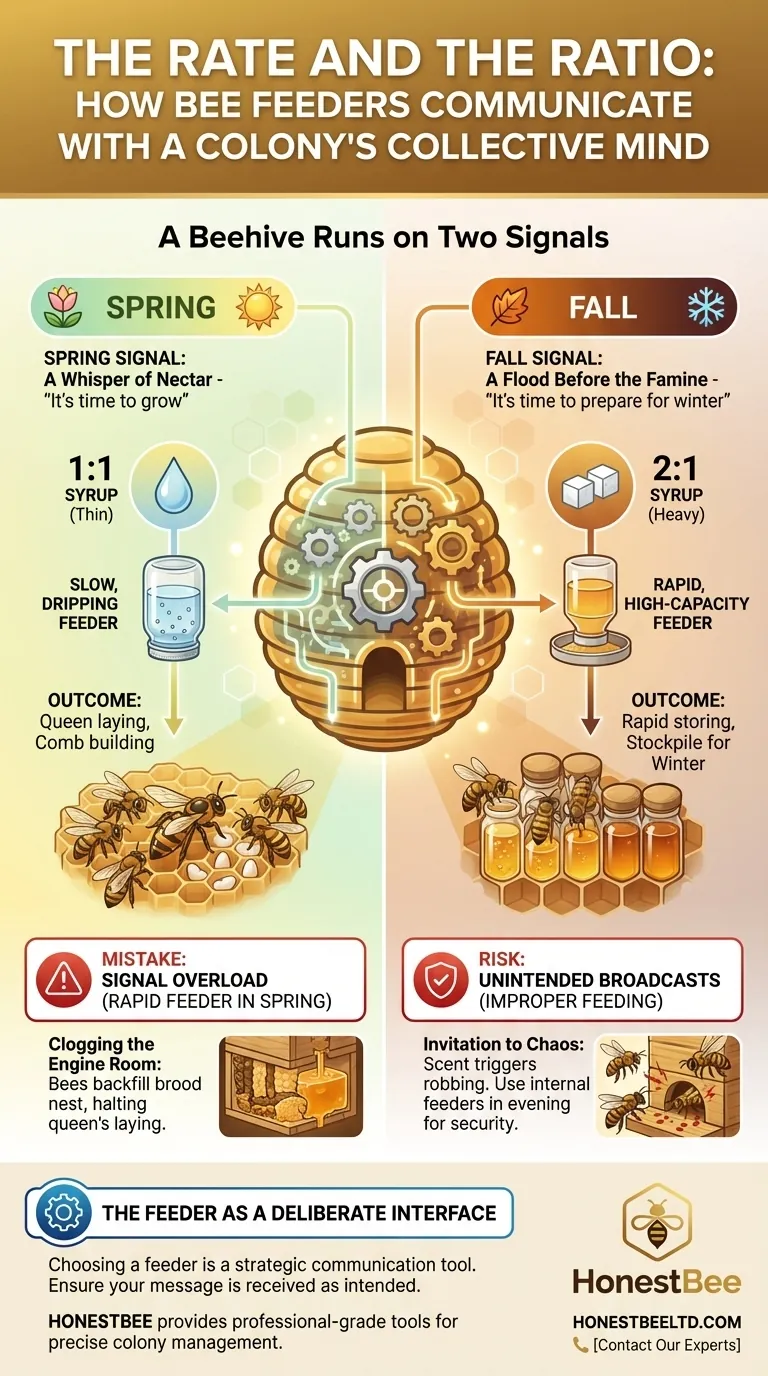
In spring, the goal is to simulate a gentle, early nectar flow. This is a subtle nudge. It tells the queen that resources are becoming available, encouraging her to start laying eggs. It prompts the workers to begin drawing out new wax comb.
This message requires two things:
- A thin, 1:1 syrup (sugar to water). It mimics the high water content of natural nectar. It's for immediate consumption, not long-term storage.
- A slow, dripping feeder. An inverted mason jar with tiny holes is a perfect example. It releases the syrup slowly, forcing the bees to work for it.
This slow rate is critical. It prevents the bees from panicking and backfilling the brood nest. It communicates opportunity, not emergency.
The Fall Signal: A Flood Before the Famine
In autumn, the message is the complete opposite. It’s an alarm bell. Winter is coming, and the colony must stockpile massive amounts of energy to survive. The communication needs to be urgent and overwhelming.
This requires a different protocol:
- A heavy, 2:1 syrup (sugar to water). The low water content means the bees expend less energy fanning it dry before capping it for storage. It’s engineered for efficiency.
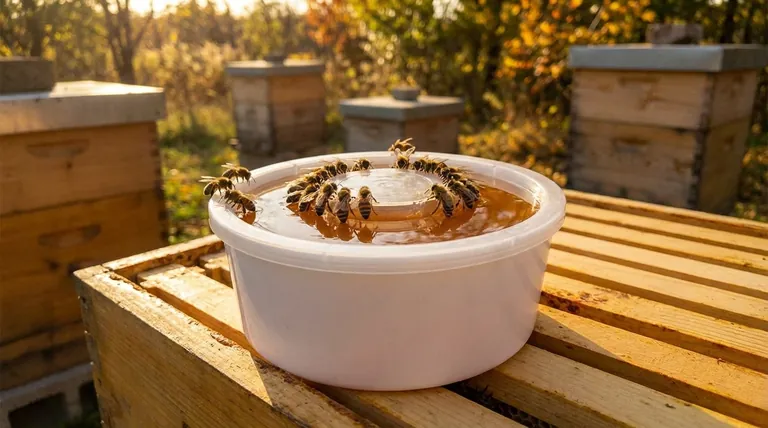
- A rapid, high-capacity feeder. Top feeders or frame feeders allow thousands of bees to feed at once. The goal is to get the maximum volume of syrup into the hive as fast as possible.
This communicates urgency. The flood of resources triggers the bees' instinct to store, store, store.
When Good Intentions Cause Systemic Failure
The most common mistakes in beekeeping are born from a misunderstanding of these signals. We apply human logic—more is always better—to a non-human system, with predictable consequences.
Signal Overload: Clogging the Engine Room
Using a rapid feeder in spring is like revving a car's engine to the redline before putting it in gear. The bees interpret the sudden flood of "nectar" as a massive, unexpected flow. Their instinct is to store it in the most convenient place: the empty cells of the brood nest.
This clogs the very heart of the hive. The queen, the engine of the colony's growth, is left with nowhere to lay. The signal for growth ironically halts it.
Unintended Broadcasts: The Invitation to Chaos
Sugar syrup has a potent aroma. When managed improperly, this scent becomes an open broadcast to every bee in the vicinity. It screams "free, undefended resources."
This can trigger robbing, a brutal frenzy where stronger colonies attack and decimate weaker ones. Placing feeders inside the hive and refilling them in the late evening contains this signal, turning a public broadcast into a private memo. It’s a matter of information security.
The Feeder as a Deliberate Interface
Choosing a feeder is not an equipment decision; it’s a strategic one. You are choosing the interface through which you will manage your colony's most critical directives. The right tool ensures your message is received as intended.
| Management Goal | Season | Informational Signal | Required Tooling | Desired Behavioral Outcome |
|---|---|---|---|---|
| Stimulate Growth | Spring | "Gentle Nectar Flow" | Slow/Dripping Feeder (1:1 Syrup) | Queen laying, comb building, slow population growth |
| Stockpile for Winter | Fall | "Urgent Final Harvest" | Rapid/Bulk Feeder (2:1 Syrup) | Rapid storing of syrup for winter survival |
For commercial apiaries and equipment distributors, mastering this communication is the difference between profit and loss. Systemic failures are not an option when hundreds of hives are at stake. This requires durable, reliable, and purpose-built equipment that delivers the correct signal, every single time. HONESTBEE specializes in supplying these professional-grade tools, ensuring that your management strategy is executed without equipment failure.
Whether you're stimulating spring build-up or ensuring winter survival across your entire operation, having the right interface is paramount. Contact Our Experts
Visual Guide
Related Products
- Rapid Bee Feeder White Plastic 2L Round Top Feeder for 8 or 10-Frame Bee Hives
- HONESTBEE Entrance Bee Feeder Professional Hive Nutrition Solution for Beekeeping
- White Plastic 0.5L Beekeeping Entrance Feeder for Bees
- HONESTBEE Professional Entrance Bee Feeder Hive Nutrition Solution
- HONESTBEE Entrance Bee Feeder Efficient Hive Front Liquid Feeding Solution for Beekeeping
Related Articles
- How to Choose Between Frame and Gravity Feeders for Healthy Honey Bee Colonies
- How to Choose the Right Bee Feeder for Your Hive’s Health and Efficiency
- Design, Drowning, and the Deceptively Simple Bee Feeder
- The Weight of Winter: A Systems Approach to Pre-Season Bee Feeding
- Beyond the Jar: The Hidden Engineering of Bee Feeder Safety