The Beekeeper's Winter Dilemma
Picture a still, cold day in January. The world is quiet. Your hives are quiet, too. As a beekeeper, that silence is both a comfort and a source of low-grade anxiety. Are they okay? Do they have enough food to generate the heat they need to survive until the first nectar flow?
Your first instinct might be to give them what you've always given them: sugar water. It’s a logical thought, but in the cold, it’s a disastrous one.
The Paradox of Winter Feeding
The primary challenge for a wintering colony isn't just starvation; it's a battle against the elements inside the hive. And our most common form of help—liquid feed—becomes an enemy.
Sugar syrup introduces two significant risks in cold weather. The first is obvious: it can freeze, rendering it useless.
The second is far more insidious. The bees' own respiration and metabolic activity release warm, moist air. When this air hits the cold inner surfaces of the hive, it condenses. This condensation can rain back down on the cluster, chilling the bees and leading to death.
In winter, moisture is often a more potent killer than the cold itself.
An Elegant Solution: The Physics of Sugar
This is where the counter-intuitive brilliance of dry sugar feeding comes into play. It solves both problems with an almost beautiful simplicity.
Plain, granulated sugar provides a stable, non-freezing source of carbohydrates. But its secret weapon is its hygroscopic nature—it actively absorbs moisture from the surrounding air.
The bees consume the slightly moistened sugar crystals, getting the energy they need. At the same time, the sugar acts as a desiccant, pulling that deadly condensation out of the hive's atmosphere. It’s food and climate control in one simple package.
Two Methods, One Goal
Applying dry sugar is a low-stress intervention. The choice between the two primary methods comes down to your priorities: speed versus tidiness.
The Emergency Intervention: The Inner Cover Method
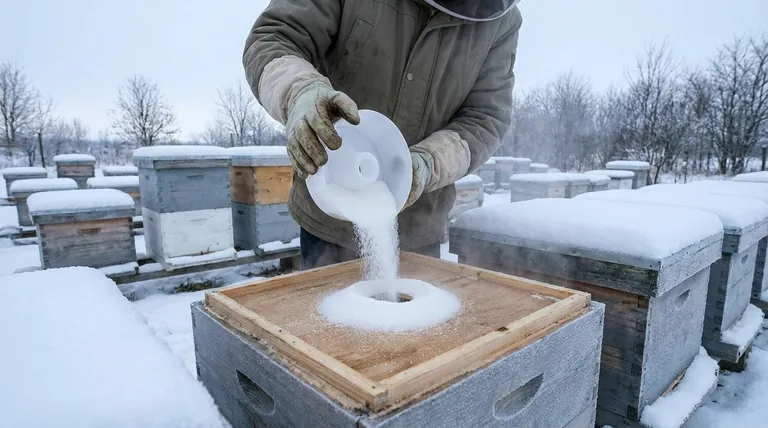
This is the fastest approach. You simply remove the telescoping outer cover and pour a mound of granulated sugar directly onto the inner cover, around the central hole. The bees will access it as needed. It's a perfect choice for a quick, urgent application when you need to act now.
The Tidy Approach: The Newspaper Method
For better containment, this method is superior. A single sheet of newspaper is placed across the top bars of the uppermost hive box. The sugar is then poured onto the paper. This prevents crystals from falling between the frames and makes spring cleanup much simpler.
Rules of Engagement: Critical Considerations
Effective beekeeping is about discipline—using the right tool for the right job at the right time. Dry sugar feeding is no exception.
It's a Tool, Not a Crutch
This is a winter survival tactic, not a long-term feeding strategy. Dry sugar provides calories for warmth, but it doesn't stimulate brood rearing like liquid syrup does. Once temperatures are consistently above 50°F (10°C), you must switch back to liquid feed if supplemental feeding is required.
The Purity Principle
The type of sugar is non-negotiable.
- Good: Pure, white granulated sucrose (cane or beet sugar). Despite debates, studies show no discernible difference in bee health between the two.
- Bad: Brown sugar. It contains molasses, which bees cannot digest and can cause dysentery.
- Worse: Powdered (confectioner's) sugar. It contains cornstarch to prevent caking, which is also indigestible to bees.
Stick to plain white sugar. No exceptions.
Choosing Your Strategy
Your approach should be deliberate, based on the specific needs of your colony.
| Priority | Recommended Method | Why |
|---|---|---|
| Speed & Emergency | Inner Cover Method | Fastest application, minimal disturbance. |
| Hive Tidiness | Newspaper Method | Contains sugar, simplifies spring cleanup. |
| Spring Growth | Neither (Use Syrup) | Switch to 1:1 liquid feed in warmer weather. |
Mastering simple, effective interventions like this is the foundation of responsible beekeeping. It transforms anxiety into confidence and gives your colonies the best possible chance of thriving. Ensuring your apiaries are equipped with durable, high-quality inner covers and hive components is the first step toward effective winter management. Contact Our Experts
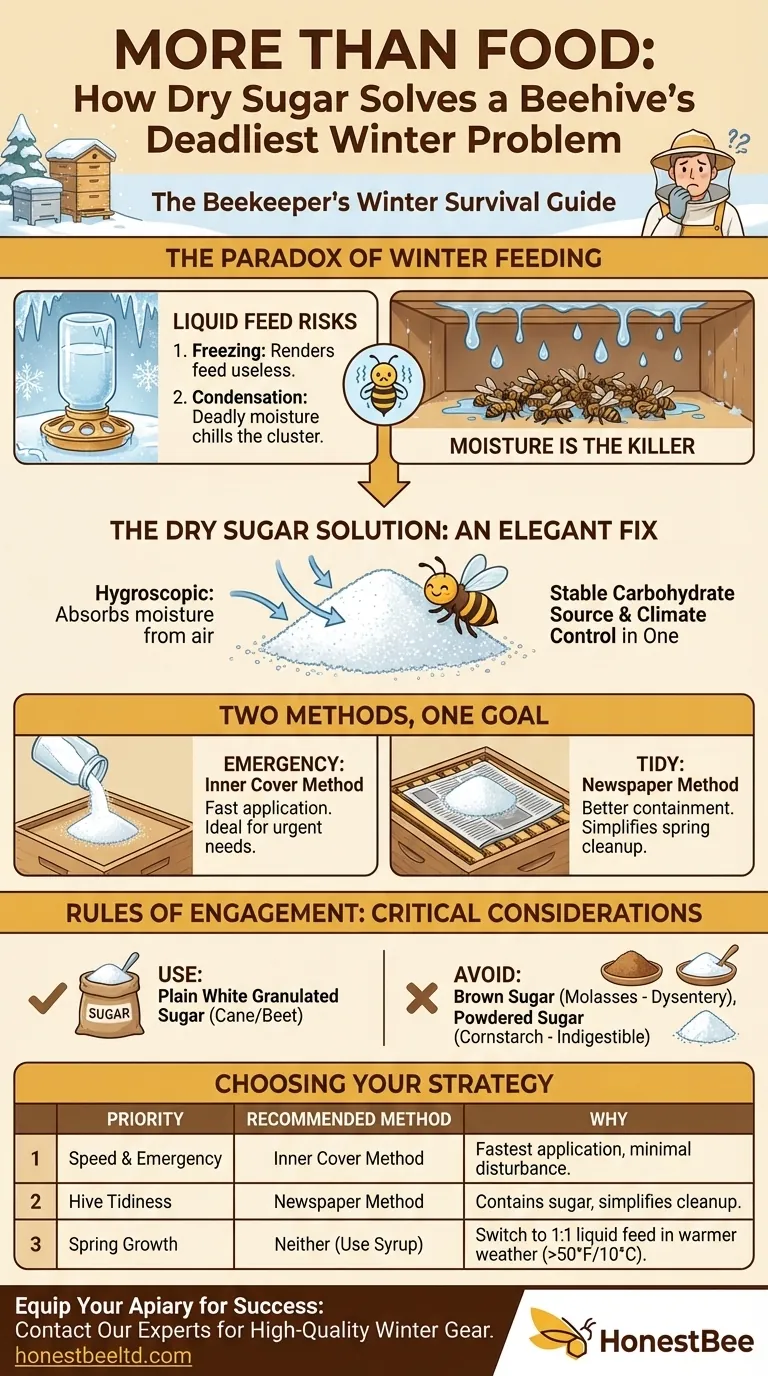
Visual Guide
Related Products
- Economy Small Scale Honey Dryer Dehumidifier Thickening Machine
- High Quality Honey Dehumidifier Dryer Thickening Machine for Beekeeping
Related Articles
- How Controlled Disc Speed in Honey Dryers Preserves Quality and Prevents Spoilage
- Is Your Honey Dryer Secretly "Cooking" Your Profits?
- The Unseen Battle in Every Honey Bucket: Heat, Time, and Quality
- How Floral Composition Shapes Honey Texture: Managing Crystallization for Perfect Consistency
- How to Control Honey Crystallization: Science-Backed Methods for Beekeepers

