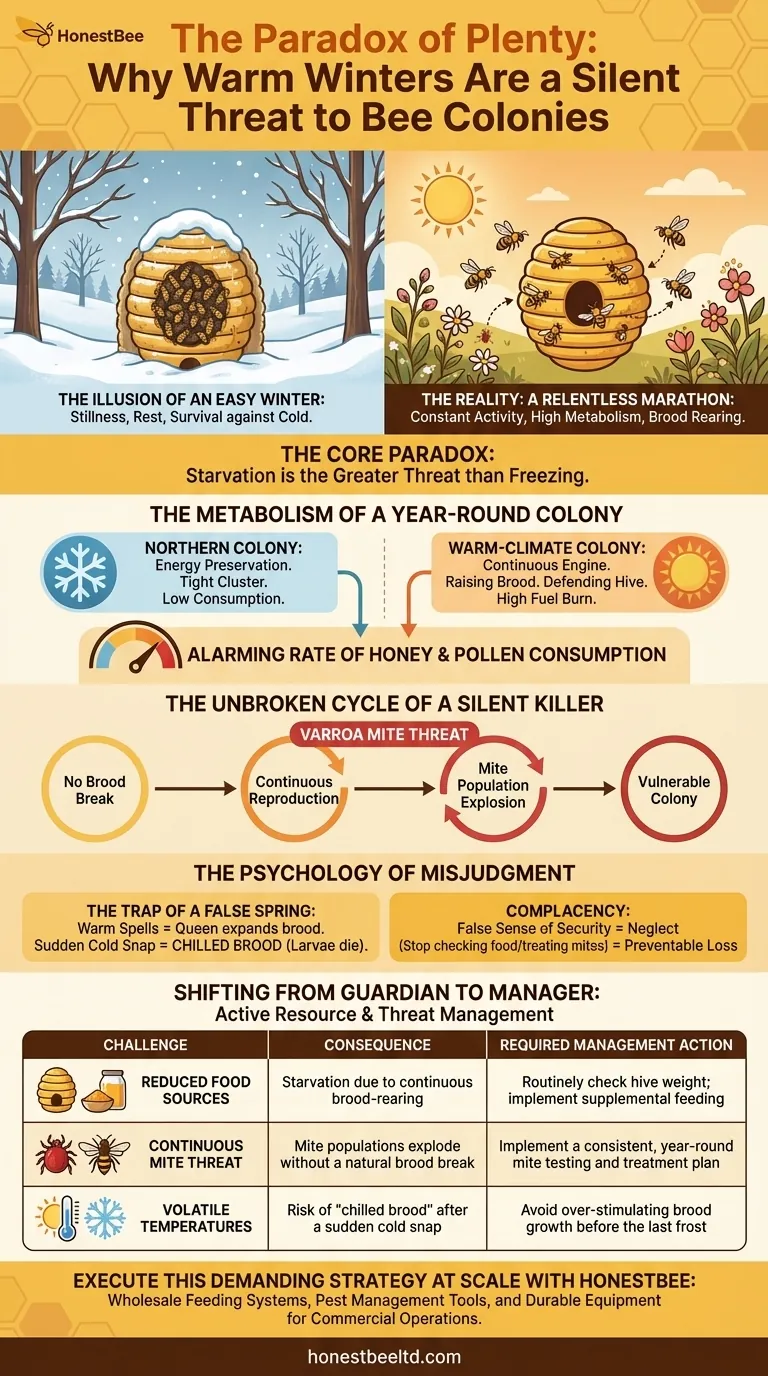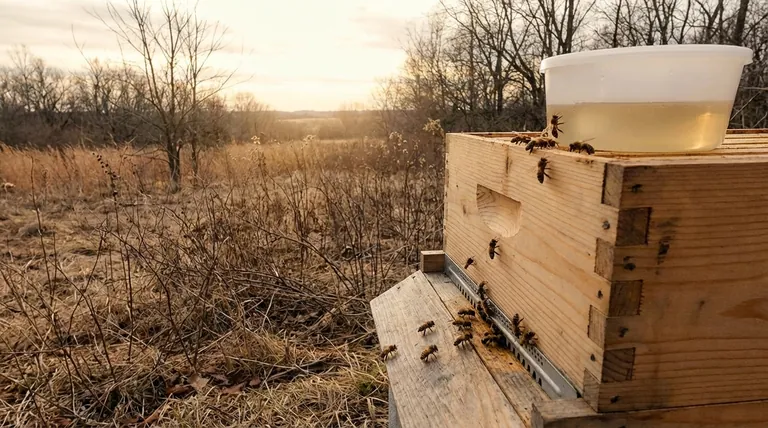
The Illusion of an Easy Winter
Our minds instinctively equate winter with a deep, quiet stillness. We see it as a time of rest, of survival against the biting cold. For beekeepers in northern climates, this is true. Their primary job is to insulate their hives and hope the colony’s tight, dormant cluster makes it to spring.
But in warmer climates, this mental model is not just wrong; it's dangerous.
For honey bees in the southern United States or similar regions, winter is not a vacation. It's a relentless marathon. The colony doesn't shut down. On any temperate day, you'll see bees flying. The queen continues to lay eggs. The hive remains a city that never sleeps, and its citizens are constantly consuming fuel.
The core paradox is this: the greatest threat in a mild winter isn't freezing, but starvation.
The Metabolism of a Year-Round Colony
A northern colony survives winter by forming a tight, heat-conserving ball. They are specialists in energy preservation, living off their honey stores with metabolic precision.
A warm-climate colony, however, keeps the engine running. They raise brood, fly on warm days, and defend the hive. This continuous activity burns through honey and pollen at an alarming rate, even as natural nectar sources dwindle to almost nothing. They are living on savings, but their spending habits haven't changed.
The Unbroken Cycle of a Silent Killer
This constant activity creates another, more insidious problem: pests. The Varroa mite, the single greatest enemy of the honey bee, thrives in a hive that never stops raising brood.
In cold climates, the "brood break"—a period where the queen stops laying—naturally disrupts the mite's life cycle. Mites need bee larvae to reproduce. Without it, their population growth halts. But in a warm-climate winter, there is no break. The Varroa mite has a year-round nursery to multiply, and its population can explode just as the colony is at its most vulnerable.
The Psychology of Misjudgment
The technical challenges are straightforward. The more complex problem is the beekeeper's own psychology. A sunny day in January feels like a gift, a sign that all is well. This is a cognitive trap.
The Danger of a False Spring
Warm spells don't just feel good to the beekeeper; they signal to the queen that it's time to ramp up egg-laying. She expands the brood nest, preparing for an early spring.
But if a sudden cold snap follows, the colony's cluster of bees may be too small to cover all the developing young. The result is "chilled brood"—larvae that die from exposure. The workers must then expend precious energy to remove the dead, setting the colony's growth back weeks. The beekeeper’s optimism is punished by the weather’s volatility.
Complacency: The Most Common Cause of Loss
The single greatest risk in warm-climate beekeeping is a false sense of security. It's easy to look at bees flying on a winter day and assume they are thriving.
This assumption leads to neglect. The beekeeper stops checking food stores or postpones mite treatments, believing the "good weather" is enough. It is this complacency—not the temperature—that leads to so many hives dying from preventable starvation or mite infestations.
Shifting from Guardian to Manager
Effective winter beekeeping in a warm climate requires a fundamental shift in mindset: from a passive guardian protecting against cold to an active manager of resources and threats. For commercial operations, this isn't a hobby; it's a critical, year-round operational discipline.
This continuous management cycle demands professional, reliable equipment.
| Challenge | Consequence for the Colony | Required Management Action |
|---|---|---|
| Reduced Food Sources | Starvation due to continuous brood-rearing | Routinely check hive weight; implement supplemental feeding |
| Continuous Mite Threat | Mite populations explode without a natural brood break | Implement a consistent, year-round mite testing and treatment plan |
| Volatile Temperatures | Risk of "chilled brood" after a sudden cold snap | Avoid over-stimulating brood growth before the last frost |
At commercial scale, "checking hive weight" means efficient processes, and "mite treatment" requires durable equipment that works reliably across hundreds of hives. It’s about having feeding systems that are easy to deploy and refill, and mite treatments that can be administered consistently and effectively.
Managing a modern apiary through a mild winter is an operational challenge. HONESTBEE provides the wholesale-focused supplies and equipment—from feeding systems to pest management tools—that commercial apiaries need to execute this demanding strategy at scale.
Visual Guide