The Critical Moment of Failure
Imagine standing beside a hive of 50,000 bees. The air hums with focused energy. You give the bellows of your smoker a gentle squeeze, directing a puff of cool, white smoke across the entrance. The guard bees retreat, the colony’s alarm pheromones are masked, and a fragile peace settles. You are in control.
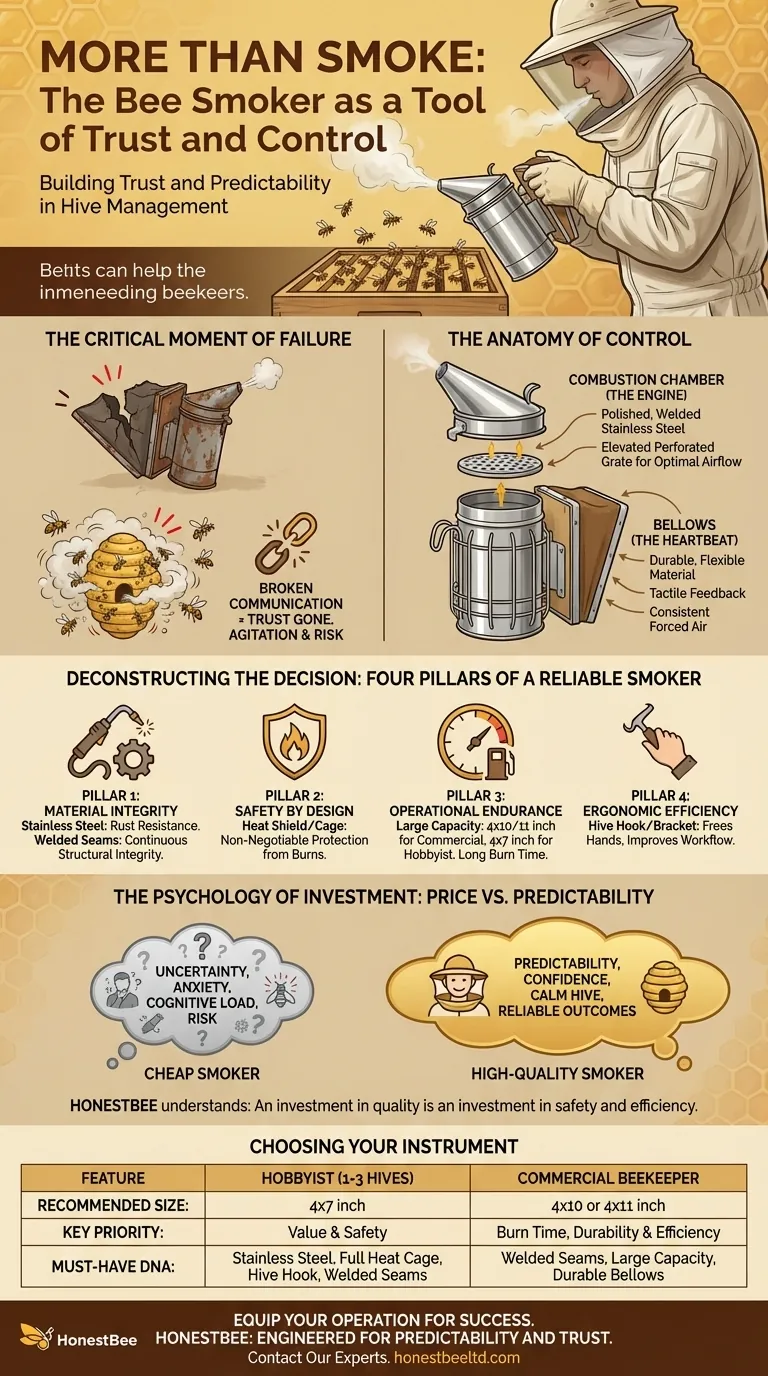
Now, imagine the smoker's bellows crack. The smoke falters and dies. The gentle hum rises in pitch, turning into an audible roar of agitation. Your tool has failed, but more importantly, your communication has broken down. The trust is gone. This is the moment a simple piece of equipment reveals itself as the most critical safety device in your apiary.
A bee smoker is not merely a can that produces smoke. It is an instrument of control, a tool for building trust between beekeeper and bee. Its design and construction are a direct investment in predictable, safe hive management.
The Anatomy of Control
To appreciate a great smoker, you have to see it not as a single object, but as a system engineered for a specific purpose: controlled, consistent combustion.
The Combustion Chamber: Where Consistency is Forged
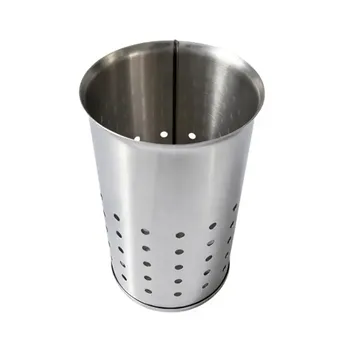
The firebox is the engine. In superior models, it's crafted from polished and welded stainless steel. This isn't for aesthetics; it’s for thermal stability and a long operational life under constant heat stress.
Inside, a small, perforated grate elevates the fuel. This isn't a trivial feature. It is the key to creating optimal airflow from below, ensuring the fuel smolders slowly and consistently rather than burning out hot and fast. It’s a small piece of engineering that enables the entire system.
The Bellows: The Heartbeat of the Operation
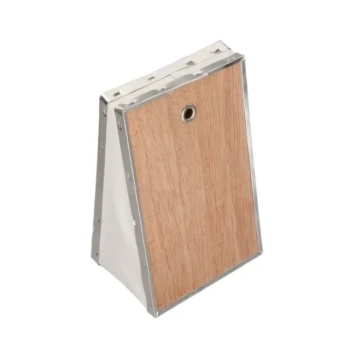
The bellows are the lungs. They provide the forced air that dictates the volume and pace of the smoke. Quality bellows, made from durable, flexible material, provide tactile feedback. With each squeeze, you should feel a direct, predictable response.
When bellows are made from cheap materials, they introduce uncertainty. They create anxiety for the beekeeper, who can never be fully confident the next squeeze won't be the last.
Deconstructing the Decision: Four Pillars of a Reliable Smoker
Choosing a smoker isn’t about features; it’s about evaluating the core engineering principles that ensure reliability when you need it most.
Pillar 1: Material Integrity
- Stainless Steel: It is the standard for a reason. Its resistance to rust and corrosion ensures the smoker doesn’t weaken over time, even when left in the back of a truck or exposed to the elements.
- Welded Seams: Look closely at how the firebox is joined. Riveted or spot-welded seams are points of failure. A continuous, welded seam is a mark of superior craftsmanship, providing structural integrity that will withstand years of heating and cooling cycles.
Pillar 2: Safety by Design
The firebox gets dangerously hot. A protective heat shield or cage isn't an optional add-on; it is a non-negotiable component of a finished tool. A smoker without a full heat cage is an accident waiting to happen. The psychological cost of a serious burn—the loss of confidence, the hesitation—is far greater than the financial cost of this feature.
Pillar 3: Operational Endurance
The size of the smoker dictates its fuel capacity and burn time.
- A standard 4x7 inch smoker is sufficient for a hobbyist with one or two hives.
- A larger 4x10 or 4x11 inch smoker is essential for commercial operations.
For a professional, having to stop an inspection to refuel is not an inconvenience; it is a direct loss of efficiency. It breaks the workflow and introduces an unnecessary risk.
Pillar 4: Ergonomic Efficiency
Small details have an outsized impact on workflow. A simple hook or mounting bracket allows you to hang the smoker on the side of a hive body. This frees up your most valuable assets: your hands. This small, thoughtful feature demonstrates an understanding of the beekeeper's process, not just the tool's function.
The Psychology of Investment: Price vs. Predictability
Why do people buy cheap smokers? It's a common cognitive bias: prioritizing a small, immediate saving over long-term, predictable performance.
A cheap tool introduces a cascade of uncertainties. Will it light properly? Will the smoke be consistent? Will the bellows hold? This uncertainty creates cognitive load and stress, distracting you from the complex task of reading the colony's behavior.
An investment in a high-quality smoker is an investment in predictability. As suppliers to commercial apiaries, we at HONESTBEE understand this better than anyone. Our clients don’t just buy equipment; they buy reliable outcomes. A well-built, welded stainless steel smoker provides the ultimate outcome: a calm hive and a confident beekeeper.
Choosing Your Instrument
Your choice ultimately depends on the scale and seriousness of your operation. This simple matrix can guide your decision.
| Feature | Hobbyist (1-3 Hives) | Commercial Beekeeper |
|---|---|---|
| Recommended Size | 4x7 inch | 4x10 or 4x11 inch |
| Key Priority | Value & Safety | Burn Time, Durability, & Efficiency |
| Must-Have DNA | Stainless Steel, Full Heat Cage, Hive Hook | Welded Seams, Large Capacity, Durable Bellows |
Your smoker is your primary interface for managing hive behavior. Its quality and reliability dictate the safety and efficiency of your work more than any other tool you own. Choosing the right one is the foundation of calm, confident beekeeping.
At HONESTBEE, we specialize in providing commercial apiaries and distributors with equipment engineered for this exact level of predictability and trust. If you're ready to equip your operation for success, Contact Our Experts.
Visual Guide
Related Products
- Stainless Steel Honey Bee Smoker Hive and Honeycomb Smoker for Beekeeping
- Professional Bee Smoker with Elongated Spout and Durable Bellows for Beekeeping
- Premium Traditional Copper Bee Smoker with Bellows
- Heavy Duty Manual Bee Smoker Blower for Beekeeping
- European Stainless Steel Bee Smoker for Honey Bee Hive
Related Articles
- The End of 'Hot Hives': Why Your Bee Smoker Is More Important Than Your Suit
- Why Your Bee Smoker Might Be Making Your Hives More Aggressive—And How to Fix It
- Why Your Bee Smoker Keeps Going Out—And the 3-Layer Fix
- How to Operate a Bee Smoker Safely: Expert Techniques for Calmer Hives
- How to Choose the Right Bee Smoker Size for Your Beekeeping Operation