Beekeepers often wonder: Why do syrup ratios need to change with the seasons? The answer lies in honeybee biology—their digestive efficiency, winter survival mechanisms, and nectar availability shifts demand tailored feeding strategies. This guide breaks down the apicultural science behind seasonal syrup formulations, offering actionable methods to support hive health year-round.
The Biology of Bee Feeding Seasons
Honeybees don’t process sugars identically in spring versus fall. Their metabolic needs shift with environmental conditions, requiring beekeepers to adapt syrup concentrations accordingly.
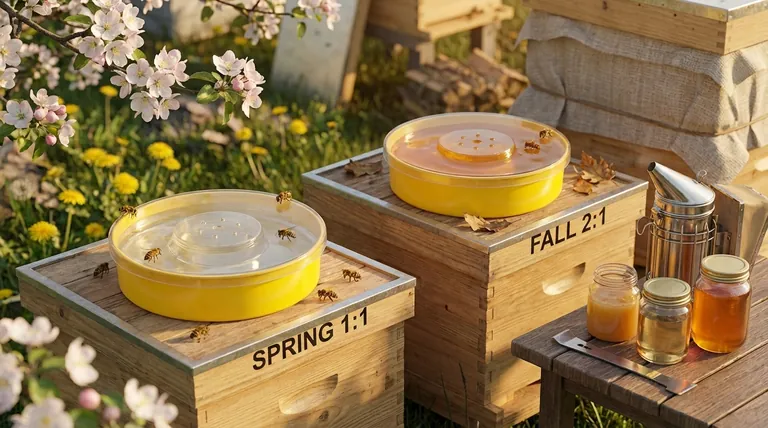
Spring Nectar Simulation Strategy
Spring colonies prioritize brood rearing and comb building. Natural nectar at this time typically contains:
- Higher water content (around 70–80%)
- Rapid digestibility to fuel immediate energy demands
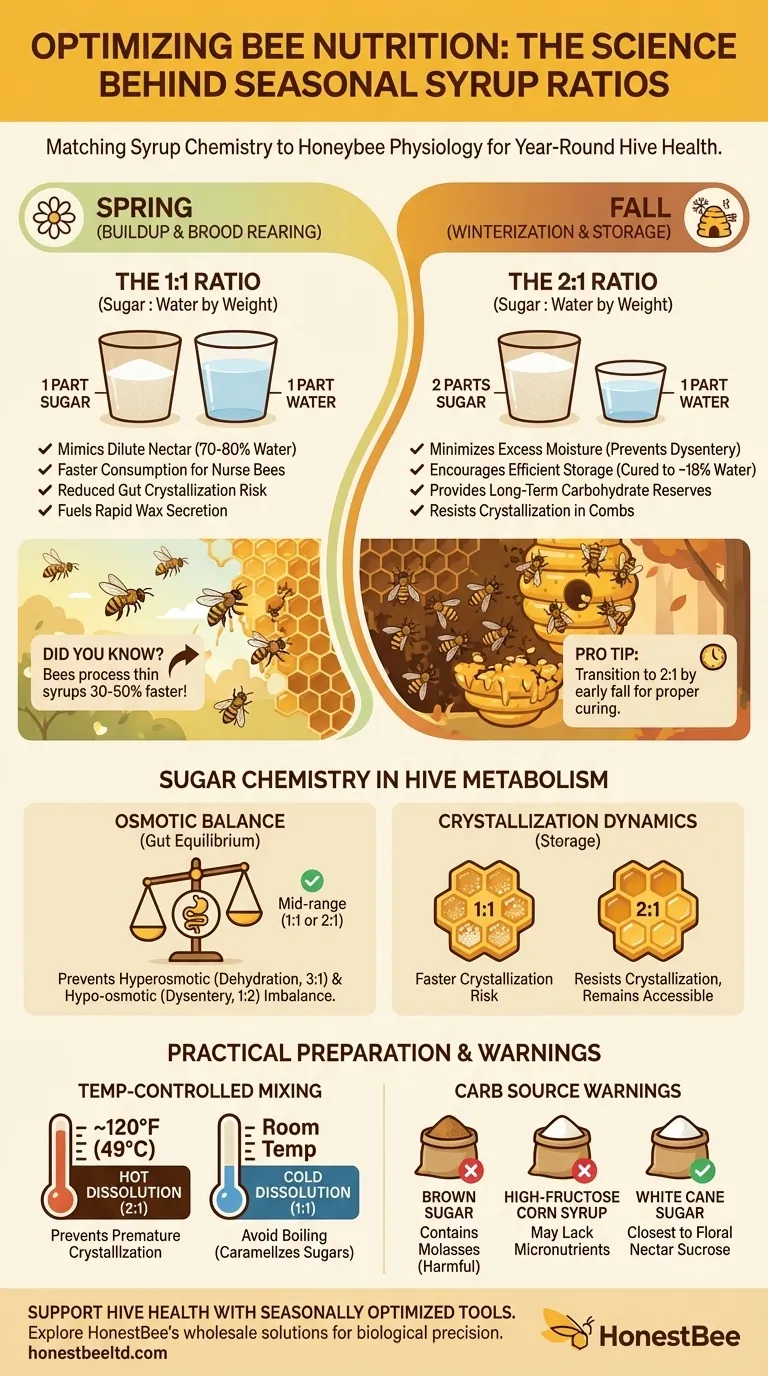
A 1:1 sugar-to-water ratio (by weight) mimics this dilute nectar, offering:
✔ Faster consumption by nurse bees
✔ Reduced gut crystallization risk during active foraging
✔ Optimal support for wax secretion
Did you know? Research shows bees process thin syrups 30–50% faster than thick solutions, critical for spring population booms.
Fall Winterization Physiology
As temperatures drop, bees transition to winter survival mode:
- Lower water intake reduces freezing risk in the hive.
- Concentrated stores provide slow-release energy.
A 2:1 sugar-to-water ratio aligns with these needs by:
✔ Minimizing excess moisture (linked to dysentery)
✔ Encouraging efficient storage (bees dehydrate syrup to ~18% water content)
✔ Providing long-term carbohydrate reserves
Pro Tip: Late-summer syrup feeding should transition to 2:1 by early fall, allowing bees time to cure and cap stores before winter.
Sugar Chemistry in Hive Metabolism
Not all sugars behave the same in bee digestion. Understanding osmotic balance and crystallization helps prevent hive stress.
Osmotic Balance in Bee Digestion
Bees maintain delicate fluid equilibrium in their gut. Improper syrup ratios disrupt this, causing:
⚠ Hyperosmotic imbalance: Thick syrups (e.g., 3:1) draw water from bee tissues, dehydrating them.
⚠ Hypo-osmotic imbalance: Thin syrups (e.g., 1:2) overwhelm excretory systems, leading to dysentery.
Key Insight: Mid-range ratios (1:1 or 2:1) match honey’s natural osmotic pressure, reducing bee energy expenditure.
Crystallization and Storage Dynamics
Sugar concentration affects how stores solidify:
- 1:1 syrup crystallizes faster, risking granulation in combs.
- 2:1 syrup resists crystallization, remaining accessible during winter.
Note: Invert sugars (e.g., honey or commercial additives) delay crystallization but aren’t always cost-effective for large-scale operations.
Practical Syrup Preparation Guide
Temperature-Controlled Mixing Methods
-
Hot Dissolution (Recommended for 2:1 syrup):
- Heat water to ~120°F (49°C) before adding sugar.
- Prevents premature crystallization.
-
Cold Dissolution (For 1:1 spring syrup):
- Room-temperature water suffices.
- Avoid boiling, which caramelizes sugars and harms bee digestion.
Alternative Carbohydrate Source Warnings
While some beekeepers experiment with:
- Brown sugar (contains molasses, harmful to bees)
- High-fructose corn syrup (may lack essential micronutrients)
Stick to white cane sugar—it’s the closest to floral nectar’s sucrose content.
Support Hive Health with Seasonally Optimized Tools
Just as syrup ratios shift with the seasons, your beekeeping supplies should adapt to colony needs. HONESTBEE provides commercial-scale equipment—from durable feeders to temperature-stable storage tanks—helping distributors and apiaries deliver precise nutrition year-round.
Ready to refine your feeding strategy? Explore HONESTBEE’s wholesale solutions designed for beekeepers who prioritize biological precision.
By aligning syrup chemistry with honeybee physiology, you’re not just feeding bees—you’re sustaining the intricate systems that keep colonies thriving. Whether prepping for spring buildup or winter survival, these ratios quietly shape the future of every hive.
Visual Guide
Related Products
- HONESTBEE Round Hive Top Bee Feeder for Syrup
- Bee Floral Relief Silicone Mold for Artisan Soap Candle Making
- Stainless Steel Honey Bee Smoker Hive and Honeycomb Smoker for Beekeeping
- HONESTBEE Entrance Bee Feeder Efficient Hive Front Liquid Feeding Solution for Beekeeping
- Premium Traditional Copper Bee Smoker with Bellows
Related Articles
- How Round Hive Top Feeders Solve 3 Critical Beekeeping Challenges
- How to Choose the Right Bee Feeder for Your Hive’s Health and Efficiency
- How to Choose Between Frame and Gravity Feeders for Healthy Honey Bee Colonies
- How to Prevent Bee Drowning in Top Feeders Without Sacrificing Efficiency
- The Winter Fortress: Engineering Colony Survival with the Hive Top Feeder