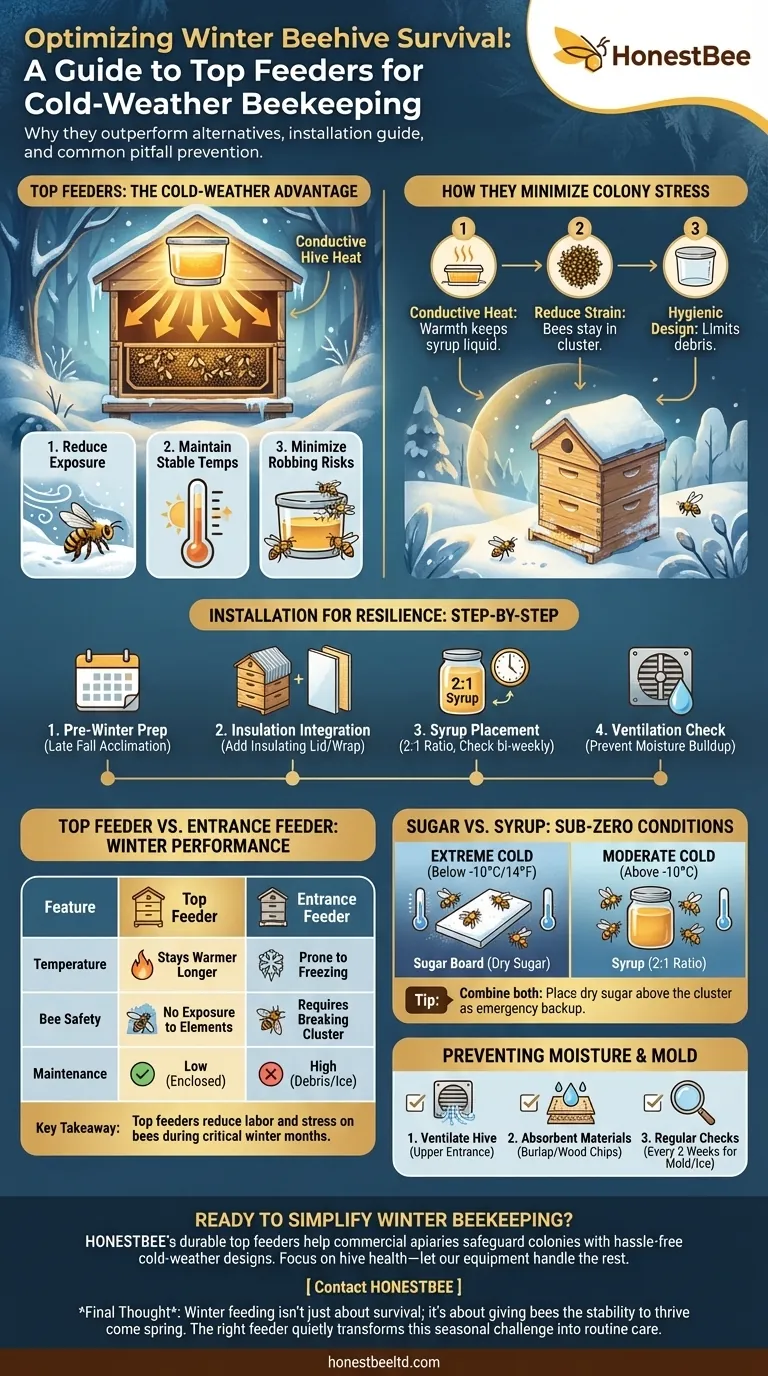
Winter beekeeping demands precision—colonies need consistent nutrition without exposure to harsh elements. Top feeders address this by combining accessibility with thermal protection. This guide explores why they outperform alternatives, how to install them effectively, and strategies to prevent common cold-weather feeding pitfalls.
Top Feeders for Cold-Weather Beekeeping
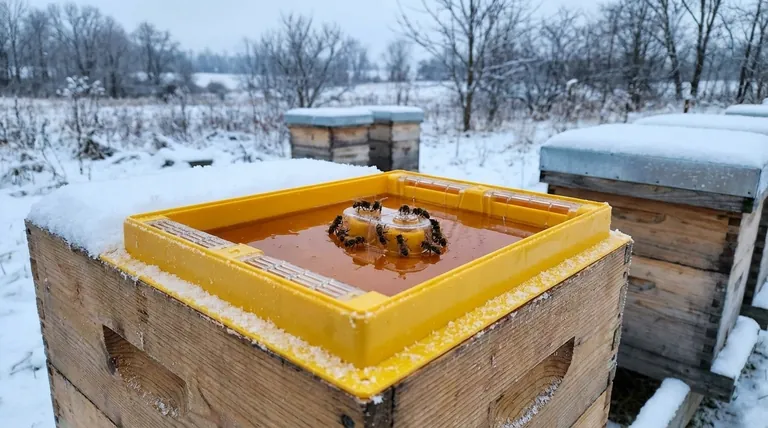
Top feeders sit directly above the hive’s brood box, leveraging the colony’s natural heat to prevent freezing. Unlike external feeders, they:
- Reduce bee exposure to wind/snow during feeding
- Maintain stable temperatures by using hive warmth
- Minimize robbing risks from other colonies
For beekeepers in sub-zero climates, these features are critical for sustaining hive activity without forcing bees to break cluster.
How Top Feeders Minimize Winter Colony Stress
Bees conserve energy in winter by clustering tightly. Traditional entrance feeders force bees to leave this heat circle, expending vital energy. Top feeders:
-
Use Conductive Heat
The feeder’s proximity to the brood nest allows warmth to radiate upward, keeping syrup liquid longer. -
Reduce Physical Strain
Bees access food without traveling through cold air, preserving fat reserves. -
Support Hygienic Conditions
Enclosed designs limit debris accumulation, a common issue with open feeders.
Step-by-Step Installation for Temperature Resilience
-
Pre-Winter Prep
Install the feeder in late fall so bees acclimate to its location before temperatures drop. -
Insulation Integration
Add an insulating lid or wrap (e.g., foam board) to buffer against extreme cold. -
Syrup Placement
Fill with thick 2:1 sugar syrup (less water content freezes slower). Check levels every 2–3 weeks. -
Ventilation Check
Ensure moisture can escape to prevent condensation buildup inside the hive.
Top Feeder vs. Entrance Feeder: Winter Performance Comparison
| Feature | Top Feeder | Entrance Feeder |
|---|---|---|
| Temperature | Stays warmer longer | Prone to freezing |
| Bee Safety | No exposure to elements | Requires breaking cluster |
| Maintenance | Low (enclosed design) | High (debris/ice removal) |
Key takeaway: Top feeders reduce labor and stress on bees during critical winter months.
Sugar vs. Syrup: What to Use in Sub-Zero Conditions
- Sugar Boards (dry sugar): Ideal for extreme cold (below -10°C/14°F) where syrup freezes solid. Bees absorb moisture from the hive to dissolve it.
- Syrup: Best for moderate cold (above -10°C). Use 2:1 sugar-to-water ratio for slower crystallization.
Tip: Combine both—place dry sugar above the cluster as emergency backup.
Preventing Moisture and Mold in Winter Feeding
-
Ventilate the Hive
A small upper entrance allows humidity to escape, reducing mold risk. -
Absorbent Materials
Lay burlap or wood chips under the feeder to soak up spills. -
Regular Checks
Inspect every 2 weeks for mold or ice blockages.
Ready to Simplify Winter Beekeeping?
HONESTBEE’s durable top feeders help commercial apiaries and distributors safeguard colonies with hassle-free cold-weather designs. Focus on hive health—let our equipment handle the rest. Contact HONESTBEE for wholesale solutions tailored to your climate.
Final Thought: Winter feeding isn’t just about survival; it’s about giving bees the stability to thrive come spring. The right feeder quietly transforms this seasonal challenge into routine care.
Visual Guide
Related Products
- HONESTBEE Round Hive Top Bee Feeder for Syrup
- HONESTBEE Professional Hive Top Bee Feeder Feeding Solution
- Professional Hive Top Bee Feeder for Beekeeping
- HONESTBEE Square Top Hive Bee Feeder Top Bee Feeder
- Rapid Bee Feeder White Plastic 2L Round Top Feeder for 8 or 10-Frame Bee Hives
Related Articles
- How Round Hive Top Feeders Solve 3 Critical Beekeeping Challenges
- How to Choose the Right Bee Feeder for Your Hive’s Health and Efficiency
- How to Choose Between Frame and Gravity Feeders for Healthy Honey Bee Colonies
- How to Prevent Bee Drowning in Top Feeders Without Sacrificing Efficiency
- The Winter Fortress: Engineering Colony Survival with the Hive Top Feeder