The Misunderstood Language of Smoke
An apiary inspection can go from calm to chaos in seconds. Often, the tipping point isn't a clumsy movement or a sudden noise. It’s the quality of the smoke.
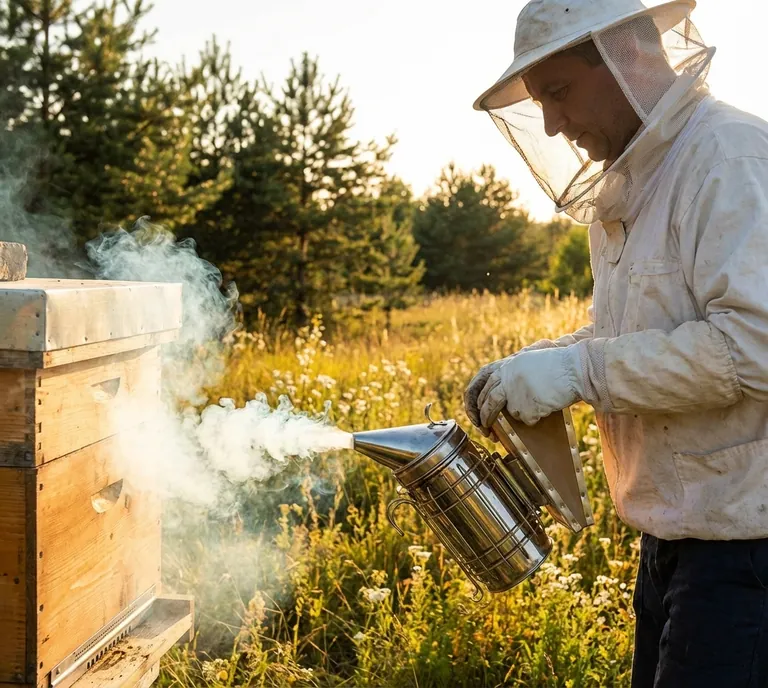
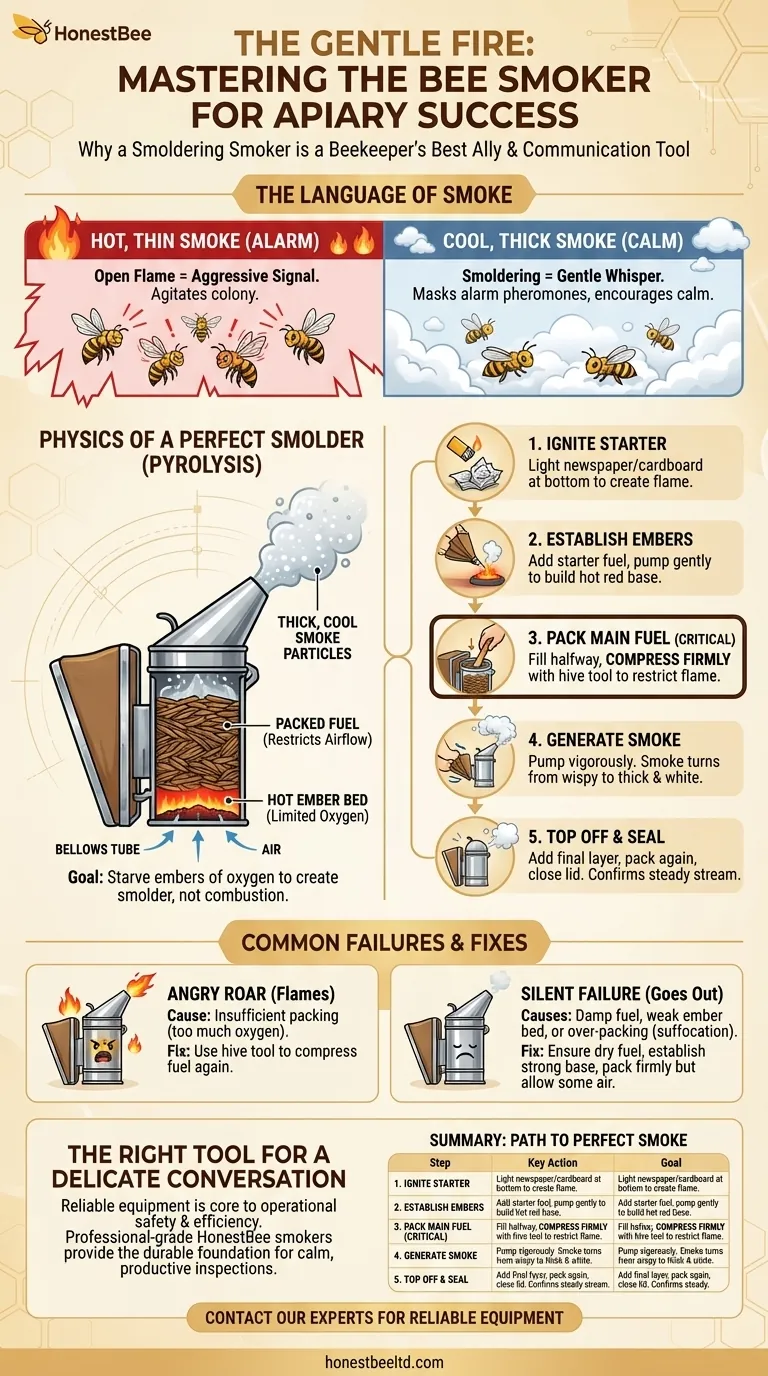
We instinctively think of fire as a blunt instrument. But for a beekeeper, the smoker is a communication device. Hot, thin smoke—the kind that comes from an open flame—is an alarm. It’s an aggressive signal of danger that agitates a colony.
Cool, thick, white smoke, however, speaks a different language. It whispers that all is well, gently masking the bees' alarm pheromones and encouraging a calm, manageable state. Mastering the smoker isn't about making fire; it's about learning to speak the hive's language.
The Physics of a Perfect Smolder
The human impulse is to build a bigger fire. We add more oxygen, aiming for a roaring flame. The art of the bee smoker requires the exact opposite approach.
The goal is not combustion, but pyrolysis. You want to create a hot bed of embers and then systematically starve it of just enough oxygen that the fuel smolders rather than burns. By packing fuel tightly on top of the embers, you force a slow, controlled process that releases thick clouds of cool particles—the perfect smoke.
This isn't just a fire in a can. It's a low-tech marvel of thermodynamics, and getting it right is a foundational skill.
The Anatomy of a Successful Lighting
Achieving a long-lasting smolder is a ritual. Rushing it is the most common path to failure. It requires the right materials and a patient, deliberate sequence.
H3: The Foundation: Your Materials
Your success depends entirely on what you put inside the smoker.
- Tools: You need the smoker itself, a reliable lighter, and a hive tool. The hive tool is not optional; it’s essential for packing the fuel correctly.
- Starter: This needs to catch fire instantly to create the initial embers. Crumpled newspaper, cardboard, or natural cotton fibers work perfectly.
- Primary Fuel: This is your long-burn material. It must be completely dry. Excellent options include pine needles, wood shavings, untreated burlap, or commercial smoker fuel pellets.
H3: The Ritual: A Step-by-Step Guide
Follow this process without skipping steps. Each one builds on the last.
- Ignite the Starter: Place a small amount of newspaper in the bottom of the smoker chamber. Light it and give a few gentle puffs with the bellows to establish a small, active flame.
- Build the Ember Bed: Add a small handful of your primary fuel (e.g., pine needles) on top of the burning starter. Pump the bellows gently but consistently to get this first layer glowing red and smoldering. This hot base is the engine for everything that follows.
- Pack the Main Fuel: Once the ember bed is established, fill the chamber about halfway with more fuel. Now, use your hive tool to compress it down firmly. This is the most critical step. Packing restricts airflow, preventing flames.
- Generate the Smoke: With the fuel packed, pump the bellows vigorously. You’ll see the smoke transform from thin and wispy to thick, white, and cool.
- Top Off and Seal: Add a final layer of fuel, pack it down again, and close the lid before flames can re-emerge. A few more puffs will confirm you have a steady stream of high-quality smoke.
When Communication Breaks Down: Common Failures
Understanding why a smoker fails is often about psychology. We get impatient. We cut corners. The bees notice.
H3: The Angry Roar: Hot, Fiery Smoke
If you see flames shooting from the nozzle, your smoke is dangerously hot. This is almost always caused by insufficient packing. Too much oxygen is reaching the embers, creating a fire instead of a smolder. The solution is to use your hive tool to compress the fuel again.
H3: The Silent Failure: The Smoker That Dies
A smoker that goes out mid-inspection is a beekeeper’s nightmare. The primary causes are:
- Damp Fuel: Even slightly moist fuel will not smolder properly.
- Weak Ember Bed: Failing to establish a hot, glowing base before adding the main fuel load.
- Over-Packing: While tight packing is key, compressing it so much that no air can circulate will suffocate the embers.
The Right Tool for a Delicate Conversation
Your technique can be perfect, but it will be undermined by faulty equipment. A smoker with a leaky bellow, a poor seal, or thin walls that overheat is a point of failure waiting to happen. For commercial apiaries and wholesale distributors, equipment reliability isn't a luxury; it's a core component of operational safety and efficiency.
A professional-grade smoker from HONESTBEE provides the durable, reliable foundation you need. Our equipment is built to withstand the rigors of daily use, ensuring that when you need to communicate with your hives, your tool speaks the right language, every time.
Summary: The Path to Perfect Smoke
| Step | Key Action | Goal |
|---|---|---|
| 1. Ignite Starter | Light newspaper/cardboard at bottom. | Create initial flame and embers. |
| 2. Establish Embers | Add a bit of primary fuel, pump bellows. | Build a hot, smoldering base. |
| 3. Pack Main Fuel | Fill chamber halfway, compress fuel down. | Force smolder, not flames. |
| 4. Pump for Smoke | Vigorously pump bellows. | Produce thick, cool, white smoke. |
| 5. Top Off & Close | Add more fuel, pack, close lid. | Ensure long-lasting, safe smoke. |
Mastering the smoker transforms hive inspections from a stressful task into a calm, productive process. It all starts with having the right skills and the right equipment. To ensure your operation is built on a foundation of reliability, Contact Our Experts.
Visual Guide
Related Products
- Stainless Steel Honey Bee Smoker Hive and Honeycomb Smoker for Beekeeping
- Professional Bee Smoker with Elongated Spout and Durable Bellows for Beekeeping
- Premium Traditional Copper Bee Smoker with Bellows
- Heavy Duty Manual Bee Smoker Blower for Beekeeping
- European Stainless Steel Bee Smoker for Honey Bee Hive
Related Articles
- The End of 'Hot Hives': Why Your Bee Smoker Is More Important Than Your Suit
- Why Your Bee Smoker Might Be Making Your Hives More Aggressive—And How to Fix It
- Why Your Bee Smoker Keeps Going Out—And the 3-Layer Fix
- How to Operate a Bee Smoker Safely: Expert Techniques for Calmer Hives
- How to Choose the Right Bee Smoker Size for Your Beekeeping Operation