The Final, Most Critical Task
The hives have been inspected. The supers are heavy. The sun is low. For the beekeeper, the day’s most physically demanding work is done. All that remains is the cleanup, starting with one small, seemingly simple task: extinguishing the bee smoker.
It is in these moments of fatigue, at the end of a long day, that we are most vulnerable to cognitive shortcuts. The decision on how to put out a smoker isn't just a technical choice; it's a psychological one that pits our desire for efficiency against the unforgiving reality of fire risk.
The Invisible Threat
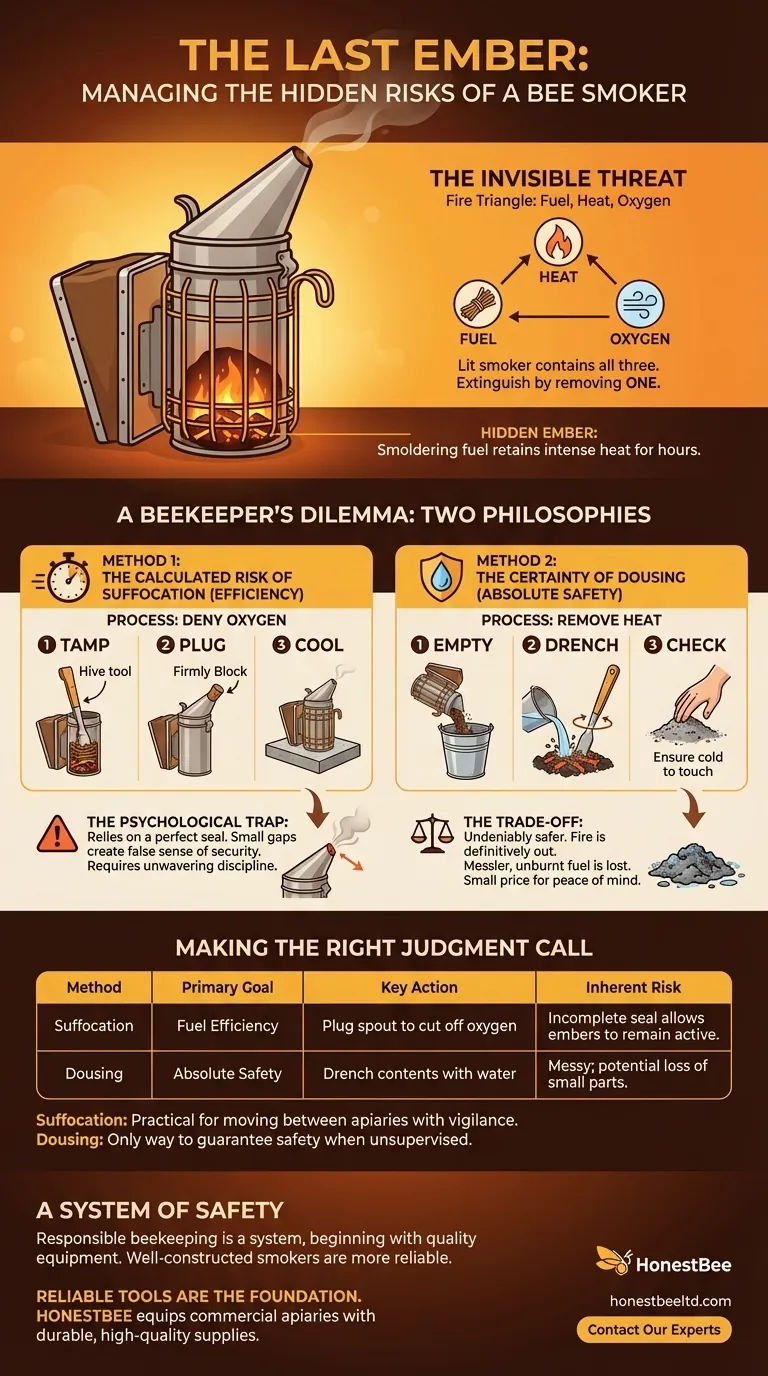
To understand the stakes, we must remember the fire triangle: fuel, heat, and oxygen. A lit smoker contains all three. Extinguishing it means decisively removing one of those elements.
The danger isn't the visible flame; it's the hidden ember. Smoldering fuel can retain intense heat for hours, a silent hazard waiting for a chance encounter with flammable material in a truck bed, a shed, or a barn. Improperly extinguishing a smoker is not a minor oversight; it's an un-set trap.
A Beekeeper's Dilemma: Two Philosophies
Every beekeeper faces this choice, which represents two distinct philosophies for managing risk. Do you prioritize resourcefulness and convenience, or do you demand absolute certainty?
Method 1: The Calculated Risk of Suffocation
This method is about efficiency. By preserving partially burned fuel, you save time and resources for the next inspection. It is an exercise in control and precision.
The Process: Denying Oxygen
- Tamp: Use your hive tool to gently compress the fuel, reducing its exposed surface area.
- Plug: Firmly block the smoker's spout with something non-flammable. A cork, a damp wad of green grass, or a purpose-built smoker plug all work to cut off the oxygen supply.
- Cool: Place the smoker on its side on a non-flammable surface—concrete, gravel, or bare earth.
The Psychological Trap
The risk here is complacency. Suffocation relies on a perfect seal. A small gap, an ill-fitting plug, can allow just enough oxygen to keep the embers alive. The smoker appears to be out, creating a false sense of security. This is the danger of a task that is "good enough" but not perfect. It requires unwavering discipline, every single time.
Method 2: The Certainty of Dousing
This method is about eliminating all doubt. It is the preferred choice of those who understand that the consequences of a mistake, however remote, are unacceptable. It prioritizes safety above all else.
The Process: Removing Heat
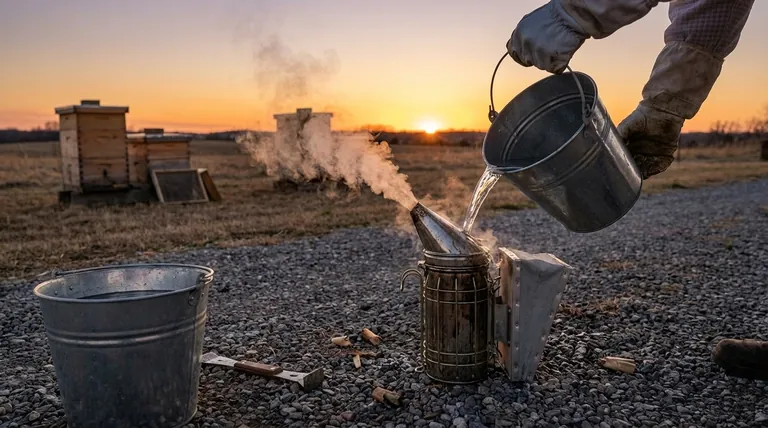
- Empty: Carefully dump the hot contents into a fire-safe container, like a steel bucket or onto a gravel drive. Be mindful of the small grate at the bottom of the smoker; it can easily be lost with the ash.
- Drench: Thoroughly soak the embers with water. Stir them. Ensure every last bit is cold to the touch.
The Trade-Off
This method is undeniably safer. The fire is definitively out. But it is messier, and the unburnt fuel is lost. It is a small price to pay for absolute peace of mind, but it is a price nonetheless.
Making the Right Judgment Call
The correct method is dictated by your context and your tolerance for risk. There is no single right answer, only the most responsible one for the situation.
| Method | Primary Goal | Key Action | Inherent Risk |
|---|---|---|---|
| Suffocation | Fuel Efficiency | Plug the spout to cut off oxygen. | Incomplete seal allows embers to remain active. |
| Dousing | Absolute Safety | Drench the contents with water. | Messy; potential loss of small parts like the grate. |
If you are moving between apiaries with little time, suffocation is a practical choice—provided you remain vigilant. If you are packing up for the day, dousing is the only way to guarantee the safety of your property and equipment when you are no longer there to supervise.
A System of Safety
Ultimately, responsible beekeeping is a system, not a single action. That system begins not at the end of the day, but at the beginning—with the quality of your equipment. A well-constructed, professional-grade smoker with a tight-fitting lid is easier to manage, easier to seal, and more reliable in its performance.
Reliable tools are the foundation of safe practices. At HONESTBEE, we equip commercial apiaries and distributors with durable, high-quality beekeeping supplies designed for the rigors of professional use. Our equipment is built to support your system of safety, from the first light of the smoker to the last extinguished ember.
To ensure your operations are built on a foundation of reliability and safety, Contact Our Experts
Visual Guide
Related Products
- Stainless Steel Honey Bee Smoker Hive and Honeycomb Smoker for Beekeeping
- Professional Bee Smoker with Elongated Spout and Durable Bellows for Beekeeping
- Premium Traditional Copper Bee Smoker with Bellows
- Heavy Duty Manual Bee Smoker Blower for Beekeeping
- European Stainless Steel Bee Smoker for Honey Bee Hive
Related Articles
- The End of 'Hot Hives': Why Your Bee Smoker Is More Important Than Your Suit
- Why Your Bee Smoker Might Be Making Your Hives More Aggressive—And How to Fix It
- Why Your Bee Smoker Keeps Going Out—And the 3-Layer Fix
- How to Operate a Bee Smoker Safely: Expert Techniques for Calmer Hives
- How to Choose the Right Bee Smoker Size for Your Beekeeping Operation