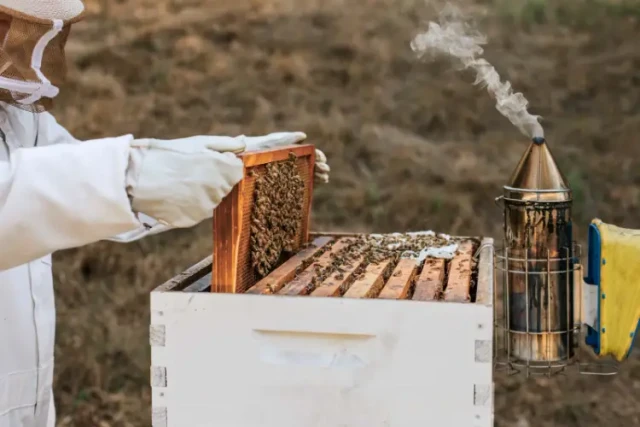
Every beekeeper knows that a reliable smoker is the backbone of hive management—calming bees, improving inspection efficiency, and protecting colonies. But with varying designs, fuel capacities, and safety features, selecting the right smoker can be daunting. This guide breaks down functional differences, efficiency benchmarks, and practical selection criteria to match your apiary’s needs.
Functional Design Differences in Beekeeping Smokers
How Dome vs. Angled Tops Impact Smoke Distribution
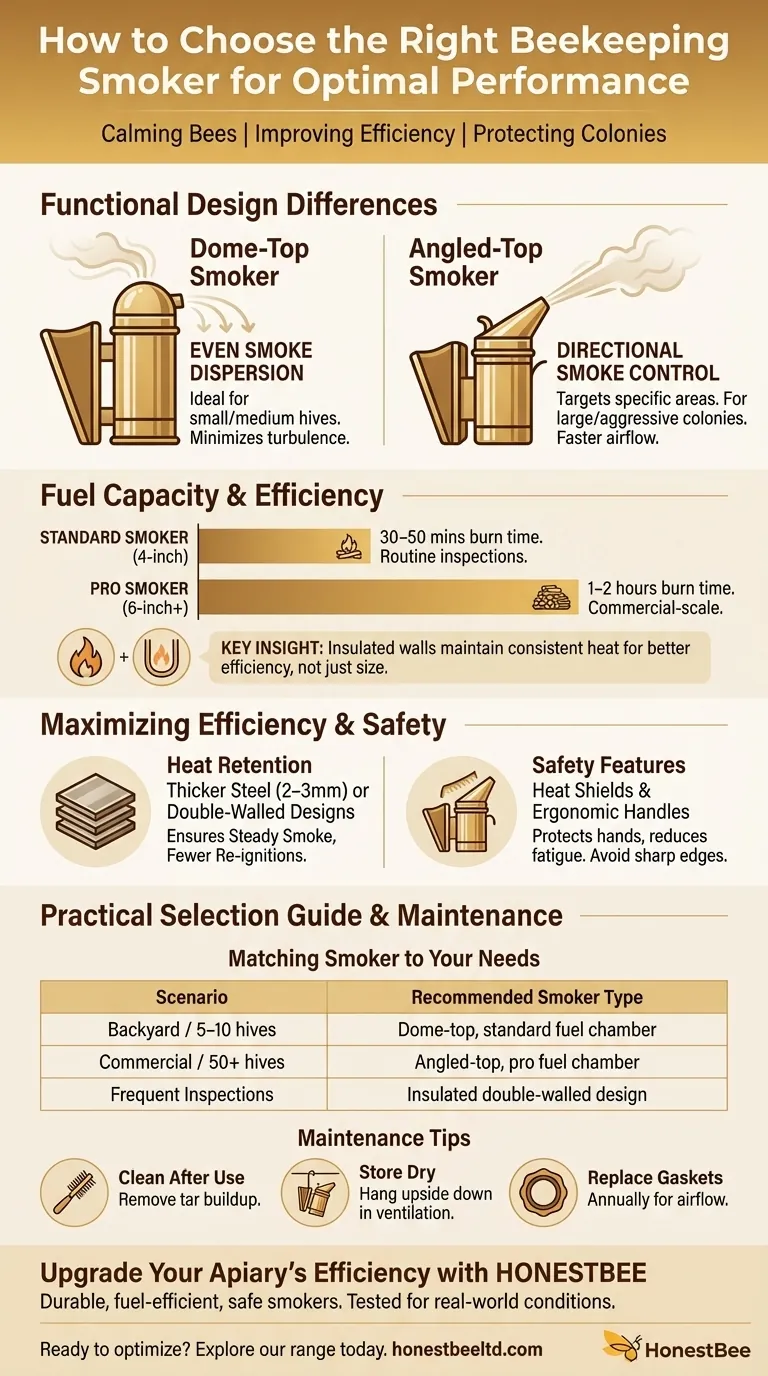
Dome-top smokers excel in even smoke dispersion, creating a gentle, downward flow ideal for calming bees during hive inspections. Their rounded design minimizes turbulence, making them perfect for small to medium-sized hives.
Angled-top smokers, conversely, offer directional smoke control. The tilted nozzle allows beekeepers to target specific hive sections—useful for large or aggressive colonies where precision matters. However, this design may require more frequent refueling due to faster airflow.
Fuel Capacity and Burn Time: Standard vs. Pro Smokers
- Standard smokers (e.g., 4-inch chambers) provide 30–50 minutes of burn time, sufficient for routine inspections.
- Pro smokers (6-inch or larger) extend operation to 1–2 hours, reducing interruptions during commercial-scale beekeeping.
Key Insight: Larger fuel chambers don’t always mean better efficiency. Pro smokers with insulated walls maintain consistent heat, while poorly constructed models waste fuel through excessive airflow.
Maximizing Efficiency and Safety
Heat Retention and Smoke Consistency Across Designs
Thicker steel construction (2–3 mm) retains heat longer, ensuring steady smoke production. Thin-walled smokers cool rapidly, leading to inconsistent smoke and frequent re-ignition.
Pro Tip: Look for double-walled designs or models with heat-resistant coatings to minimize heat loss.
Safety Features: Heat Shields and Ergonomic Handles
- Heat shields protect hands from radiant heat, especially critical during prolonged use.
- Ergonomic handles with non-slip grips reduce fatigue during all-day hive checks—a must for commercial beekeepers.
Safety Check: Avoid smokers with exposed rivets or sharp edges, which can snag protective gear.
Practical Selection Guide
Matching Smoker Types to Hive Sizes and Beekeeper Workflow
| Scenario | Recommended Smoker Type |
|---|---|
| Backyard/5–10 hives | Dome-top, standard fuel chamber |
| Commercial/50+ hives | Angled-top, pro fuel chamber |
| Frequent inspections | Insulated double-walled design |
Maintenance Tips to Extend Smoker Lifespan
- Clean after each use: Remove tar buildup with a wire brush to prevent clogging.
- Store dry: Moisture accelerates rust—hang smokers upside down in a ventilated area.
- Replace gaskets annually: Worn seals compromise airflow efficiency.
Upgrade Your Apiary’s Efficiency with HONESTBEE
Whether you’re a distributor supplying commercial apiaries or a beekeeper scaling operations, HONESTBEE’s wholesale-focused smokers balance durability, fuel efficiency, and safety. Our designs are tested in real-world beekeeping conditions to deliver longer burn times, precise smoke control, and reduced maintenance—helping you focus on thriving colonies, not equipment hassles.
Ready to optimize your beekeeping workflow? Explore HONESTBEE’s range today.
Products You Might Be Looking For:
View durable beekeeping smokers
Visual Guide
Related Products
- Miniature Stainless Steel Bee Smoker for Beekeeping
- Stainless Steel Honey Bee Smoker Hive and Honeycomb Smoker for Beekeeping
- Professional Bee Smoker with Elongated Spout and Durable Bellows for Beekeeping
- Electric Bee Smoker European Style Bee Hive Smoker for Beekeeping
- Galvanized Beekeeping Smoker for Honey Bee and Apiculture
Related Articles
- How to Operate a Bee Smoker Safely: Expert Techniques for Calmer Hives
- Why Your Bee Smoker Keeps Going Out—And the 3-Layer Fix
- Why Your Bee Smoker Might Be Making Your Hives More Aggressive—And How to Fix It
- The End of 'Hot Hives': Why Your Bee Smoker Is More Important Than Your Suit
- Mastering the Use of Beekeeping Smokers