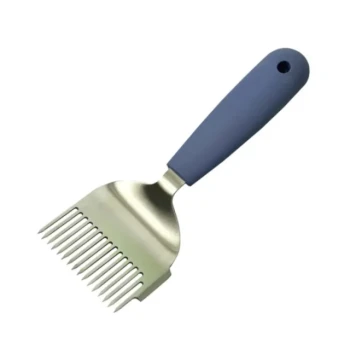
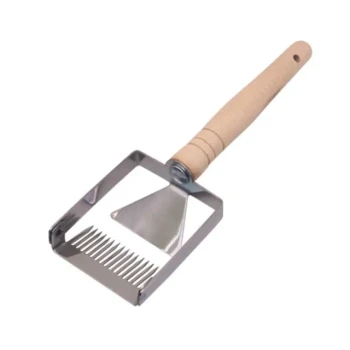
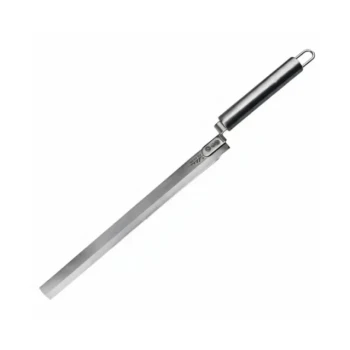
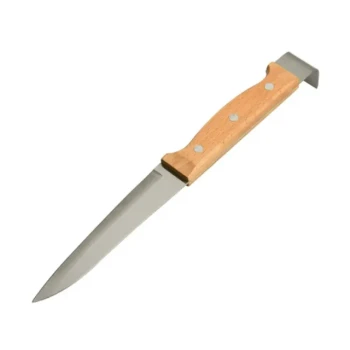
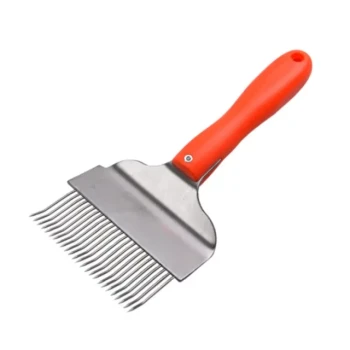
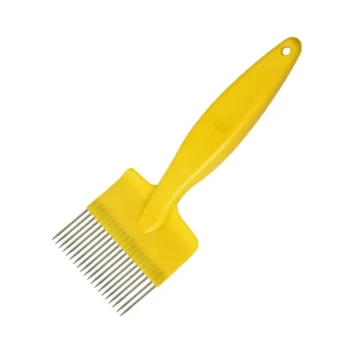
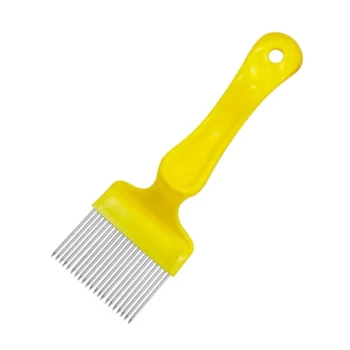
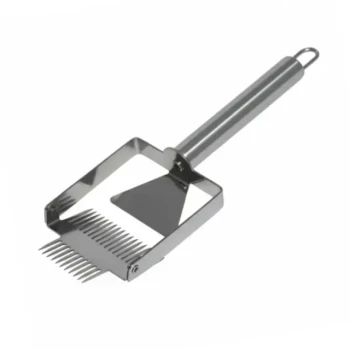
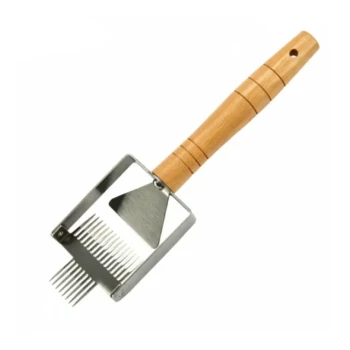
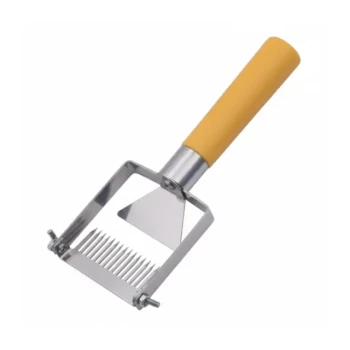
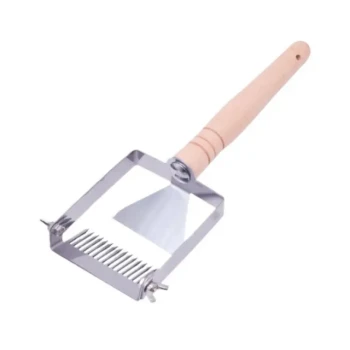
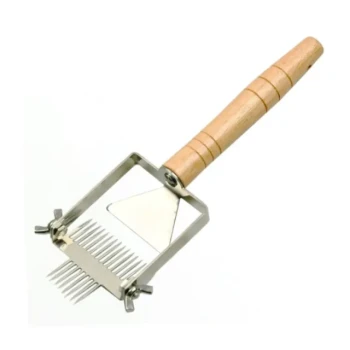
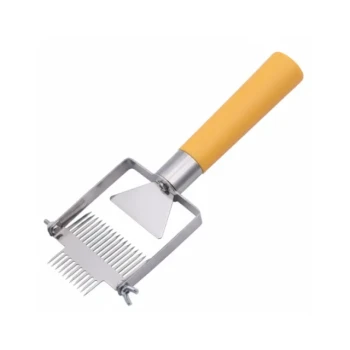
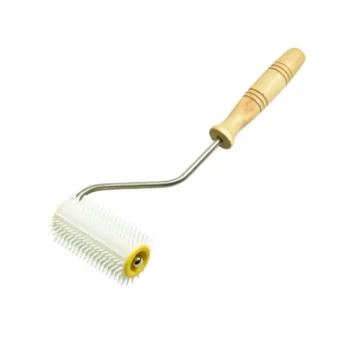
Specialized uncapping tools are utilized to manually breach the wax capping of sealed brood cells, enabling a direct cross-sectional analysis of the colony's developing population. By systematically opening these cells, beekeepers can extract larvae and pupae to quantify the presence of Varroa mites during their critical reproductive phase. This provides a precise percentage of infestation that surface-level inspections of adult bees cannot reveal.
Core Takeaway While adult bee sampling measures mites in transit, uncapping tools reveal the "hidden" population reproducing under the wax. This method provides the definitive data needed to calculate total mite pressure and assess treatment efficacy, particularly when drone brood is absent.
The Mechanics of Cross-Sectional Sampling
Targeted Cell Opening
The primary function of uncapping tools, such as needles or specialized forks, is to perform cross-sectional sampling.
Instead of inspecting the entire frame, the technician opens individual cells to create a statistically significant snapshot of the hive's health.
Establishing Statistical Relevance
To ensure accurate data, this process requires the systematic inspection of at least 250 capped brood cells.
Opening fewer cells may result in a skewed dataset that fails to represent the true distribution of the parasite within the colony.
Random Selection
Technicians randomly select sealed brood cells for opening to avoid selection bias.
This randomization ensures that the calculated infestation rate reflects the average pressure across the colony, rather than a localized cluster of mites.
Precision Equipment and Visualization
The Role of High-Precision Tweezers
Manual uncapping requires high-precision tweezers to remove wax caps and extract larvae without crushing them.
Rough handling can damage the delicate larvae or the mites themselves, making it impossible to distinguish between live and dead parasites or identify specific developmental stages.
Importance of Visual Contrast
Identifying immature mites and eggs requires exceptional visual clarity, often aided by a high-power halogen lamp (approx. 300 watts).
The strong lighting provides the necessary contrast to distinguish pale, immature mites from the white bodies of honeybee pupae.
Distinguishing Developmental Stages
With proper tools and lighting, technicians can observe not just adult female mites, but also their reproductive offspring.
This distinction is vital for calculating resistance indices and understanding how effectively the mite population is multiplying.
Interpreting the Biological Data
Calculating Infestation Percentage
The direct observation of parasitism allows for a mathematical calculation of the infestation rate.
By dividing the number of infested cells by the total number of cells opened, beekeepers derive a precise percentage of capped brood infestation.
Assessing Reproductive Pressure
This method specifically targets the reproductive phase of the Varroa life cycle.
Unlike alcohol washes, which count phoretic mites (those riding on adult bees), uncapping reveals the future mite load that will emerge with the next generation of bees.
Critical Timing
This assessment is particularly valuable during seasons when drone brood is absent.
Since Varroa prefer drone brood, their presence in worker brood during these periods signals a dangerously high infestation pressure that requires immediate intervention.
Understanding the Trade-offs
Labor and Time Intensity
This method is significantly more time-consuming than standard jar samples (sugar rolls or alcohol washes).
It requires a stable environment, specialized lighting, and a steady hand, making it difficult to perform rapidly in the field across many hives.
Destructive Sampling
The process is inherently destructive to the individual larvae and pupae selected for inspection.
While the loss of 250 bees is negligible to a healthy colony, the psychological barrier of killing brood can be a deterrent for some hobbyist beekeepers.
Making the Right Choice for Your Goal
To select the most appropriate assessment method, consider your specific data requirements:
- If your primary focus is routine maintenance: Use alcohol washes or sugar rolls for a quick, non-destructive estimate of phoretic mite levels.
- If your primary focus is breeding or research: Use specialized uncapping tools to determine specific reproductive success rates and resistance traits.
- If your primary focus is treatment validation: Use uncapping tools to verify if a treatment successfully penetrated the cappings to kill developing mites.
True colony management relies on understanding not just how many mites are on your bees, but how effectively they are reproducing under the surface.
Summary Table:
| Feature | Brood Uncapping Method | Alcohol Wash / Sugar Roll |
|---|---|---|
| Target Phase | Reproductive (under cappings) | Phoretic (on adult bees) |
| Data Precision | High (shows future mite load) | Moderate (snapshot of transit) |
| Sample Size | ~250 capped cells | ~300 adult bees |
| Equipment | Uncapping fork, tweezers, 300W lamp | Sampling jar, alcohol/powdered sugar |
| Impact | Destructive to sampled brood | Non-destructive (sugar) or lethal (alcohol) |
| Primary Use | Breeding, Research, Treatment Validation | Routine colony maintenance |
Maximize Your Colony's Health with Professional Tools
Effective Varroa management starts with the right equipment. HONESTBEE provides commercial apiaries and distributors with the precision beekeeping tools and machinery needed to maintain high-production standards. From specialized hardware for mite assessment to industrial-scale honey-filling machines and hive-making equipment, our comprehensive wholesale offering ensures your operation has the competitive edge.
Ready to elevate your apiary's efficiency? Contact HONESTBEE Today to explore our full range of professional beekeeping supplies and essential consumables.
References
- J. M. Flores, F. Padilla. Fiabilidad de los principales métodos de diagnóstico de Varroa destructor en colonias de abejas. DOI: 10.21071/az.v64i246.391
This article is also based on technical information from HonestBee Knowledge Base .
Related Products
- Professional Multi-Function Uncapping Fork with Ergonomic Rubber Grip
- Professional Honey Uncapping Fork Tool with Customizable Tine Options
- Professional Multi-Function Uncapping Fork with Integrated Blade for Beekeeping
- Professional Stainless Steel Uncapping Fork with Wooden Handle
- Professional All-Stainless Steel Uncapping Knife for Beekeeping
People Also Ask
- What is the primary use of an uncapping fork in beekeeping? A Guide to Precision Honey Harvesting
- What is the use of an uncapping fork? A Precision Tool for Hive Management and Honey Harvesting
- What is the original purpose of an uncapping fork? Mastering Precision Honey Extraction and Comb Preservation
- How is an uncapping fork used to uncap honey frames? Precision Techniques for Perfect Honey Extraction
- What is an uncapping fork? A Precision Tool for Efficient Honey Harvesting