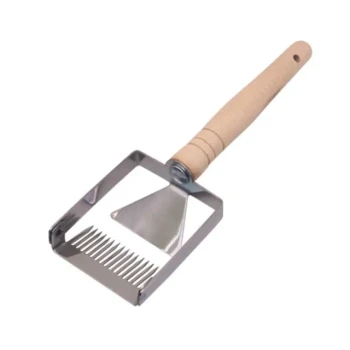
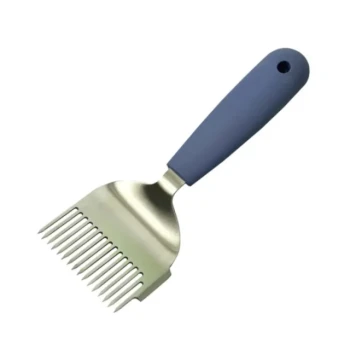
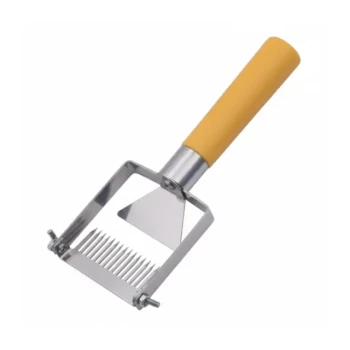
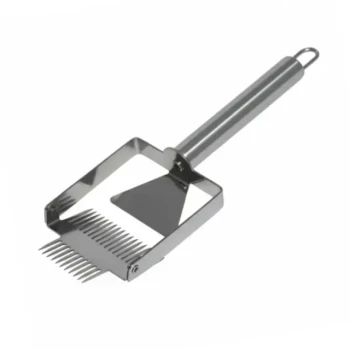
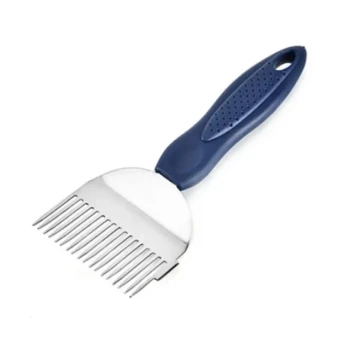
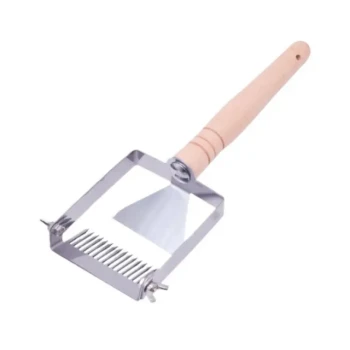
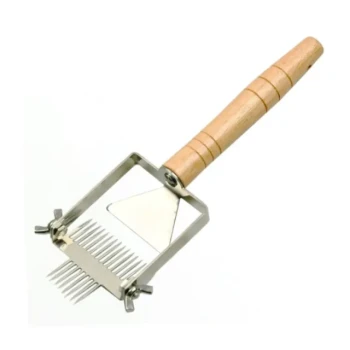
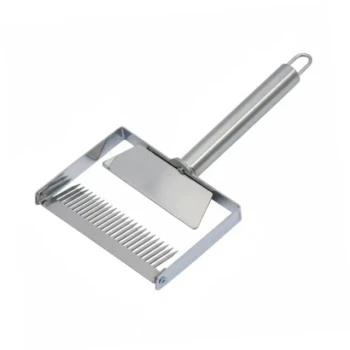
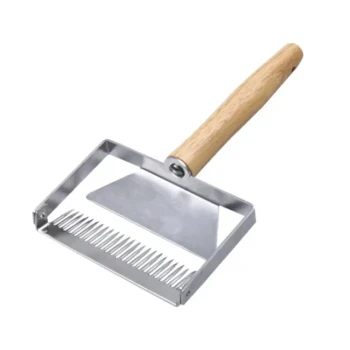
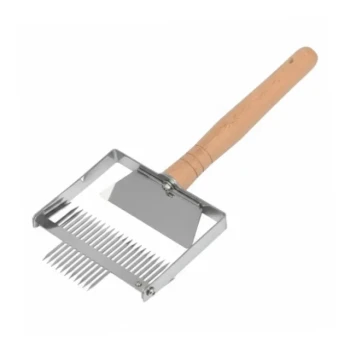
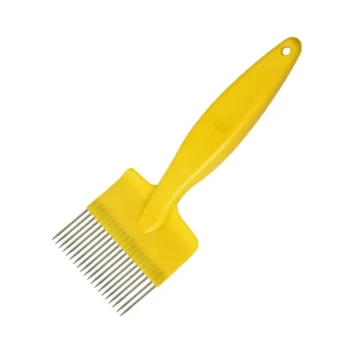
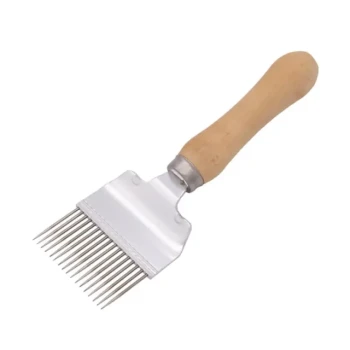
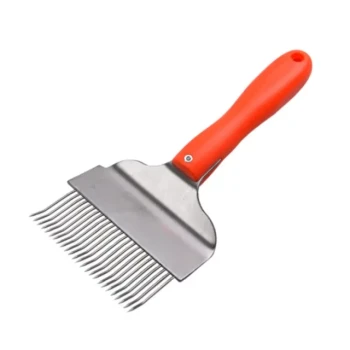
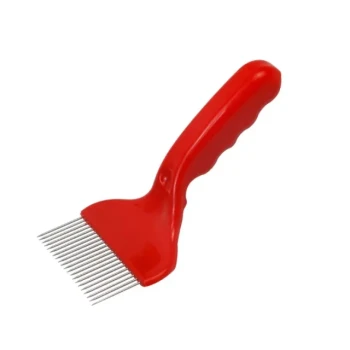
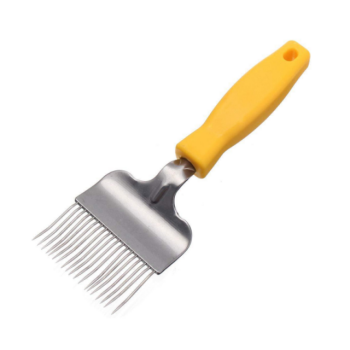
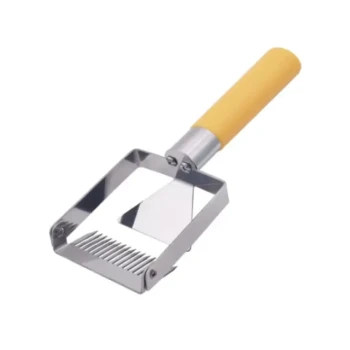
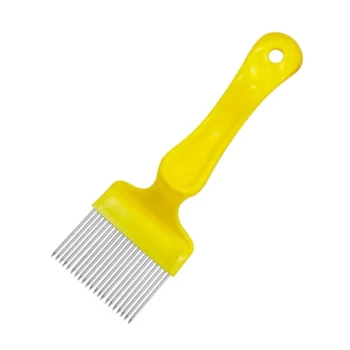
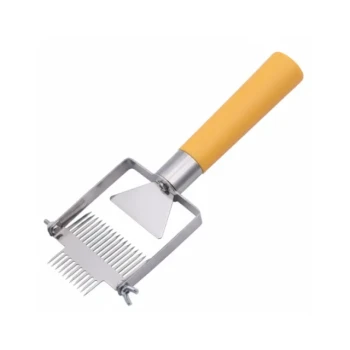
Using an uncapping fork effectively requires you to gently scratch the wax cappings on a specific honey frame within the hive.
This mechanical action simulates damage or an exposed resource, prompting the bees to immediately clean the area, remove the honey from those cells, and transport it to a more secure location higher up in the nest.
By disrupting the cappings on lower frames, you trigger the colony’s instinct to consolidate resources. This forces bees to move honey out of the brood nest and into the upper supers, freeing up space for the queen or winter reserves.
The Mechanics of Relocation
Triggering the Cleanup Response
Bees are obsessive about hive hygiene and resource security. When you use an uncapping fork to scratch the surface of a capped honey frame, the bees perceive this as a breach in their storage.
This disruption forces them to uncapping the cells fully to address the "leak."
The Upward Migration
Once the honey is exposed, the bees will not leave it in the damaged cells. Following their natural instinct to organize, they will ingest and relocate this nectar.
The destination is almost always higher up in the hive. This aligns with their natural behavior to keep active brood below and long-term food stores above.
The Biological Context
The Brood Nest Priority
Honey bees utilize hexagonal cells for two main purposes: raising brood and storing food. In a healthy hive, the lower area is reserved for the queen to lay eggs.
Pollen is typically stored immediately adjacent to the brood for easy access during feeding.
Strategic Honey Storage
Supplementary observations of bee behavior show that excess honey is stored at the top of the hive. This area serves as the "pantry" for winter survival or nectar dearths.
By scratching frames in the lower box, you are aligning with the bees' natural desire to move honey away from the active brood nest and into these upper storage areas.
Critical Trade-offs to Consider
Risk of Robbing
Scratching cappings releases the strong scent of open honey. If done during a nectar dearth (a shortage of natural flowers), this scent can attract robber bees from other colonies.
Ensure the hive entrance is reduced if you apply this technique during times of scarcity.
Avoiding "Wet" Bees
It is vital to only scratch the cappings, not gouge the comb.
If you damage the structural integrity of the cells too deeply, honey may flow down onto the colony floor. This can drown bees or attract pests like small hive beetles.
Making the Right Choice for Your Goal
This technique is a powerful tool for hive management, but it must be applied with specific intent.
- If your primary focus is alleviating a honey-bound hive: Scratch the honey arch on brood frames to force bees to move that food up, giving the queen room to lay.
- If your primary focus is consolidating supers: Scratch partially filled frames in lower supers to encourage bees to move that nectar to fill out the frames in the topmost box.
Mastering this simple manipulation allows you to direct the flow of resources within the hive without moving the frames yourself.
Summary Table:
| Technique Action | Biological Trigger | Primary Goal | Management Risk |
|---|---|---|---|
| Scratching Cappings | Cleanup Response | Freeing Brood Space | Potential for Robbing |
| Disrupting Lower Frames | Upward Migration | Consolidating Supers | Damaging Comb Integrity |
| Simulating Leakage | Resource Security | Maximizing Storage | Pests (Hive Beetles) |
Maximize Your Colony Productivity with HONESTBEE
Efficient hive management starts with the right tools. At HONESTBEE, we specialize in supporting commercial apiaries and distributors with high-quality, professional-grade beekeeping equipment. Whether you need precise uncapping forks, advanced honey-filling machines, or bulk industry consumables, our comprehensive wholesale offering is designed to scale your operations and improve hive efficiency.
Let us help you streamline your honey production and hive maintenance. Contact us today to learn how our hardware and industry expertise can bring superior value to your beekeeping business.
Related Products
- Professional Stainless Steel Uncapping Fork with Wooden Handle
- Professional Multi-Function Uncapping Fork with Ergonomic Rubber Grip
- Adjustable Stainless Steel Honey Uncapping Fork with Plastic Handle for Beekeeping
- All Stainless Steel Double Sided Pivoting Honey Uncapping Fork
- Professional Multi-Function Uncapping Fork with Integrated Blade for Beekeeping
People Also Ask
- What are the disadvantages of using an uncapping fork? Overcoming Manual Limits for Better Honey Extraction
- What is the original purpose of an uncapping fork? Mastering Precision Honey Extraction and Comb Preservation
- How is an uncapping fork used to uncap honey frames? Precision Techniques for Perfect Honey Extraction
- What is an uncapping fork? A Precision Tool for Efficient Honey Harvesting
- What is the primary use of an uncapping fork in beekeeping? A Guide to Precision Honey Harvesting