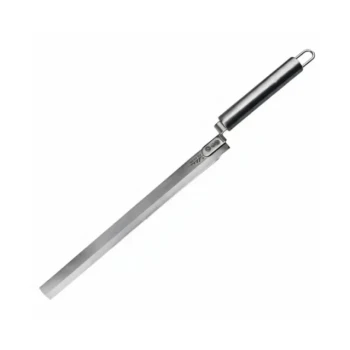
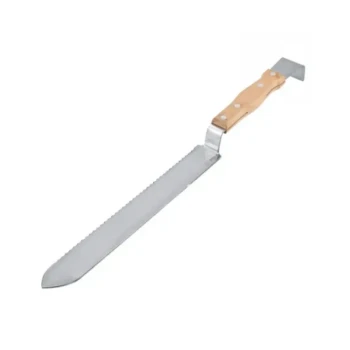
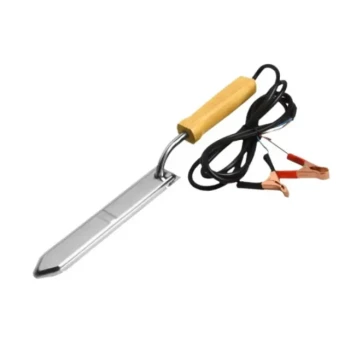
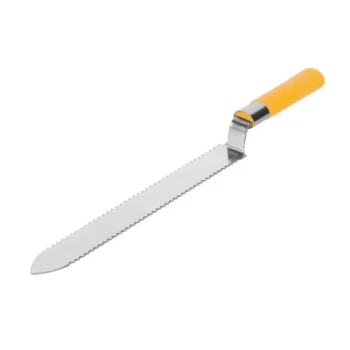
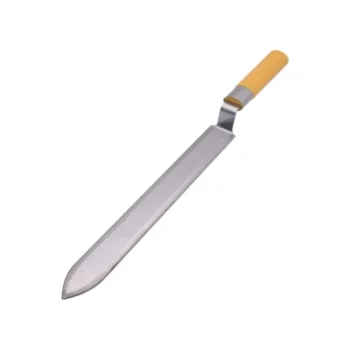
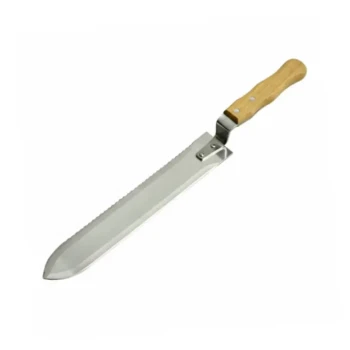
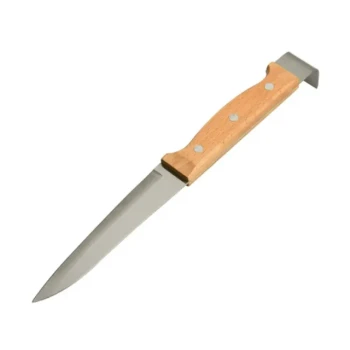
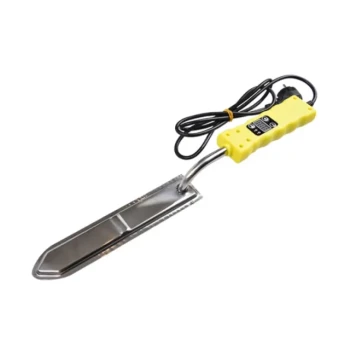
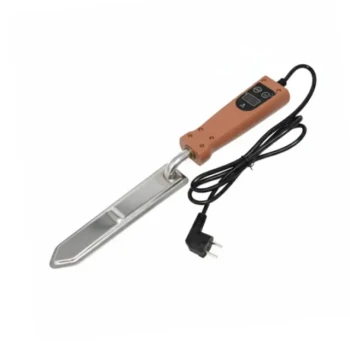
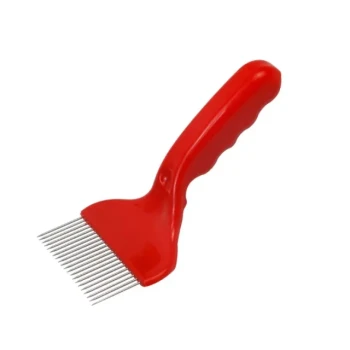
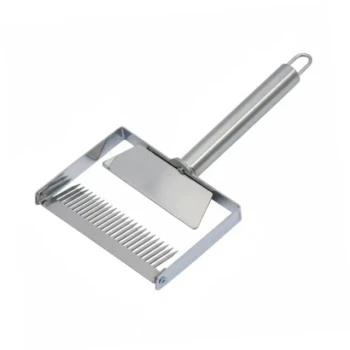
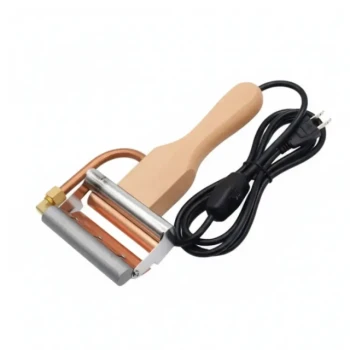
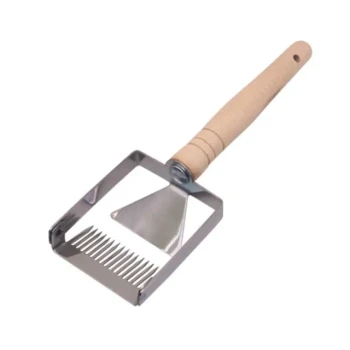
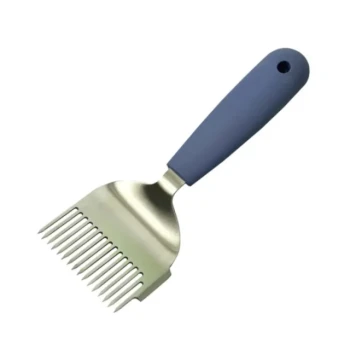
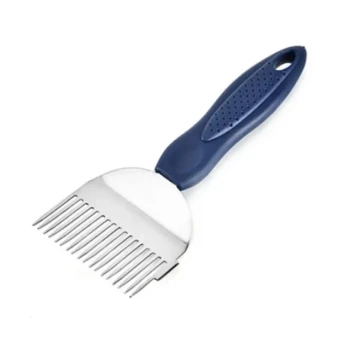
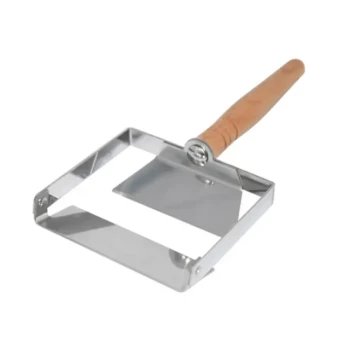
The use of professional uncapping knives or forks is the non-negotiable prerequisite to extraction. You must use these tools to slice away the thin layer of beeswax—known as cappings—that bees use to seal ripe honey cells. If you do not perform this step, the centrifugal force of the extractor will be unable to pull the honey from the comb, resulting in a failed harvest.
Core Takeaway Honey extractors rely on physics, not magic; they cannot extract honey from a sealed container. Professional uncapping tools surgically open these beeswax seals to allow free flow during spinning, while simultaneously preserving the structural integrity of the comb so the colony does not have to rebuild it from scratch.
The Mechanics of Release
Overcoming the Wax Seal
Bees are efficient engineers; once honey is cured and ripe, they seal it hermetically with a wax capping for long-term storage. This seal is robust.
A honey extractor operates using centrifugal separation. It spins the frames at high speed to sling the liquid contents outward. However, if the wax seal remains intact, the honey is physically trapped inside the cell. Without uncapping, the extractor simply spins heavy, full frames without releasing a drop.
Ensuring Complete Extraction
The goal of uncapping is not just to open the cell, but to do so consistently across the entire frame surface.
Professional knives and forks are designed to remove the cappings at a uniform depth. This ensures that when the extractor spins, honey flows freely from every cell, maximizing your yield and balancing the weight of the spinning basket.
Preserving Hive Infrastructure
Protecting the Drawn Comb
A critical advantage of using proper uncapping tools is the preservation of the "drawn comb" (the wax cells).
When you use a specialized knife, you slice off only the outer cap. This leaves the walls of the honeycomb cells intact. If you were to mash the comb or cut too deeply with improper tools, you would destroy the bees' infrastructure.
Energy Efficiency for the Colony
Preserving the comb is vital for the bees' future productivity.
Producing beeswax requires a significant amount of energy and resources from the colony. By returning intact, uncapped frames to the hive, you allow the bees to simply refill the existing cells with new nectar. This saves them from the labor-intensive process of rebuilding wax, directly leading to faster honey production in the next cycle.
Tool Selection and Technique
The Electric Knife Advantage
For beekeepers processing larger quantities, the electric uncapping knife is the industry standard for efficiency.
It uses heat to cauterize the wax as it cuts, producing a clean, smooth slice. This method is fast and minimizes the amount of loose wax debris, resulting in cleaner honey that requires less filtering later.
Manual Knife Techniques
Manual uncapping is viable but requires specific thermal management.
This technique typically involves using two knives: one works while the other heats in hot water. You must swap them frequently to maintain cutting ability and—critically—dry the heated knife before it touches the comb to prevent water from contaminating the honey. The motion should be a steady, downward saw-like cut, using a nail-board for stability.
Understanding the Trade-offs
The Cost of Efficiency
While electric knives offer the cleanest cut and highest speed, they represent a higher financial investment. They also tether you to a location with an electrical outlet, which may limit where you can process your harvest.
Precision vs. Speed
Using manual knives or forks is inexpensive, but labor-intensive.
The primary pitfall with manual tools is consistency. It is easier to accidentally cut too deep (wasting honey and wax) or too shallow (missing cells) with a manual blade than with a heated electric one. Furthermore, manual methods often result in more wax crumbs, increasing the filtration workload.
Making the Right Choice for Your Goal
Whether you choose a simple fork or a heated electric knife, the objective remains the same: open the cells without destroying the frame.
- If your primary focus is volume and speed: Invest in an electric uncapping knife to minimize fatigue and reduce wax residue in your honey.
- If your primary focus is budget or small-scale hobby: Utilize the two-knife hot water method, ensuring you dry the blades thoroughly between swaps to maintain honey purity.
Ultimately, the correct use of these tools ensures you harvest the honey while protecting the bees' hard work for the next season.
Summary Table:
| Tool Type | Best For | Key Advantage | Impact on Bees |
|---|---|---|---|
| Electric Uncapping Knife | Large-scale apiaries | Fast, clean cuts with minimal wax debris | Preserves comb; high energy savings for colony |
| Manual Uncapping Knife | Hobbyists/Budget-focused | Low cost; portable | Preserves comb; requires more labor/skill |
| Uncapping Fork | Small-scale / Patchwork | Precise for low spots & uneven comb | High precision; minimal wax loss |
Maximize Your Harvest Efficiency with HONESTBEE
At HONESTBEE, we understand that professional-grade tools are the backbone of a successful commercial apiary. We provide a comprehensive range of beekeeping equipment—from precision electric uncapping knives and honey-filling machines to hive-making hardware and essential consumables—specifically designed for commercial apiaries and global distributors.
Don't let inefficient tools slow down your production or damage your precious drawn comb. Partner with us for high-performance wholesale solutions that save your bees energy and boost your bottom line.
Ready to scale your beekeeping business? Contact us today for a wholesale quote!
References
- Aušrinė Raudoniūtė. EFFECTIVENESS OF INTEGRATED THEMATIC EDUCATIONAL ACTIVITY ABOUT BEES AND BEEKEEPING. DOI: 10.48127/gu/19.25.70
This article is also based on technical information from HonestBee Knowledge Base .
Related Products
- Professional All-Stainless Steel Uncapping Knife for Beekeeping
- Professional Z-Shaped Multi-Function Uncapping Knife for Beekeeping
- Professional 12V DC Electric Uncapping Knife for Beekeeping
- Professional Serrated Double-Sided Uncapping Knife for Beekeeping
- Professional Stainless Steel Double-Sided Honey Uncapping Knife
People Also Ask
- What is the use of a bee knife? Essential for Efficient Honey Harvesting
- What is an uncapping knife and its function in honey harvesting? Essential Tips for Efficient Extractions
- What is the primary difference between a cold and heated uncapping knife? Choose the Best Tool for Your Honey Harvest
- What is the function of uncapping knives or uncapping forks? Expert Tools for Honey Harvesting Productivity
- How do sustainable harvesting consumables support hive conservation? Boost Colony Health & Commercial Yield