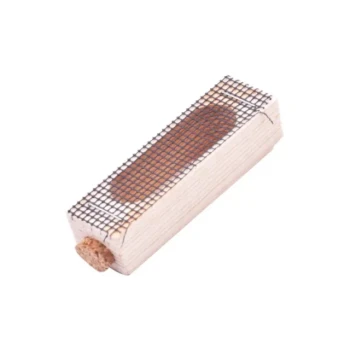
Applying hardware mesh to your beehive entrance acts as a specialized physical barrier known as a mouse guard. By securing a strip of wire mesh over the hive’s lower opening, you prevent rodents from nesting in the warmth of the colony while ensuring bees can still exit and enter freely.
Core Takeaway Winterizing a hive requires balancing protection with accessibility. Hardware mesh serves as a critical defense against pests, specifically excluding mice, while maintaining the necessary clearance for bees to perform hygiene-related flights on unseasonably warm days.
The Strategic Role of Mesh
Blocking the Rodent Threat
During winter, a beehive is a warm, dry, and food-rich environment that is highly attractive to rodents.
Without a physical barrier, mice can easily enter through standard entrances to build nests. Hardware mesh provides a rigid obstacle that rodents cannot squeeze through or chew away.
Facilitating Cleansing Flights
While the hive must be secure, it cannot be sealed completely.
Bees do not defecate inside the hive; they wait for unseasonably warm days to leave for "cleansing flights." The mesh must be applied in a way that creates a permanent "open door" for the bees, ensuring they are never trapped inside with their waste.
sizing and Application Principles
Calibrating the Mesh Size
The effectiveness of this method relies entirely on the gauge (size) of the grid openings.
The mesh size must be carefully calibrated to be small enough to block the skull of a mouse. However, it must be large enough to allow a worker bee to pass through without struggle or wing damage.
Integration with Other Reducers
Hardware mesh can be used alone or in conjunction with other winterizing methods.
While mesh handles pests, you may still need to address thermal loss. Supplementary strategies include using manufactured entrance reducers behind the mesh or natural items like pinecones and sticks to narrow the remaining space and limit cold air intake.
Understanding the Trade-offs
Airflow vs. Insulation
Hardware mesh is excellent for pest control and ventilation, but it offers zero thermal insulation.
If you rely solely on mesh, the entrance remains wide open to wind. To counter this, consider pairing the mesh with wind blocks or foam insulation boards elsewhere on the hive to maintain internal temperatures.
The Risk of Obstruction
Because the mesh creates a physical grate, debris can accumulate behind it.
Dead bees (normal winter mortality) can pile up against the inside of the mesh, potentially blocking the exit for living bees. You must periodically check the entrance to ensure the path remains clear for those vital cleansing flights.
Making the Right Choice for Your Goal
To apply this effectively, assess your specific environmental risks:
- If your primary focus is preventing infestation: Install hardware mesh immediately, as it offers a superior, chew-proof barrier compared to wooden reducers or natural obstacles.
- If your primary focus is thermal retention: Combine hardware mesh (for pests) with a reduced entrance size or external wind blocks to minimize cold drafts while keeping the colony secure.
Your goal is to build a fortress that keeps enemies out but lets the residents fly free.
Summary Table:
| Feature | Hardware Mesh (Mouse Guard) | Function in Winter |
|---|---|---|
| Primary Purpose | Rodent Exclusion | Prevents mice from nesting and damaging the comb |
| Beekeeping Access | Open Grid | Allows bees to exit for hygiene-related cleansing flights |
| Mesh Gauge | Size-Specific | Must block mouse skulls but allow worker bees passage |
| Thermal Value | Low | Provides ventilation but requires supplemental wind blocks |
| Maintenance | Periodic Checking | Necessary to clear dead bee accumulation behind the grate |
Secure Your Apiary for the Winter with HONESTBEE
Protecting your investment requires the right tools at the right scale. At HONESTBEE, we specialize in supporting commercial apiaries and distributors with a comprehensive wholesale selection of high-quality beekeeping equipment. From durable hardware mesh and precision-engineered entrance reducers to advanced hive-making machinery and honey-filling systems, we provide everything needed to maintain a thriving operation.
Maximize your colony survival rates and operational efficiency—contact us today to discuss our bulk wholesale solutions and how we can add value to your beekeeping business!
Related Products
- 8-Cone Galvanized Steel Bee Robber Guard
- Beehive Entrance Reducer Guardian Metal Hive Entrance for Bees
- Beehive Entrance Discs Plastic Bee Entrance Disc for Bee Hives
- Professional Hive Front Entrance Bee Feeder
- Multi-Functional Sliding Hive Entrance for Beekeeping
People Also Ask
- What protective functions do beehive entrance guards provide? Defend Your Hive Against Wasps and Moths
- What is the primary function of protective guards at hive entrances? Block Rodents & Boost Winter Survival Rates
- How do conical metal guards or rubber inner tubes function as pest control tools? Stop Ants with Mechanical Barriers
- What is the function of Hive Entrance Guards? Master Bee Colony Defense Against Small Hive Beetles
- What happens if you block the entrance to a bee hive? Avoid This Dangerous Mistake