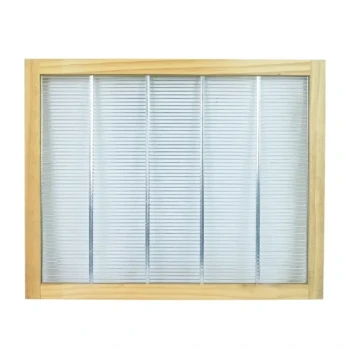
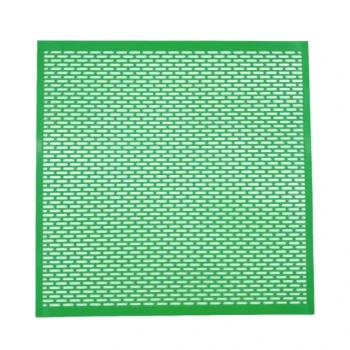
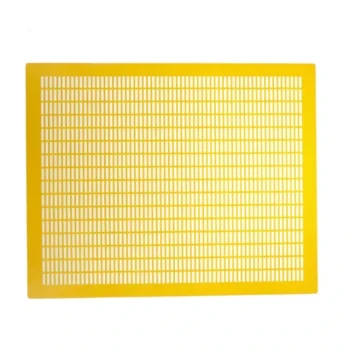
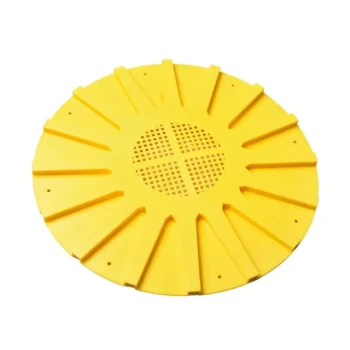
Use division boards to establish two queens separately, then use queen excluders to share the workforce without allowing the queens to meet. About two months before the main honey flow, place the old queen in the lower brood chamber with uncapped brood and roughly half the bees. Place a new queen, capped brood, and the remaining bees in an upper chamber, initially separated by a solid division board; after approximately two weeks, replace it with a queen excluder so workers can move between chambers while the queens remain isolated.
A successful two-queen system combines separate queen control with a shared worker population. Division boards protect the queens during establishment, while queen excluders support colony integration and brood-free honey storage.
How the Two-Queen System Increases Production
Build a larger foraging force
Two active queens can expand the colony’s brood population before the main nectar flow. A larger population of mature workers can then be available for nectar collection when the crop begins.
The objective is not simply to keep two queens in one hive. It is to create a strong, well-timed workforce without allowing the queens to fight or the colony to swarm.
Use vertical stacking efficiently
A vertical configuration places one brood chamber above the other. This makes it possible to separate the queens by hardware while allowing the overall colony to use the available vertical space for brood expansion and honey storage.
The lower chamber generally holds the old queen, while the upper chamber holds the new queen. The exact chamber arrangement should be adapted to the hive design and local management conditions.
Establishing the Two-Queen Arrangement
Start with a solid division board
Begin approximately two months before the expected honey flow, when there is sufficient time for both units to stabilize and build population.
The lower brood chamber should contain the old queen, uncapped brood, and approximately half of the colony’s bees. The upper chamber should receive the new queen, capped brood, and the remaining bees.
A solid division board provides complete separation during this vulnerable transition. It prevents direct contact between queens and reduces the risk of fighting while the upper unit accepts the new queen.
Check acceptance and colony strength
After the new queen has had time to establish, inspect both chambers for queen acceptance, brood development, food reserves, and population balance.
The two-week interval is a practical transition point in the described system, but it should not replace inspection. If the upper queen has not been accepted or either chamber is weak, replacing the board too early can destabilize the setup.
Replace the board with a queen excluder
After approximately two weeks, replace the solid division board with a queen excluder.
The excluder allows worker bees to move between the two brood chambers. Its restricted openings prevent the larger queens from passing through, preserving physical separation while allowing the colonies to share workers and odors.
This is the central mechanical principle of the system: two separate laying areas, one interconnected workforce.
Managing the Colony During the Honey Flow
Add supers as nectar storage increases
As the honey flow begins, add honey supers above the brood chambers. Queen excluders placed below the supers help keep the queens in the brood area and reduce the likelihood of eggs or larvae appearing in honey-storage frames.
This separation is valuable for commercial operations because it simplifies inspections, frame handling, and extraction.
Maintain clear bee passage
A queen excluder is effective only when workers can move through it readily. Burr comb, propolis, or dead drones can obstruct the openings and slow movement between chambers.
Inspect the excluder and surrounding frame edges regularly. Correct positioning, clean surfaces, and suitable entrances help prevent the grid from becoming a bottleneck.
Consider upper entrances where appropriate
An upper entrance can provide returning foragers with a more direct route into the honey supers. This may reduce congestion at the lower entrance and support efficient movement during a strong flow.
However, entrance configuration should match the hive design, local climate, robbing risk, and the beekeeper’s management method. It is not a universal substitute for maintaining a clean, properly fitted excluder.
Combining the Colony Before the Season Ends
Remove the excluder at the planned stage
Roughly one month before the honey flow ends, the primary reference recommends removing the queen excluder.
This allows the colony to combine under the younger queen rather than maintaining two separated queens through the end of the production period.
Confirm which queen will remain
The intended outcome is a single colony led by the younger queen. Before combining, verify the condition and performance of both queens and plan the transition deliberately.
Queen management should not be left to chance. If both queens can move together after the barrier is removed, a conflict may occur unless the beekeeper has established a clear plan for retaining one queen.
Preserve the honey harvest
Removing the brood-chamber excluder does not necessarily mean abandoning brood-free honey management. A separate excluder may still be used between the final brood area and the honey supers, depending on the colony’s configuration and the timing of the harvest.
The key is to distinguish between:
- A division excluder: separates two queens while allowing worker movement.
- A super excluder: keeps the queen out of honey-storage areas.
The same type of hardware may be used, but its position and purpose are different.
Selecting Hardware for Reliable Management
Division boards must provide true separation
A solid division board should fit securely and prevent bees or queens from bypassing the intended barrier. Poor fit can undermine the entire two-queen arrangement by allowing direct queen contact or uncontrolled worker movement.
For distributors and commercial users, product consistency is particularly important. Uniform dimensions, compatible frames, and dependable sealing surfaces reduce installation errors across multiple apiaries.
Queen excluders require precise openings
A quality queen excluder uses accurately spaced parallel wires or a properly formed perforated barrier. The openings must permit worker passage while preventing queen passage.
The product should also be rigid enough to remain flat, durable through repeated handling, and compatible with the selected hive equipment.
Match components across the hive system
Division boards, excluders, brood chambers, supers, and entrances must work as an integrated system. Dimensional incompatibility can create gaps, obstruct bee movement, or make inspections and transportation more difficult.
For B2B buyers, one-stop sourcing can simplify this process by consolidating compatible components, reducing procurement complexity, and supporting more consistent hive assembly.
Understanding the Trade-offs
Higher potential does not guarantee higher yield
A two-queen system can produce a substantially stronger colony, but honey production depends on queen quality, colony health, weather, forage availability, timing, and management skill.
The relationship between worker population and honey yield is not an automatic guarantee. A large colony still requires adequate nectar, ventilation, storage space, and effective swarm control.
Excluders can restrict movement
Queen excluders may slow worker movement, particularly when bees deposit burr comb across the grid or when drones become trapped in the openings.
A clogged or poorly fitted excluder can function as a barrier to productivity. Regular inspection, cleaning, correct alignment, and appropriate entrances are therefore essential.
The system increases management complexity
Two-queen colonies require more equipment, more inspections, and more precise timing than conventional single-queen colonies. Introducing a new queen, balancing populations, monitoring acceptance, and later combining the colony all create additional points of failure.
This approach is best suited to beekeepers and operations with the labor, equipment, and expertise to manage those transitions reliably.
Queen introduction carries risk
The upper queen must be accepted and allowed to establish before the two sections are connected through an excluder. Introducing the excluder prematurely can expose an unsettled unit to unnecessary stress and may compromise the intended arrangement.
Inspection-based decisions are more reliable than following a calendar without regard to colony condition.
How to Apply This to Your Project
The right setup depends on your target honey flow, hive dimensions, labor capacity, and equipment standardization.
- If your primary focus is maximum honey production: Establish both queens well before the main flow, use the solid division board during acceptance, then replace it with a properly fitted queen excluder to build a shared worker force.
- If your primary focus is brood-free honey handling: Keep a queen excluder between the brood area and honey supers, and monitor the grid for burr comb, propolis, and drone blockage.
- If your primary focus is swarm control: Build population under controlled separation and provide adequate super space before crowding triggers swarming pressure.
- If your primary focus is reliable commercial supply: Source dimensionally compatible division boards, excluders, brood boxes, and supers from a supplier able to provide consistent quality, rapid response, and efficient fulfillment.
- If your primary focus is operational simplicity: Use the two-queen method only when your team can support the additional inspections, queen management, and seasonal timing it requires.
With precise barriers, sound timing, and disciplined inspections, two-queen hardware can convert separate queen units into one highly productive, manageable honey-production system.
Summary Table:
| Hardware | Purpose | Role in Two-Queen Setup |
|---|---|---|
| Solid Division Board | Complete separation | Initially isolates queens during acceptance, preventing conflict. |
| Queen Excluder (Division) | Allows worker movement, blocks queens | Replaces solid board after acceptance, enabling shared workforce. |
| Queen Excluder (Super) | Keeps queen out of honey supers | Ensures brood-free honey storage, simplifying harvest. |
Ready to optimize your honey production with reliable hive hardware? HONESTBEE offers a comprehensive range of division boards, queen excluders, and full beekeeping equipment designed for commercial apiaries and distributors. Benefit from one-stop sourcing, rapid response, dedicated support, and ultra-fast delivery. Contact us today to discuss your wholesale needs or OEM/ODM customization.
Related Products
- Metal Queen Bee Excluder for Beekeeping
- Premium Wood Framed Metal Wire Queen Bee Excluder
- High Performance Plastic Queen Excluder for Beekeeping and Apiary Management
- Wooden Queen Bee Excluder for Beekeeping
- Professional Plastic Queen Excluder for Modern Beekeeping
People Also Ask
- Why are standardized hive frames and queen excluders essential for maintaining honey purity and quality? Scale Your Purity
- What types of queen excluders are available for beekeepers? Choose the Right Tool for Your Hive
- How does a queen-bee excluder function as a defense against Small Hive Beetles? Protect Your Honey with Resource Denial
- What is the primary function of a queen excluder within a commercial beehive? Ensure Purity in Honey Production
- Can a queen excluder be used as a propolis trap? Understand Bee Space for Better Hive Management