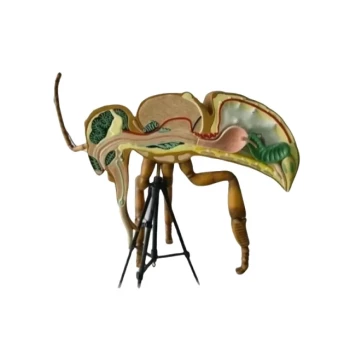
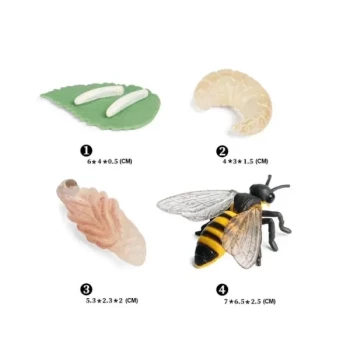
Identifying honeybee eggs and larvae is a foundational skill that allows for the precise assessment of queen productivity and colony progression. Eggs appear as microscopic, white, rice-shaped specks positioned at the base of a cell, whereas larvae are pearly-white, worm-like organisms that grow in a distinct C-shape. Understanding these visual transitions is essential for any professional or distributor providing high-level technical support to the apiculture industry.
Accurate brood identification serves as the primary diagnostic tool for hive health, enabling beekeepers to verify the presence of a laying queen and the timing of the colony's growth cycle. Recognizing the subtle physical differences between these stages is the first step in proactive hive management.
Visual Characteristics of the Honeybee Egg
The Rice-Grain Morphology
Honeybee eggs are exceptionally small, white, and shaped remarkably like a tiny grain of rice. They are typically placed vertically at the very bottom of the hexagonal cell by the queen. As the egg nears the end of its three-day stage, it may begin to tilt slightly, signaling the transition to the larval phase.
Challenges in Visibility
Because of their minute size, eggs can be difficult to see without optimal lighting or magnification. They are often best observed by tilting the frame so that sunlight or a high-powered inspection light hits the bottom of the cell directly. For distributors, offering high-quality magnification tools is a key service for clients who struggle with this early detection stage.
Identifying Larval Development
The Transition to the Worm-Like State
Once the egg hatches, it becomes a larva, which takes on the appearance of a small, white worm. In the initial hours after hatching, the larva is extremely tiny and lies in a small pool of royal jelly or worker jelly. This liquid "bed" is a primary visual indicator that distinguishes a newly hatched larva from a late-stage egg.
Growth and the "C-Shape" Orientation
As the larvae mature, they grow at an exponential rate, eventually curving into a tight "C" shape. They transition from being barely visible in a pool of liquid to occupying the entire width of the hexagonal cell. Mature larvae are opaque, pearly-white, and much easier to identify with the naked eye than eggs or early-stage larvae.
Recognizing Brood Health and Patterns
Indicators of a Healthy Colony
Healthy larvae should always appear pearly white and glistening with moisture. They should be found in a consistent, "solid" brood pattern, where almost every cell in a given area contains a larva of a similar age. This consistency is a hallmark of a high-performing queen and a well-nourished colony.
Warning Signs of Decline
Distributors and professionals should train clients to look for spotty brood patterns or larvae that appear twisted or discolored. Off-colors, such as yellow or brown, or a noticeable off-odor upon opening the hive, can indicate serious disease or colony decline. Rapidly identifying these symptoms is vital for maintaining the integrity of a large-scale apiary.
Understanding the Trade-offs in Brood Inspection
Lighting vs. Disruptive Behavior
While high-intensity light is necessary to see eggs, excessive exposure to direct sunlight or prolonged hive openings can stress the bees. Beekeepers must balance the need for a detailed examination with the necessity of maintaining the hive's internal temperature and humidity. Professional-grade inspection lights allow for quick identification without the need for long, disruptive exposure.
Speed vs. Accuracy
In large-scale operations, technicians often prioritize speed, which can lead to missing the subtle presence of eggs. Missing eggs during an inspection might lead to the false conclusion that a hive is queenless. Utilizing comprehensive diagnostic kits and high-speed fulfillment for specialized tools ensures that accuracy is never sacrificed for efficiency.
Professional Strategies for Brood Assessment
Successful apiary management relies on a full spectrum of professional tools and deep industry expertise to ensure every hive reaches its maximum potential.
- If your primary focus is rapid colony scaling: Prioritize the identification of eggs to confirm the queen's daily laying rate and ensure your supply chain can provide enough equipment for the coming boom.
- If your primary focus is disease prevention: Focus on the color and orientation of larvae to catch early signs of foulbrood or nutritional stress before they spread through the apiary.
- If your primary focus is customer education: Provide your clients with high-resolution visual guides that contrast healthy, pearly-white larvae against the rice-shaped profile of eggs.
By mastering these visual distinctions, you ensure the highest level of service and technical expertise in the apiculture market.
Summary Table:
| Feature | Honeybee Egg | Honeybee Larva |
|---|---|---|
| Shape | Tiny, vertical rice-grain shape | Distinct "C" shape, worm-like |
| Color | Matte white | Glistening, pearly-white |
| Position | Centered at the base of the cell | Lying in a pool of royal/worker jelly |
| Size | Microscopic (approx. 1.5mm) | Rapidly grows to fill the cell width |
| Health Sign | Firmly attached at the bottom | Opaque and moist (not yellow/brown) |
Partner with HONESTBEE: Your One-Stop Source for Professional Apiculture Solutions
At HONESTBEE, we understand that supporting large-scale commercial apiaries and B2B resellers requires more than just products—it requires deep industry expertise and a reliable supply chain. We provide a comprehensive, full-spectrum portfolio designed to maximize profit margins and operational efficiency for distributors and wholesalers worldwide.
Why Choose HONESTBEE?
- Comprehensive Product Range: From specialized hive-making and honey-filling machinery to essential consumables and honey-themed cultural merchandise.
- Premium Trading Services: Benefit from our robust OEM/ODM support, certified quality standards, and deep professional industry knowledge.
- Efficient Order Fulfillment: Experience ultra-fast delivery and rapid response times tailored to the urgent needs of the beekeeping season.
Enhance your inventory with high-quality beekeeping tools and equipment designed for professionals. Contact our wholesale team today to discuss how our one-stop sourcing capabilities can grow your business!
Related Products
- Plastic Beekeeping Honey Bee Larvae Grafting Tools for Queen Rearing and Chinese Grafting
- HONESTBEE Anatomy Bee Model Detailed Anatomical Display for Education and Study
- Professional Large-Format Hive Number Set for Beekeeping
- Honey Bee Life Cycle Model 4 Stage Educational Set for Kids Learning
- Langstroth Honey Bee Box Hive Boxes for Different Depths
People Also Ask
- How do larvae grafting tools and royal jelly production kits contribute to a diversified bee product strategy?
- What happens if a larva is grafted too late? Avoid Scrub Queens and Failed Rearing
- What is the primary function of a Professional Bee Larvae Grafting Tool in queen rearing? Enhance Breeding Efficiency
- What is the grafting method of queen rearing? Master Controlled Queen Production for Your Apiary
- What is the primary function and technical requirement of a larvae grafting tool? Master Precision Queen Rearing