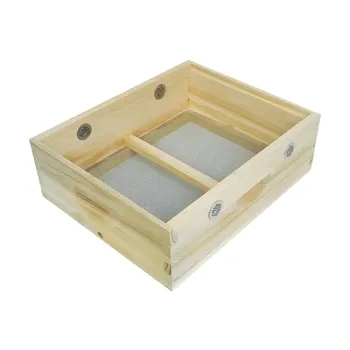
Reversing brood boxes or adding an expansion brood chamber can relieve spring congestion by giving the queen immediate vertical space for egg-laying. In a multi-story hive, place the brood box containing the active brood nest below an empty or partially empty chamber, or add a second chamber above it with suitable frames. Since colonies naturally expand upward, this arrangement encourages brood-nest growth and can reduce the pressure that contributes to swarm preparation.
The central principle is timing: provide usable brood space before the colony becomes crowded, but reverse boxes only when the brood nest is consolidated and weather is warm enough to prevent chilling.
Why Spring Congestion Develops
Colony Population Expands Rapidly
As spring temperatures rise and forage becomes available, the queen increases egg production and the adult population grows quickly. Brood, pollen, nectar, and water can occupy most available comb within a short period.
Limited Space Triggers Swarm Preparation
When the brood nest becomes crowded, the queen may have fewer open cells for laying. The colony can then begin constructing queen cells and preparing to swarm, reducing the beekeeper's control over population and honey production.
Vertical Growth Matches Bee Behavior
Honey bees generally extend the brood nest upward when additional space is available. Expansion equipment should therefore be positioned so that workers can move naturally into usable comb above the active brood area.
How Reversing Brood Boxes Works
Place the Brood-Filled Box Below
If the upper brood chamber contains the complete brood sphere and the lower chamber is largely empty, swap their positions. The brood-filled box is placed on the bottom board, while the empty box is placed above it.
This gives the colony room to expand upward into the previously underused chamber while preserving direct access to the active brood nest.
Confirm the Brood Sphere Before Reversing
Reversal is appropriate only when the brood is concentrated entirely in the upper box and the lower box is empty or nearly empty. If brood is distributed across both chambers, moving the boxes can split the cluster.
A split cluster during a cold period can leave brood poorly protected and cause chilled brood or a setback in colony development.
Work During a Mild, Calm Period
Open the hive when temperatures are sufficiently warm for a brief inspection and manipulation. Use a smoker appropriately, set the removed box on an inverted hive roof or another stable surface, and avoid crushing bees while repositioning equipment.
Cleaning or replacing a dirty bottom board can be incorporated into the same operation if the hive design and conditions permit.
How Adding a Brood Chamber Creates Space
Add the Chamber Above the Active Brood Nest
A second brood box can be placed above the primary brood chamber when the colony is strong enough to occupy the additional volume. The upper chamber should contain empty drawn comb where possible, or frames fitted with foundation when drawn comb is unavailable.
Empty drawn comb provides the fastest usable space because the queen can lay in it immediately and workers do not need to build the cells first.
Include a Frame of Capped Brood When Appropriate
For a strong colony, positioning a frame of capped brood in the center of the added chamber can encourage workers to occupy and maintain the new space. This should be done only when the colony has sufficient adult bees to cover and care for the additional brood.
Expand Before the Hive Is Fully Occupied
Do not wait until every frame is filled. A practical operating rule is to expand when approximately 7 of 11 frames are drawn and actively used, provided the colony and weather conditions support further growth.
Early expansion gives the queen room before congestion leads to queen-cell construction.
Coordinating Brood and Honey Space
Add Honey Supers Promptly
Brood-box expansion addresses room for population growth, while honey supers provide storage space for nectar and honey. A strong colony can draw comb and fill a super rapidly during a major nectar flow, so supers should be installed before existing storage space is exhausted.
Use Queen Excluders Deliberately
A queen excluder can keep the queen in the designated brood area while allowing workers to move into honey supers. It should be installed only when the brood nest is adequately developed and the colony has enough worker traffic to occupy the super.
Monitor Both Chambers After Expansion
After adding space, inspect whether the bees are actually using the new chamber. Look for drawn comb, stored pollen or nectar, expanding brood, and adequate bee coverage rather than assuming that added equipment alone has solved congestion.
Understanding the Trade-offs
Reversal Is Not a Universal Spring Procedure
Reversing boxes too early can damage colony development if brood is present in both chambers or if temperatures are too low. The technique depends on the actual brood distribution, colony strength, and local weather.
Empty Foundation Is Slower Than Drawn Comb
Foundation creates potential capacity, but bees must first produce wax and draw the cells. During cool weather or a weak nectar flow, an added foundation-filled chamber may remain unused and provide less immediate relief than drawn comb.
Excess Space Can Stress Weak Colonies
Adding a full brood chamber to a small colony can increase the volume it must heat and defend. Expansion should match the colony's adult population and forage conditions, especially in regions with unpredictable spring weather.
These Methods Do Not Replace Swarm Inspections
Once queen cells are developed or the colony is already committed to swarming, adding space may not be sufficient. Regular inspections remain necessary to identify congestion, queen-cell construction, and uneven brood distribution.
Applying the Method in Commercial Apiaries
Standardize Equipment Availability
Distributors, wholesalers, and commercial operators should maintain ready access to compatible brood boxes, bottom boards, roofs, frames, drawn comb, foundation, queen excluders, and honey supers. Expansion decisions are time-sensitive during spring, so unavailable equipment can directly limit colony performance.
Build a Seasonal Response System
Apiary teams can schedule inspections as spring forage begins and use consistent criteria, such as frame occupancy, brood distribution, and weather conditions. This supports rapid order fulfillment and ensures that replacement or expansion equipment reaches the apiary before congestion becomes severe.
Match Products to Operating Conditions
Drawn comb is valuable for immediate capacity, while foundation supports longer-term equipment rotation and comb renewal. A broad product portfolio allows beekeepers and resellers to select the appropriate solution for colony strength, regional climate, and expected nectar flow.
Making the Right Choice for Your Goal
Choose the method according to the colony's condition, not simply the calendar.
- If your primary focus is preventing spring swarming: Expand brood space before the brood nest is crowded, and reverse boxes only when the brood sphere is fully contained in the upper chamber and weather is reliably mild.
- If your primary focus is maximizing colony population: Add a second brood chamber with empty drawn comb, or use a properly prepared foundation-filled chamber when the colony is strong enough to occupy it.
- If your primary focus is honey production: Provide brood expansion first, then add honey supers before existing storage frames are nearly full.
- If your primary focus is reliable commercial operations: Keep compatible expansion equipment and spare hive components in stock so space-management decisions are not delayed by procurement.
Timely, condition-based expansion gives the colony room to grow while preserving the beekeeper's ability to manage swarming and honey production.
Summary Table:
| Method | Best Used When | Key Action | Benefits | Risks/Caveats |
|---|---|---|---|---|
| Reversing brood boxes | Brood nest consolidated in upper box; lower box empty; mild weather | Swap positions; empty box above | Immediate vertical space; natural upward expansion | Chilled brood if cluster split or weather cold |
| Adding expansion chamber | Strong colony; ~7 of 11 frames used; suitable weather | Add chamber above brood nest; use drawn comb or foundation | Prevents crowding; queen continues laying | Slow use if foundation only; stress for weak colonies |
Ready to optimize your apiary's spring management? HONESTBEE supports commercial apiaries and distributors with a full spectrum of beekeeping equipment, from brood boxes and frames to drawn comb and foundation. Our one-stop sourcing, rapid response, and fast fulfillment ensure you get the right supplies when you need them. For distributors and wholesalers, we offer competitive margins, OEM/ODM support, and certifications to meet your market demands. Contact us today to discuss your expansion needs and secure a reliable supply chain!
Related Products
- Australian Langstroth Beehive Boxes for Beekeeping Wholesales
- Langstroth Honey Bee Box Hive Boxes for Different Depths
- Portable Bee Mating Hive Boxes Mini Mating Nucs 8 Frames for Queen Rearing
- Professional Beekeeping Quilt Box with Multi Vent Moisture Control
People Also Ask
- What are the primary advantages of using standardized Langstroth boxes? Scale Your Commercial Beekeeping Operation
- What are the differences between the three standard depths of Langstroth boxes? Choose the Best Size for Your Apiary
- What role do standardized Langstroth boxes play in commercial apiary management and honey bee research? | HONESTBEE Guide
- How many beehive boxes are needed when starting a new hive? A Guide to Proper Hive Setup
- What are the disadvantages of using a combination of deep and medium boxes? Avoid Costly Incompatibility Issues