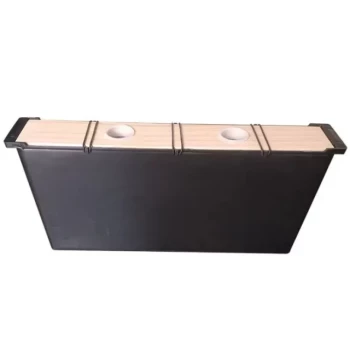
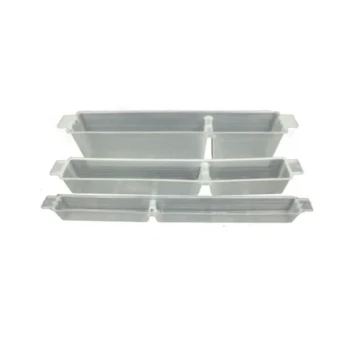
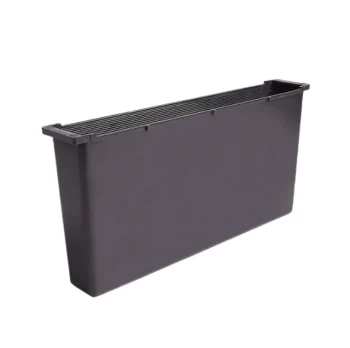
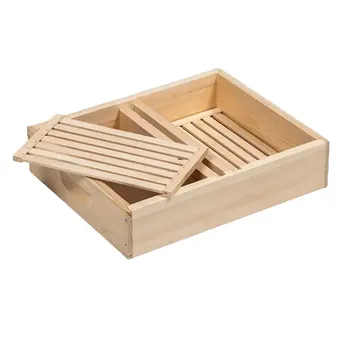
Frame feeders are generally a better fit for nucleus hives than full-sized commercial colonies. In a full-sized hive, their limited capacity leads to frequent or daily refilling, while the feeder occupies space that could otherwise hold active comb. In nucleus hives, however, slower consumption and limited roof clearance make the compact in-hive design more practical.
The key distinction is operating scale: frame feeders provide convenient internal access for small colonies, but their capacity and space requirements make them inefficient for large, actively managed colonies.
How Frame Feeders Perform in Full-Sized Hives
Limited Capacity Creates More Work
A frame feeder replaces a standard brood-chamber frame, so its syrup volume is inherently restricted by the width of that frame space.
Full-sized colonies can consume syrup rapidly, requiring frequent or daily refills. For commercial beekeepers managing many colonies, this creates recurring labor and service demands.
Refilling Disrupts the Colony
Because the feeder is located inside the hive body, the beekeeper must open the hive to replenish syrup.
This interrupts colony conditions, can disturb brood and bees, and increases handling time and sting exposure. The operational burden becomes more significant when many full-sized hives require repeated servicing.
It Reduces Comb Capacity
The feeder occupies a position that would otherwise contain a comb frame.
That means fewer frames are available for brood rearing, nectar storage, or honey production. In a full-sized production hive, sacrificing comb space can reduce the colony’s usable capacity.
Why Frame Feeders Suit Nucleus Hives Better
Smaller Colonies Consume Feed More Slowly
Nucleus colonies have fewer bees and typically consume syrup at a slower rate than full-sized colonies.
As a result, the frame feeder’s smaller capacity is less restrictive. Refilling may still be necessary, but the interval is generally more manageable than in a strong commercial colony.
They Work Where Top Feeders May Not
Standard top feeders may not fit properly beneath the roofs of nucleus hives.
A frame feeder avoids this clearance problem by fitting inside the hive body. This makes it a practical option when the nucleus hive’s compact dimensions limit external or top-mounted feeder choices.
Compact Access Can Simplify Small-Colony Feeding
Placing the feeder directly beside the colony gives bees immediate access to the syrup.
For small colonies, this can be useful during establishment or periods when supplemental feeding is needed, provided the feeder is installed and managed correctly.
Key Design Limitations
The Feeder Occupies a Full Frame Position
The central design compromise is that the feeder replaces, rather than supplements, a standard frame.
This limits comb-building and storage capacity. For distributors and resellers, this should be communicated clearly: the product is a compact feeding solution, not a capacity-neutral accessory.
Liquid Capacity Is Small
The narrow, frame-shaped vessel cannot hold as much syrup as many external or top-mounted feeders.
This makes capacity the main limitation in full-sized colonies and determines whether the product is suitable for a given management system.
Refilling Requires Hive Access
The feeder cannot normally be replenished without opening the hive.
That design limits convenience for high-volume operations and increases the labor associated with repeated feeding rounds.
Drowning Protection Must Be Effective
Bees have direct access to the syrup, so the design must reduce the risk of drowning.
A floating wooden raft is commonly used to provide a landing surface. However, the raft and internal access arrangement must be adequate; an open syrup container without effective float protection can cause bee mortality.
Understanding the Trade-offs
Internal Access Versus Operating Efficiency
Frame feeders offer direct access to syrup without requiring a top feeder to fit above the hive body.
The trade-off is that this convenience comes with reduced capacity, lost frame space, and the need to open the hive for refilling.
Compactness Versus Production Capacity
Their narrow format is valuable in nucleus equipment and space-constrained hive designs.
The same compactness becomes a disadvantage in full-sized colonies, where feed demand and comb-production requirements are substantially greater.
Simple Construction Versus Safety Requirements
Wooden or plastic construction can make frame feeders straightforward to source and integrate into standard hive equipment.
Nevertheless, material choice alone does not determine performance. Float design, stability, cleanability, and reliable fit are critical to safe and repeatable use.
Selecting Products for Different Markets
For Nucleus-Hive Customers
Frame feeders are well suited to beekeepers who need an internal feeder for small colonies or compact nucleus boxes.
Product specifications should emphasize hive compatibility, dimensions, syrup capacity, float design, and ease of cleaning.
For Commercial-Hive Customers
Full-sized commercial beekeepers should be advised that frame feeders are best for targeted or temporary feeding rather than high-volume, low-intervention feeding programs.
Where frequent refilling and maximum comb capacity are priorities, a higher-capacity feeder format is generally more appropriate.
For Distributors and Resellers
A strong product portfolio should distinguish between nucleus-hive feeding equipment and full-sized colony feeding systems.
Clear application guidance reduces unsuitable orders, supports faster customer decisions, and allows suppliers to provide a more complete one-stop sourcing service across hive sizes and management needs.
How to Apply This to Your Project
Choose the feeder according to colony size, refill frequency, available hive space, and the level of handling your customers can accept.
- If your primary focus is nucleus hives: Position frame feeders as compact internal solutions that suit slower consumption and roofs with limited top-feeder clearance.
- If your primary focus is full-sized commercial colonies: Treat frame feeders as limited-capacity or occasional-use products, not as the most efficient primary feeding system.
- If your primary focus is product sourcing: Verify dimensions, hive compatibility, syrup capacity, float performance, and material quality before consolidating orders.
- If your primary focus is customer service: Explain the capacity and lost-frame-space trade-offs clearly so beekeepers can select equipment matched to their management scale.
The right frame feeder is not simply the one that fits the hive—it is the one whose capacity, safety, and servicing demands match the colony and operating model.
Summary Table:
| Aspect | Full-Sized Hives | Nucleus Hives |
|---|---|---|
| Capacity | Limited; requires frequent daily refills | Suitable; slower consumption |
| Space | Occupies a full frame, reducing comb area | Fits well; no top clearance issues |
| Refilling | Requires opening hive, disrupting colony | More manageable due to lower demand |
| Performance | Inefficient for high-volume feeding | Practical for small colonies |
At HONESTBEE, we supply a comprehensive range of beekeeping equipment, including frame feeders suited for both nucleus and full-sized hives. Our premium trading services ensure rapid response, dedicated support, and fast delivery. Whether you're a distributor or beekeeper, we provide the right tools and guidance for your operation. Contact us today to discuss your needs and see how we can boost your efficiency and profitability.
Related Products
- Professional In-Hive Frame Bee Feeder by HONESTBEE
- 3.5L Plastic Beehive Frame Feeder Deep Frame Water Feeder for In Hive Use
- In-Hive Dual Compartment Frame Bee Feeder for Targeted Colony Nutrition
- Professional In-Hive Bee Feeder HONESTBEE Frame for Beekeeping
- Rapid Bee Feeder White Plastic 2L Round Top Feeder for 8 or 10-Frame Bee Hives
People Also Ask
- What precautions should be taken when feeding bees inside the hive? Safeguard Your Colony from Robbing and Leaks
- Why should sugar syrup or dry sugar not be left out in the open when feeding bees? Avoid a Dangerous Feeding Frenzy
- What is a bee frame feeder and what are its disadvantages? Choose the Best Feeding Strategy for Your Apiary
- Why are professional bee feeders necessary for the stable development of bee colonies in commercial apiaries?
- How is sugary syrup fed to bees inside the hive? A Guide to Safe & Efficient In-Hive Feeders