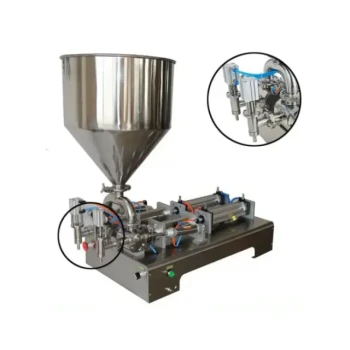
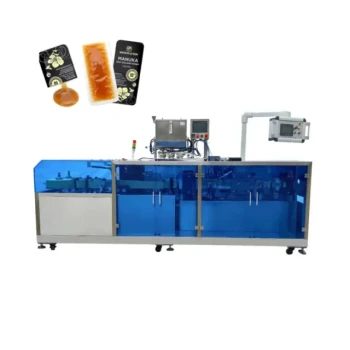
Industrial honey-filling machines are the critical link between raw pollination output and market-ready commercial products. These machines ensure quality through high-precision metering systems and fully enclosed sanitary structures that eliminate secondary contamination. By automating volume control and sealing, they preserve the biological activity and consistency of the honey while meeting the rigorous net-weight standards required for international trade.
For distributors and wholesalers, industrial-grade filling technology is the foundation of a reliable supply chain. It guarantees that every batch maintains its purity and sensory characteristics, providing the standardized quality necessary for rapid global distribution and high-end retail.
Precision Engineering for Standardized Output
Accurate Volumetric Metering
Industrial machines utilize high-precision quantitative pumps and flow meters to ensure each container meets exact weight specifications. This accuracy is vital for international trade compliance, as it prevents under-filling and minimizes material loss during high-speed production runs.
Adaptability to Honey Viscosity
Pollination-derived honey can vary significantly in thickness depending on the floral source and environmental conditions. Advanced filling lines are designed to handle these varying viscosities without sacrificing speed, ensuring a uniform flow that maintains production efficiency for large-scale orders.
Automated Sealing and Leak Prevention
The integration of automated sealing processes ensures that every container is airtight immediately after filling. This prevents leakage during long-distance transport and protects the honey from oxidation, which is essential for maintaining a long shelf life in wholesale warehouses.
Preservation of Biological and Sensory Integrity
Prevention of Secondary Contamination
By utilizing fully enclosed, sterile filling environments, these machines remove the risk of human-induced adulteration or environmental pollutants. This mechanized encapsulation is superior to manual handling, as it keeps the honey in a controlled loop from the filtration stage to the final bottle.
Temperature and Flow Control
To protect the sensitive enzymes, antioxidants, and bioactive components inherent in natural honey, industrial machines often incorporate constant temperature control. This ensures the honey remains fluid enough for filling without being subjected to excessive heat that would degrade its nutritional value or flavor profile.
Impurity Filtration Integration
High-end filling systems often integrate multi-stage filtration to remove micro-impurities while retaining the honey's natural characteristics. This ensures the final product meets the purity standards expected by premium B2B buyers and health-conscious consumers.
Strategic Advantages for the Distribution Chain
Traceability and Batch Management
Modern industrial filling lines are equipped with systems for traceable batch management and anti-counterfeiting labeling. For wholesalers, this means every pallet can be tracked back to its production date and source, which is a non-negotiable requirement for modern food safety audits.
Enhanced Professional Presentation
Consistency in filling levels and clean, drip-free exterior packaging enhances the professional presentation of the brand. This aesthetic reliability is a key factor for distributors looking to place products in high-end retail environments where consumer trust is paramount.
Rapid Order Fulfillment
The high-speed nature of automated filling allows for ultra-fast delivery timelines. When a distributor faces a sudden spike in demand, industrial-grade machinery provides the throughput necessary to scale production rapidly without compromising the quality of individual units.
Understanding the Trade-offs and Pitfalls
Complexity of Sanitization
While automated systems are more hygienic, they require rigorous, specialized cleaning protocols to prevent mold or yeast growth in the valves. Inadequate maintenance of the sanitary mechanical structures can lead to batch-wide contamination, making expert operational knowledge a necessity.
Initial Investment vs. Throughput
The high cost of industrial-grade equipment can be a barrier for smaller operations, but for wholesalers, the trade-off is clear: manual filling cannot match the consistency or speed required for global supply chains. Choosing lower-tier equipment often results in higher "giveaway" costs due to imprecise filling volumes.
Changeover Downtime
Switching between different container sizes or honey types can cause significant downtime if the machine is not designed for rapid changeovers. Distributors must ensure their sourcing partners use versatile equipment that supports a diverse product portfolio without stalling the supply chain.
Making the Right Choice for Your Goal
Evaluating a honey-filling solution requires aligning machine capabilities with your specific business objectives and market demands.
- If your primary focus is High-Volume Distribution: Prioritize machines with high-precision quantitative pumps and automated palletizing to ensure ultra-fast order fulfillment.
- If your primary focus is Premium or Organic Markets: Look for systems that emphasize low-heat processing and sterile, closed-loop environments to preserve bioactive enzymes and antioxidants.
- If your primary focus is International Export: Ensure the equipment features integrated traceability, anti-counterfeiting labeling, and metering that meets global trade weight standards.
Standardizing your production with high-precision industrial machinery is the most effective way to secure the commercial value and purity of honey at scale.
Summary Table:
| Feature | Quality Impact | B2B Strategic Benefit |
|---|---|---|
| Volumetric Metering | Precise weight control | Prevents material loss & ensures trade compliance |
| Closed-Loop System | Zero secondary contamination | Guarantees product purity for international audits |
| Temp & Flow Control | Preserves bioactive enzymes | Maintains premium nutritional value & flavor profile |
| Automated Sealing | Leak & oxidation prevention | Extends shelf life for long-distance global shipping |
| Batch Traceability | Transparent production logs | Simplifies safety audits & builds distributor trust |
Scale Your Honey Distribution with HONESTBEE Expertise
At HONESTBEE, we empower commercial apiaries and distributors with high-performance, industrial-grade solutions. From honey-filling and hive-making machinery to a full spectrum of beekeeping tools and consumables, our one-stop sourcing model is designed to maximize your operational efficiency.
Why partner with us?
- Comprehensive Portfolio: Access everything from specialized hardware to honey-themed cultural merchandise.
- Reliable Supply Chain: Benefit from our deep industry expertise and ultra-fast delivery for rapid order fulfillment.
- Tailored for B2B: We support wholesalers with premium trading services, ensuring high profit margins and consistent quality.
Ready to optimize your production and secure your market position? Contact our expert team today to discuss your wholesale requirements!
References
- M. RINDOŠ. Book review: Packer L. 2023: Bees of the World. A Guide to Every Family.. DOI: 10.14411/eje.2025.002
This article is also based on technical information from HonestBee Knowledge Base .
Related Products
- Commercial Rotary Honey Filling Machine for Production
- Precision Durable Efficient HONESTBEE Rotary Honey Filling Machine
- Fully Automatic Honey Filling Packaging Machine for Processing Line
- Economy Small Honey Filling Machine Honey Bottle Filler Packaging Machine
- Precision Automated Packaging Turntable Honey Spoon Filling Sealing Packing Machine
People Also Ask
- What role do commercial honey filling machines play in honey distribution? Scaling Efficiency and Quality Control
- What technical support do commercial-grade filling machines provide? Convert Honey NTFPs into Marketable Commodities
- What is the significance of specialized honey filling equipment? Scaling from Beekeeping to Commercial Success
- Why is professional honey filling machinery critical for honey production? Scale Your Apiary's Profit & Efficiency
- Why is high-capacity honey filling machinery necessary for Giant Honey Bees? Solve the Apis dorsata Volume Crisis