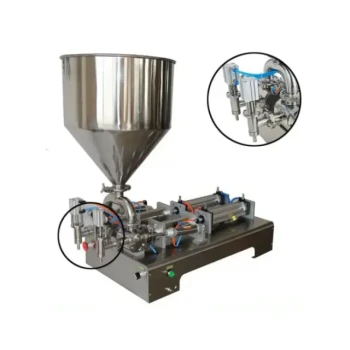
The seasonal harvest of Apis dorsata creates an immediate volume crisis that manual processing cannot withstand. A single comb from these Giant Honey Bees can yield up to 15 kg (33 lbs) of honey, and because harvesting occurs in large clusters over short periods, processors are inundated with raw material. High-capacity machinery is strictly necessary to manage this surge, ensuring the honey is filtered, standardized, and packaged before it degrades.
Processing honey from Giant Honey Bees is a race against time and chemistry. Industrial-grade machinery is the only reliable method to handle the massive influx of raw material while preserving the delicate enzymes and preventing contamination required for commercial standardization.
Managing the Volume Surge
The primary logistical challenge with Apis dorsata is not just the quantity of honey, but the velocity at which it arrives.
Overcoming Seasonal Bottlenecks
Unlike standard apiaries where harvest can be staggered, Apis dorsata harvesting often results in a massive influx of raw product in a very short timeframe. Manual filling creates a production bottleneck that leaves raw honey sitting in storage, increasing the risk of spoilage or crystallization. High-capacity machines provide the throughput necessary to clear this backlog immediately.
Transitioning to Industrial Efficiency
Traditional manual processing involves high labor intensity and low efficiency. Mechanizing the extraction, suction, filtration, and bottling processes significantly improves output per unit of labor. This transition allows operations to scale from small-scale beekeeping to an industrial, export-oriented model.
Preserving Chemical Integrity
Beyond simple volume, Apis dorsata honey often possesses medicinal properties that are easily destroyed by improper handling.
Controlling Hydroxymethylfurfural (HMF)
Honey is hygroscopic and chemically unstable when exposed to air and heat. Automated filling lines significantly reduce the time honey is exposed to the atmosphere. This speed effectively controls the increase of Hydroxymethylfurfural (HMF), a compound that indicates heat damage and age, preserving the honey's freshness profile.
Protecting Heat-Sensitive Enzymes
The medicinal value of this honey relies on active ingredients like catalase, invertase, and diastase. These components are extremely heat-sensitive and can be denatured by the friction or ambient heat of manual processing. High-specification machinery utilizes precise temperature control to inhibit the dehydration of hexoses, ensuring the pharmacological activity of the honey remains intact.
Handling High Viscosity
Honey is a viscous fluid that resists flow, making manual measurement inconsistent. Industrial machines utilize precision piston or weighing systems to manage this high viscosity. This ensures consistent product weight and precise metering, satisfying international trade standards despite the difficult physical nature of the fluid.
Ensuring Hygiene and Standardization
To enter the global market, the variability of wild-harvested honey must be eliminated.
Eliminating Secondary Contamination
Manual handling is the leading cause of secondary contamination in food processing. Automated systems are often closed loops, moving honey from filtration to bottle without human contact. This ensures the final product meets the strict hygiene standards required for high-end distribution markets.
Homogenization for Export
Apis dorsata honey is gathered from multiple sources, leading to natural variations in the raw product. Processing machinery allows for the homogenization of these different batches. This results in a uniform product that adheres to global physicochemical standards, reducing the risk of trade rejection due to inconsistency.
Understanding the Trade-offs
While necessary for volume, industrial automation introduces specific complexities that must be managed.
Capital Intensity vs. Flexibility
High-capacity machinery represents a significant capital expenditure. It creates a rigid production line that is highly efficient for one type of packaging but may lack the flexibility to switch quickly between different bottle shapes or sizes compared to manual labor.
Technical Maintenance Requirements
The shift to automation trades manual labor for technical oversight. These machines require specialized maintenance to ensure the precision weighing and temperature control systems remain accurate. A failure in a high-capacity line can halt the entire operation, creating a risk point that does not exist in decentralized manual processing.
Making the Right Choice for Your Operation
The decision to invest in this machinery depends on your specific end-market goals.
- If your primary focus is the Global Export Market: You must invest in automation to ensure the homogenization and standardized packaging required to minimize trade risks.
- If your primary focus is Medicinal/Pharmaceutical Grade: You need high-precision temperature control and reduced air exposure to maintain low HMF levels and enzyme activity.
- If your primary focus is Volume Throughput: You require industrial filling speeds to process the seasonal clusters of Apis dorsata harvests without creating a backlog.
For Apis dorsata processing, automation is not a luxury; it is the infrastructure required to turn a volatile natural resource into a stable commercial commodity.
Summary Table:
| Feature | Manual Processing | High-Capacity Machinery |
|---|---|---|
| Throughput Speed | Low (Creates bottlenecks) | High (Clears seasonal surges) |
| Enzyme Preservation | Poor (Risk of heat/air damage) | Excellent (Precise temperature control) |
| HMF Level Control | Difficult to monitor | Optimized via rapid processing |
| Contamination Risk | High (Human contact) | Low (Closed-loop systems) |
| Standardization | Variable (Batch inconsistency) | High (Homogenized for export) |
Scale Your Honey Production with HONESTBEE
Turning a volatile Apis dorsata harvest into a premium commercial commodity requires more than just labor—it requires precision engineering. At HONESTBEE, we specialize in empowering commercial apiaries and global distributors with the industrial infrastructure needed to succeed.
How we add value to your operation:
- High-Volume Efficiency: Our honey-filling and processing machines are designed to eliminate seasonal bottlenecks.
- Quality Preservation: Advanced temperature and viscosity controls protect the medicinal integrity of your honey.
- Full-Spectrum Supply: From specialized hive-making hardware to honey-themed cultural merchandise, we provide the complete toolkit for beekeeping success.
Ready to transition from manual bottlenecks to industrial-scale exports?
Contact HONESTBEE Today for a Wholesale Consultation
References
- Cameron Jack, Jamie Ellis. Giant Honey Bee (suggested common name) Apis dorsata Fabricius (Insecta: Hymenoptera: Apidae). DOI: 10.32473/edis-in1119-2016
This article is also based on technical information from HonestBee Knowledge Base .
Related Products
- Precision Durable Efficient HONESTBEE Rotary Honey Filling Machine
- Economy Small Honey Filling Machine Honey Bottle Filler Packaging Machine
- Commercial Rotary Honey Filling Machine for Production
- Semi Automatic Small Honey Bottle Filling Machine Honey Filler
- Fully Automatic Honey Filling Packaging Machine for Processing Line
People Also Ask
- How do honey filling machines work? Achieve Precision & Speed for Your Apiary
- How do honey filling and processing machines aid native bee product conservation? Boost Value with HONESTBEE Technology
- What quality control role does professional honey filling equipment perform? Ensure Consistency and Product Stability
- What is a key feature of the new generation of the honey filling machine? The Advanced Electronic Control Unit
- How do high-precision honey filling machines ensure quality? Optimize Your Commercial Production with HONESTBEE