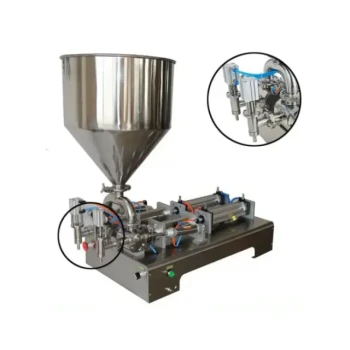
Industrial honey-filling machines are the critical infrastructure that transforms raw bulk honey into high-value, retail-ready assets. By leveraging high-precision quantitative filling and sanitary sealing, these machines minimize product waste and ensure that every gram of harvest reaches the market in a standardized, premium format. This technological bridge allows large-scale operations to meet the rigorous hygiene and packaging demands of high-end retail, significantly increasing the total economic output of the apiary.
Core Takeaway: Industrial filling machines secure the economic viability of beekeeping by enabling producers to capture retail-level margins, reduce labor overhead, and eliminate the product loss associated with manual processing.
Maximizing Profitability Through Value-Added Processing
Capturing the Retail Value Add
The primary economic shift occurs when a project transitions from selling bulk honey to intermediate traders to producing consumer-ready bottled products. By utilizing automated equipment, beekeepers can bypass middlemen and capture the significant price markup found in the terminal retail market. This transition allows the producer to retain the "value-add" that usually goes to third-party packers.
Minimizing Operational Waste
Honey is a high-value commodity where even small inaccuracies in manual filling lead to substantial financial losses over time. Industrial machines use high-precision quantitative control systems to ensure every container is filled to the exact specification, preventing overfill and maximizing the total number of units produced from each harvest.
Streamlining Large-Scale Distribution
For distributors and wholesalers, the ability to provide equipment that standardizes packaging is vital for maintaining a consistent supply chain. Automated filling ensures that every bottle is uniform in weight and appearance, which is essential for shelf-readiness and meeting the logistics requirements of global retail partners.
Enhancing Scalability and Risk Mitigation
Overcoming Labor and Production Risks
As climate change leads to yield fluctuations and rising production costs, reducing labor dependency becomes a financial necessity. Automated filling lines allow large-scale projects to process massive volumes of honey with minimal staff, protecting the project's bottom line against rising wages and labor shortages.
Diversifying Income Streams
Modern beekeeping relies heavily on pollination services, but honey remains a vital secondary product that provides necessary cash flow. Efficient processing equipment maximizes the commercial value of these by-products, providing the financial resources needed to invest in colony health and long-term population management.
Rapid Response to Market Demand
In a competitive B2B environment, speed is a major differentiator. Industrial-grade machinery enables high-speed processing and fulfillment, allowing producers to react quickly to large purchase orders from wholesalers without compromising on hygiene or quality consistency.
Ensuring Hygiene and Regulatory Compliance
Standardized Quality for Global Export
Meeting international food safety standards is non-negotiable for large-scale projects aiming for the export market. Automated, sterile processing workflows ensure the purity of the honey from the source to the shelf, reducing the risk of costly product recalls or export rejections.
Building Brand Trust through Precision
Consistency in packaging builds consumer and distributor trust. By using automated sealing technology, producers ensure that every product is tamper-evident and hygienically sealed, which enhances market recognition and supports premium pricing strategies.
Understanding the Trade-offs
Initial Capital Expenditure vs. Long-Term ROI
The primary hurdle for many projects is the significant upfront investment required for high-end industrial machinery. While the long-term reduction in labor costs and waste provides a clear ROI, the initial cost requires careful financial planning and a stable production volume to justify the expense.
Technical Complexity and Maintenance
Automated systems require specialized knowledge to operate and maintain. Relying on a "one-stop" equipment partner who offers deep professional expertise and rapid response times for parts and service is critical to prevent production downtime, which can be devastating during a peak harvest season.
Choosing the Right Infrastructure for Growth
To ensure the economic success of a large-scale beekeeping project, the choice of machinery must align with the specific commercial objectives of the operation.
- If your primary focus is capturing high-end retail margins: Invest in machines with the highest precision dosing and premium aesthetic packaging capabilities to justify luxury pricing.
- If your primary focus is maximizing throughput and volume: Prioritize high-speed, multi-head filling lines that offer ultra-fast fulfillment to satisfy large-scale wholesale contracts.
- If your primary focus is export compliance and safety: Select equipment that features fully automated sterile workflows and advanced tamper-evident sealing technologies.
The integration of industrial filling technology is the definitive step in evolving a raw agricultural harvest into a sophisticated, high-margin commercial enterprise.
Summary Table:
| Economic Factor | Impact of Filling Automation | Business Value |
|---|---|---|
| Profit Margin | Enables direct-to-retail packaging | Captures value-add by bypassing middlemen |
| Waste Control | High-precision quantitative dosing | Prevents overfill and eliminates product loss |
| Labor Costs | Reduces dependency on manual staff | Protects the bottom line against rising wages |
| Market Reach | Standardizes quality for global export | Meets strict hygiene and regulatory standards |
| Fulfillment | Rapid processing and high throughput | Fast response to large-scale wholesale orders |
Scale Your Honey Production with HONESTBEE’s Professional Solutions
At HONESTBEE, we empower commercial apiaries and B2B distributors with the high-performance infrastructure needed to dominate the market. As your one-stop sourcing partner, we provide a full spectrum of beekeeping machinery—from specialized hive-making equipment to high-precision honey-filling lines—designed to maximize your profit margins and operational efficiency.
Why Partner with HONESTBEE?
- Comprehensive Portfolio: Access everything from heavy machinery and tools to essential industry consumables and merchandise.
- Rapid Fulfillment: Benefit from ultra-fast delivery and a responsive supply chain that keeps your projects on schedule.
- Industry Expertise: Leverage our deep technical knowledge for OEM/ODM support and premium equipment maintenance.
- Exceptional Service: Dedicated support to ensure your large-scale operations run without downtime.
Ready to transform your bulk harvest into high-value retail assets? Contact HONESTBEE today to discuss your wholesale requirements and streamline your path to profitability.
References
- Hezron Tirok, Andrew Kimwolo. Effect of Information Materials Provision on Implementation of Bee-Keeping Projects in Baringo County, Kenya. DOI: 10.37284/eajbe.7.1.2184
This article is also based on technical information from HonestBee Knowledge Base .
Related Products
- Commercial Rotary Honey Filling Machine for Production
- Precision Durable Efficient HONESTBEE Rotary Honey Filling Machine
- Fully Automatic Honey Filling Packaging Machine for Processing Line
- Automatic Honey Filling and Filtering Machine for Beekeeping Bottle Filling
- Economy Small Honey Filling Machine Honey Bottle Filler Packaging Machine
People Also Ask
- What role do commercial honey filling machines play in honey distribution? Scaling Efficiency and Quality Control
- What technical support do commercial-grade filling machines provide? Convert Honey NTFPs into Marketable Commodities
- What is the significance of specialized honey filling equipment? Scaling from Beekeeping to Commercial Success
- Why is professional honey filling machinery critical for honey production? Scale Your Apiary's Profit & Efficiency
- Why is high-capacity honey filling machinery necessary for Giant Honey Bees? Solve the Apis dorsata Volume Crisis