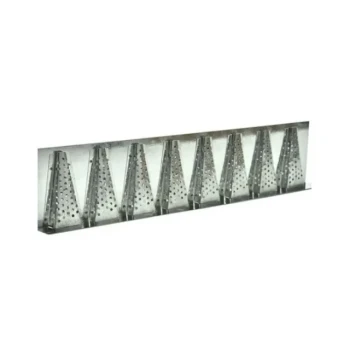
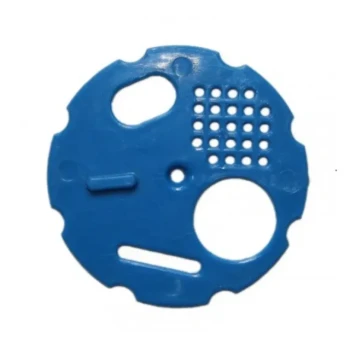
Large cuboid entrance protection devices serve as a critical defense system that directly safeguards colony strength by minimizing worker bee fatalities during peak predation periods. By installing these devices, specifically during the high-risk months of September and October, you prevent the depletion of the workforce essential for gathering late-season resources and generating winter heat.
Core Insight: The survival of a honey bee colony in winter is strictly a numbers game. These devices prevent the "population crash" caused by late-season predators, ensuring the hive retains the critical mass necessary to thermoregulate and survive until spring.
Preserving the Workforce During Critical Windows
Combating Peak Predation
The primary function of these devices is to reduce worker losses during peak hornet activity. In many regions, this predatory pressure spikes in September and October.
Without protection, a colony can lose a significant percentage of its foragers daily. This device acts as a mechanical filter, allowing bees to pass while excluding larger predators.
Securing Winter Stores
The immediate benefit of reduced mortality is higher productivity. A robust population of surviving workers allows the colony to continue foraging late into the season.
By keeping the workforce intact, the colony can accumulate sufficient winter stores. These food reserves are the fuel the hive requires to survive the dormant months.
The Mechanics of Overwintering Survival
Maintaining Cluster Density
Survival in cold climates depends on the colony’s ability to form a thermal cluster. The bees vibrate their wing muscles to generate heat, protecting the queen and the brood.
This process requires a specific population density. If predation thins the ranks in autumn, the remaining cluster may be too small to generate adequate heat, leading to colony failure regardless of food stores.
Enhancing Spring Buildup
The impact of these devices extends beyond winter survival. A colony that overwinters with a strong population experiences a faster rate of buildup in the spring.
Because the colony exits winter with a viable workforce, it can immediately capitalize on early nectar flows. This leads to rapid expansion and overall higher productivity for the coming year.
Operational Considerations
While these devices are highly effective, their utility is tied to specific environmental timing.
Situational Necessity
The device provides maximum value during the September and October window. Its contribution to colony strength is negligible during months with low predator activity.
The Cost of Inaction
The trade-off here is not necessarily a downside of the hardware, but the risk of omitting it. Relying solely on natural defenses during peak hornet season can lead to a population deficit that is impossible to recover from before the first freeze.
Making the Right Choice for Your Hive
To ensure your colonies are prepared for the cold season, assess your local predator load and act accordingly.
- If your primary focus is Survival: Prioritize installation in early September to maintain the cluster density required for thermal regulation.
- If your primary focus is Productivity: Use these devices to protect the foragers needed to maximize winter store accumulation and accelerate spring growth.
By mechanically excluding predators, you are effectively buying your colony the time and manpower it needs to thrive.
Summary Table:
| Feature | Impact on Colony Strength | Benefit for Overwintering |
|---|---|---|
| Predator Exclusion | Reduces worker bee fatalities during peak hornet activity | Maintains the critical mass needed for thermoregulation |
| Forager Preservation | Ensures a larger workforce for late-season nectar gathering | Increases winter food stores and survival reserves |
| Cluster Stability | Prevents population crashes in September/October | Sustains high cluster density to generate vital winter heat |
| Spring Preparation | Preserves a viable workforce through the dormant period | Enables rapid colony buildup and higher early-season productivity |
Secure Your Apiary's Future with HONESTBEE
At HONESTBEE, we specialize in empowering commercial apiaries and distributors with the high-quality tools needed to ensure colony longevity and peak productivity. Whether you are scaling your operations with our specialized hive-making and honey-filling machinery or seeking a reliable wholesale partner for essential beekeeping consumables, we provide the comprehensive solutions your business demands.
Don't let late-season predators compromise your winter survival rates. Our professional-grade hardware and hive-protection equipment are designed to maintain the cluster density and worker strength essential for a thriving honey production season.
Ready to optimize your wholesale supply chain?
Contact HONESTBEE today to explore our full spectrum of beekeeping equipment and tools.
References
- M. A. Abd Al-Fattah, Wael Mahmoud Marzouk. New applications for protecting honeybee, Apis mellifera L., colonies from attacking the oriental hornet (Vespa orientalis Fab.). DOI: 10.21608/eajbsa.2014.13201
This article is also based on technical information from HonestBee Knowledge Base .
Related Products
- 8-Cone Galvanized Steel Bee Robber Guard
- Beehive Entrance Reducer Guardian Metal Hive Entrance for Bees
- Steel Round Disc Entrance Reducer for Flexzion Bee Hive Nuc Box Gate
- Beehive Entrance Discs Plastic Bee Entrance Disc for Bee Hives
- Multi-Functional Rotary Hive Entrance Disc for Beekeeping
People Also Ask
- What protective functions do beehive entrance guards provide? Defend Your Hive Against Wasps and Moths
- What is the primary function of protective guards at hive entrances? Block Rodents & Boost Winter Survival Rates
- How do conical metal guards or rubber inner tubes function as pest control tools? Stop Ants with Mechanical Barriers
- What is the function of Hive Entrance Guards? Master Bee Colony Defense Against Small Hive Beetles
- How can hardware mesh be applied to a beehive entrance for winter protection? Secure Your Colony Against Pests