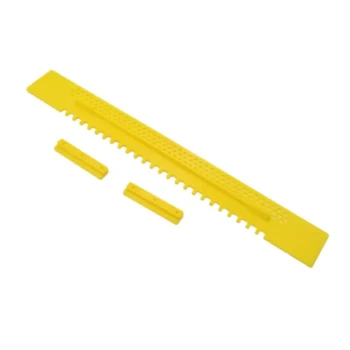
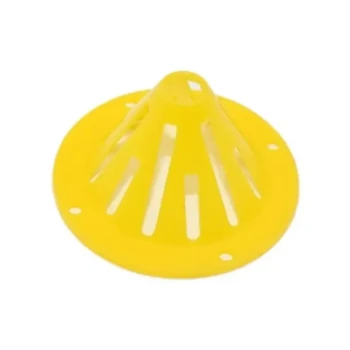
Fully opening beehive entrances and installing secondary ventilation ports is essential in hot and humid climates to maximize air convection within the hive. This enhanced airflow facilitates the rapid removal of excess moisture that bees expel during their fanning process, ensuring the honey ripens correctly with low water content and high enzyme activity.
Core Takeaway In humid environments, bees cannot rely solely on their own fanning to evaporate moisture from nectar. Increasing structural ventilation assists natural convection, preventing high moisture levels that lead to honey fermentation and spoilage.
The Mechanics of Honey Ripening
The Moisture Barrier
Bees transform nectar into honey primarily by reducing its water content. In humid climates, the external air is already saturated with moisture, making this evaporation process significantly more difficult.
Without assistance, the humid air generated by the bees' metabolism and evaporation efforts becomes trapped inside the hive. This stagnation halts the ripening process.
Enhancing Natural Convection
Bees instinctively fan their wings to circulate air, but in high heat and humidity, this often isn't enough.
By fully opening the main entrance and adding secondary ports, you create a "chimney effect." This allows cool air to enter through the bottom and warm, moisture-laden air to escape efficiently through the top.
The Role of Enzyme Activity
Proper ventilation does more than just dry the honey; it preserves its chemical integrity.
According to technical standards, reinforced ventilation helps maintain an environment where honey achieves high enzyme activity. If the hive becomes a stifling oven, these delicate biological processes can be disrupted.
Practical Ventilation Strategies
Maximizing Structural Airflow
The primary method for managing humidity is physical hive manipulation during the honey flow.
Ensure the bottom entrance is fully open to allow maximum intake of air. Simultaneously, install secondary ventilation ports, often located in upper supers or covers, to provide an exhaust route for humidity.
Utilizing Screened Bottom Boards
For consistent airflow, many beekeepers utilize screened bottom boards.
These replace the solid floor of the hive with a mesh that allows air to rise freely into the brood nest. This is a passive but effective way to lower internal humidity levels.
Ventilated Inner Covers
Heat naturally rises, accumulating at the top of the hive where honey supers are often located.
Using inner covers equipped with ventilation holes allows this heat to escape rather than radiating back down onto the colony.
Understanding the Trade-offs
Pest Management
While increasing airflow is vital, open ports can act as entryways for pests.
When using screened bottom boards, it is often wise to equip them with oil pan traps. This helps manage infestations of small hive beetles, which thrive in the same humid conditions that require increased ventilation.
Evaluating Supplemental Cooling
In extreme heat, some beekeepers employ active cooling methods, such as misting systems, wet towels, or even placing ice buckets on the hive roof.
However, strict objectivity requires noting that these intensive interventions are not typically necessary for the average beekeeper. Structural ventilation (entrances and ports) is usually sufficient to secure the honey crop.
Making the Right Choice for Your Goal
- If your primary focus is Honey Quality: Prioritize upper ventilation ports to ensure moisture escapes rapidly, preventing fermentation and preserving enzymes.
- If your primary focus is Temperature Regulation: Utilize a screened bottom board and a ventilated inner cover to create a passive cooling draft through the hive.
- If your primary focus is Pest Control: Combine your ventilation strategy with oil traps under screened boards to prevent beetles from exploiting the open airflow.
Mastering hive ventilation is the difference between a fermented loss and a harvest of premium, low-moisture honey.
Summary Table:
| Ventilation Method | Primary Function | Key Benefit |
|---|---|---|
| Fully Open Entrance | Maximizes air intake | Facilitates rapid moisture removal and fanning efficiency |
| Secondary Ports | Creates chimney effect | Allows warm, moisture-laden air to escape through the top |
| Screened Bottom Boards | Passive airflow | Reduces internal humidity while managing small hive beetle pests |
| Ventilated Inner Covers | Heat dissipation | Prevents heat accumulation in honey supers to preserve enzymes |
Maximize Your Harvest with HONESTBEE Professional Solutions
Managing humidity is critical for commercial apiaries and distributors aiming for premium honey quality. At HONESTBEE, we specialize in supporting your large-scale operations with a comprehensive wholesale offering. From specialized hive-making and honey-filling machinery to high-durability beekeeping tools and essential industry consumables, we provide everything you need to optimize hive ventilation and processing efficiency.
Don't let humidity compromise your enzyme activity or honey moisture levels. Our expert team is ready to supply the hardware and expertise to scale your business. Contact HONESTBEE today to discuss our bulk pricing and equipment solutions tailored to your professional beekeeping needs!
References
- Hermann Pechhacker, Helmut Horn. Beekeeping Around the World. DOI: 10.1080/0005772x.2001.11099511
This article is also based on technical information from HonestBee Knowledge Base .
Related Products
- Stainless Steel Round Beehive Air Vents for Ventilation
- Professional Reversible Beehive Hive Entrance
- Steel Round Disc Entrance Reducer for Flexzion Bee Hive Nuc Box Gate
- Inner Beehive Cover for Beekeeping Bee Hive Inner Cover
- Beehive Entrance Discs Plastic Bee Entrance Disc for Bee Hives
People Also Ask
- How does ventilation affect colony health, and how should it be managed seasonally? A Guide to Preventing Moisture & Overheating
- Why is proper ventilation important in a beehive? Prevent Mold, Regulate Temperature, and Boost Colony Health
- How can a beekeeper provide proper ventilation for a beehive throughout the year? Seasonal Strategies for Bee Health
- How can ventilation be added to a beehive without using an inner cover? Simple, Effective Solutions for Healthy Hives
- Why is good ventilation crucial when transporting beehives? Protect Your Colony from Lethal Overheating