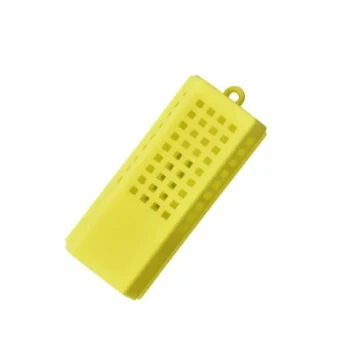
Migration Lids function primarily through specialized ventilation ports that actively manage the flow of air into and out of the beehive. These components are engineered to stabilize the internal microenvironment by balancing humidity levels and ensuring adequate oxygen exchange, particularly when the colony is under stress.
The core value of a Migration Lid lies in its ability to prevent the accumulation of heat and moisture in high-density environments. By facilitating necessary respiration and thermoregulation, these lids protect both the colony's health and the wooden structure of the hive itself.
The Mechanics of Environmental Control
Regulating Air Circulation
The fundamental mechanism of the Migration Lid is its system of specialized ventilation ports. These ports allow stale, warm air to escape while permitting fresh air to enter the hive.
This continuous exchange is vital for meeting the respiratory needs of the colony. It prevents the suffocation risks associated with high-density storage environments where airflow is often restricted.
Controlling Internal Humidity
Beyond simple airflow, these lids play a critical role in managing moisture. Bees generate significant humidity through respiration and nectar processing.
Without proper venting, this moisture accumulates within the hive. Migration Lids allow this excess humidity to vent externally, maintaining a drier internal atmosphere.
Critical Impacts on Hive Health
Facilitating Thermoregulation
Bees must maintain a specific temperature range to survive, a process known as thermoregulation. This becomes difficult during high-temperature seasons or confined transport.
Migration Lids support this biological requirement by preventing heat traps. The ventilation ports allow the colony to expel excess metabolic heat efficiently, avoiding lethal overheating.
Preventing Structural Decay
The benefits of these lids extend to the physical equipment. Persistent moisture accumulation is a primary cause of wood decay in hive boxes.
By regulating humidity, Migration Lids keep the internal wood surfaces drier. This prolongs the lifespan of the hive equipment by mitigating rot and fungal growth caused by damp conditions.
Operational Considerations
The Necessity of Specialized Equipment
It is important to recognize that standard hive covers may not suffice in all scenarios. Migration Lids are specifically critical during scenarios of high stress, such as long-distance transport.
Context-Specific Performance
The design is optimized for high-density storage where external airflow is limited. In these specific conditions, the passive regulation provided by these ports becomes a lifeline for the colony, whereas a solid lid could lead to rapid colony collapse due to asphyxiation or hyperthermia.
Making the Right Choice for Your Goal
To ensure the longevity of your equipment and the safety of your bees, select your equipment based on your operational context.
- If your primary focus is Colony Survival during Transport: Prioritize lids with unobstructed ventilation ports to ensure respiratory and thermoregulation needs are met in high-density storage.
- If your primary focus is Equipment Longevity: Use these lids to actively lower internal humidity levels, thereby preventing moisture-induced wood decay.
Effective hive management requires matching your ventilation strategy to the environmental demands placed on the colony.
Summary Table:
| Feature | Function in Microenvironment | Key Benefit for Beekeepers |
|---|---|---|
| Ventilation Ports | Facilitates continuous air exchange | Prevents colony suffocation & overheating |
| Moisture Venting | Expels metabolic & nectar humidity | Mitigates wood decay & fungal growth |
| Thermoregulation | Allows escape of metabolic heat | Maintains stable internal colony temperatures |
| Dense Design | Optimized for high-density storage | Essential for safe long-distance transport |
Maximize Colony Safety with HONESTBEE Beekeeping Solutions
At HONESTBEE, we specialize in supporting commercial apiaries and distributors with high-performance beekeeping equipment designed for professional use. Whether you are transporting thousands of colonies or expanding your wholesale inventory, our comprehensive range—from specialized Migration Lids and hive-making machinery to honey-filling equipment—ensures your operations remain efficient and profitable.
Partner with HONESTBEE to access:
- Premium-grade beehive hardware and consumables at wholesale scale.
- Advanced machinery to streamline your honey production and hive manufacturing.
- Expertly designed tools that prioritize honeybee health and equipment longevity.
Ready to elevate your beekeeping business? Contact us today to discuss our full spectrum of wholesale tools and machinery!
References
- Deborah I. Fels, Marcus Foth. Ergonomics in apiculture: A case study based on inspecting movable frame hives for healthy bee activities. DOI: 10.1016/j.heliyon.2019.e01973
This article is also based on technical information from HonestBee Knowledge Base .
Related Products
People Also Ask
- Why are specialized queen bee cages used for the banking of mated queen bees? Maximize Commercial Apiary Storage Efficiency
- What is the mechanism of action for using temporary queen bee cages? Master Successful Queen Introduction
- How are queen cages used to protect newly hatched queens? Secure Your Virgin Queens During Development
- Why are queen cages or grid cages used in bee studies? Achieve Precise Biological Data for Research
- What technical precaution must be taken regarding the mesh or grill side of a queen bee cage? Ensure Queen Survival