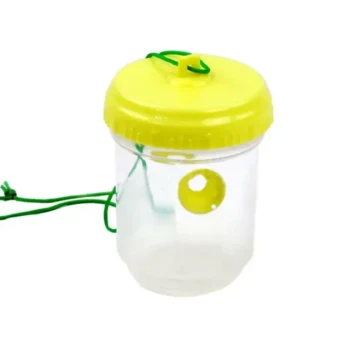
Physical traps serve as a frontline defense in the Integrated Pest Management (IPM) strategy for honey bee colonies by directly targeting and reducing the adult Small Hive Beetle population. These devices function by exploiting the beetle's specific behavioral traits, such as their aversion to light or response to specific attractants, to sequester them away from the colony's core. This physical removal creates a barrier that interrupts the beetle's reproductive cycle before it can damage the hive's resources.
The primary function of a physical trap is not just to kill individual beetles, but to act as a contraceptive barrier for the colony. By capturing adults before they lay eggs, you prevent the exponential population growth that leads to colony collapse.
The Mechanics of Capture
Exploiting Biological Weaknesses
Small Hive Beetles possess distinct behavioral patterns that traps turn against them. Most notably, these beetles have a natural tendency to avoid light.
Traps are often designed to provide a dark refuge that mimics the cracks and crevices beetles seek out to hide from bees. Once the beetle enters this harborage, the physical mechanism of the trap prevents escape.
The Role of Attractants
Beyond passive capture, many traps utilize specific attractants or baits.
These lures draw beetles away from the honeycomb and brood frames. By redirecting the pest's movement toward the trap, the device actively clears the comb surface, reducing the immediate pressure on the bees to guard every cell.
Strategic Impact on Colony Health
Interrupting the Reproductive Cycle
The most critical contribution of physical traps is the reduction of egg-laying opportunities.
Adult beetles seek out protein-rich resources, specifically bee bread and larvae, to deposit their eggs. When a trap captures an adult female, it effectively removes thousands of potential larvae from the ecosystem.
Preventing Resource Spoilage
Beetle larvae are responsible for the fermentation and destruction of honey and pollen.
By lowering the adult population, traps minimize the number of larvae that eventually hatch. This protects the colony's food stores and structural integrity, preventing the "sliming" events that often cause bees to abscond or the colony to collapse.
Understanding the Limitations
Traps are Consumables
It is important to view these traps as consumable tools rather than permanent fixtures.
To maintain efficacy, traps must be monitored and maintained. If they become full or if the attractant loses potency, their ability to control the beetle population diminishes rapidly.
Population Reduction, Not Eradication
Physical traps are designed to lower the population, not necessarily eliminate it entirely in a single stroke.
They work best as part of a broader IPM strategy. Relying solely on traps without strong colony genetics or proper hive management may not be sufficient in cases of overwhelming infestation.
Integrating Traps into Your Management Plan
To maximize the effectiveness of physical traps, align their usage with your specific management goals:
- If your primary focus is Preventative Maintenance: Deploy traps early in the season to catch scouting beetles before they establish a breeding population in the hive.
- If your primary focus is Crisis Management: Increase the number of traps and check them frequently to rapidly reduce the density of adult beetles threatening the brood.
Physical traps provide the necessary leverage to keep beetle populations manageable, ensuring your bees can focus on foraging rather than hive defense.
Summary Table:
| IPM Contribution | Mechanism of Action | Strategic Benefit |
|---|---|---|
| Population Control | Exploits light aversion to capture adults | Reduces adult density and immediate hive pressure |
| Reproductive Barrier | Sequesters adults before egg-laying | Prevents larval outbreaks and resource "sliming" |
| Resource Protection | Redirects pests away from brood and honey | Safeguards bee bread, larvae, and honey stores |
| Monitoring Tool | Provides data on infestation levels | Informs timing for broader management actions |
Elevate Your Apiary Management with HONESTBEE
At HONESTBEE, we understand that protecting your honey bee colonies requires more than just luck—it requires the right tools. We cater to commercial apiaries and professional distributors by providing a comprehensive wholesale range of beekeeping equipment designed for durability and performance.
From advanced hive-making and honey-filling machinery to essential consumables and physical pest control tools, our portfolio is built to enhance your operational efficiency and safeguard your yields. Whether you are scaling your production or supplying the next generation of beekeepers, HONESTBEE delivers the hardware and expertise you need.
Ready to optimize your colony health and honey production?
Contact HONESTBEE Today for Wholesale Solutions
References
- Aura Palonen, Peter Neumann. Spatiotemporal variation of small hive beetle infestation levels in honeybee host colonies. DOI: 10.1007/s13592-025-01206-8
This article is also based on technical information from HonestBee Knowledge Base .
Related Products
- Removable Washable Hive Beetle Trap Attractants for Small Hive Beetles
- Reusable Aluminium Beetle Trap for Small Hive Beetles Silver Bullet
- Reusable Clear Small Hive Beetle Traps for Beehives Beetle Trapping Tools
- Black Plastic Beetle Barn Hive Beetle Trap for Beehives
- Plastic Beetle Blaster Trap Beekeeping Tools and Supplies
People Also Ask
- How should powdered substances be used in beetle traps for hive beetle control? Expert Guide for Maximum Colony Protection
- What are the three main types of hive beetle traps? Expert Solutions for Protecting Your Bee Colonies
- What are the types of hive beetle traps available? Master Your Beetle Control Strategy
- What are the main types of hive beetle traps available? A Beekeeper's Guide to Effective Control
- What are the available chemical-free options for trapping hive beetles? Safe and Effective Pest Management Solutions